
What Is Building Maintenance Software?
Building Maintenance Software is a digital tool that property and facilities managers use to plan, schedule, and track everything involved in keeping a building’s fabric, plant, and equipment safe and operational. That spans planned preventive maintenance (PPM), routine servicing, statutory compliance inspections, and emergency or reactive repairs.
It gives facilities managers, landlords, and maintenance teams a single place to raise and assign work orders, dispatch engineers based on their availability and location, and track a job from report to sign-off, including work carried out by external contractors.
Because much of building maintenance is driven by legal obligations, the software also schedules and records statutory checks such as fire safety, gas safety, legionella, electrical, and lifting-equipment inspections under the Lifting Operations and Lifting Equipment Regulations (LOLER). It keeps a timestamped audit trail for regulators and insurers.
This is where it differs from broader Facilities Management (FM) Software. FM software manages the whole workplace: space planning, moves, cleaning, security, and room bookings. Building Maintenance Software concentrates on the subset that keeps the physical building compliant and running, making it a sharper fit for organisations whose priority is asset upkeep and safety rather than workplace operations as a whole.
It is used across:
- Schools
- Commercial properties
- Offices
- Public buildings
- Apartments, flats and housing buildings
- Hospitals and healthcare facilities
- Hotels and rentals
7 Best Property and Building Maintenance Software Solutions
Azolla
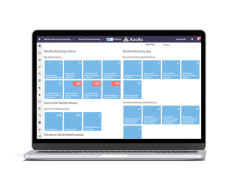
A cloud-based Building Maintenance Software solution that uses IoT to automate core operations and compliance. Used by organisations looking to use IoT to automate core operations and enhance HSE compliance.
Price: From £125 per month
Cleverly
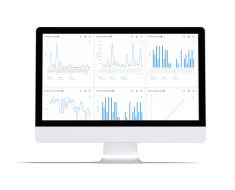
A fully-featured building maintenance solution with self-service workflow automation and consolidated multi-channel communication. Used by small to mid-sized organisations and landlords looking to automate core property management operations.
Price: From £999 per month
Snapfix

An image-first task management solution with embedded messaging. Ideal for organisations looking for a highly visual task management and building maintenance solution.
Price: From £8.50 per month
MaintainX
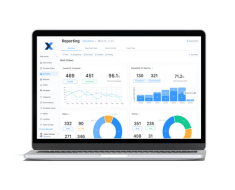
A self-service building maintenance solution with a library of customisable processes and integrated messaging. Used by businesses requiring a self-service solution that can be easily scaled.
Price: From £13 per user, per month
Concerto
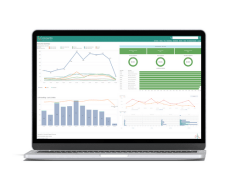
A consolidated, compliance-centric platform for large scale building and property maintenance. Built for estate and portfolio management in highly regulated industries and environments.
Price: From £1,200 per month
Planon
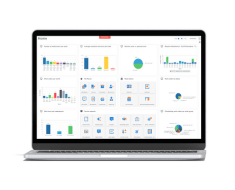
Comprehensive Building Maintenance Software for managing, improving, and optimising extensive property portfolios. Ideal for large enterprise planning or undertaking portfolio-scale smart building and sustainability transformations.
Price: From £35,000 per annum
Infraspeak
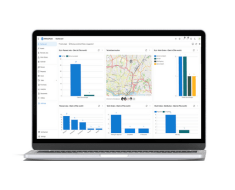
A dynamic asset, building, and maintenance platform for property managers and FM service providers.
Price: From £29 per user, per month
Comparing Best Property and Building Maintenance Software Solutions
Software | Best for | Price |
1. Snapfix | Teams wanting highly visual, image-first task management | From £8.50 per month |
2. MaintainX | Businesses needing a scalable, self-service solution | From £13 per user, per month |
3. Infraspeak | Property managers & FM providers managing assets & maintenance together | From £29 per user, per month |
4. Azolla | Teams using IoT to automate operations & HSE compliance | From £125 per month |
5. Cleverly | SMBs & landlords automating property management operations | From £999 per month |
6. Concerto | Estate & portfolio management in highly regulated industries | From £1,200 per month |
7. Planon | Large enterprises running portfolio-scale smart building transformations | From £35,000 per year |
Why Property Managers Choose to Implement Building Maintenance Software
Property managers implement Building Maintenance Software to protect the building as a capital asset. For a property owner, the building itself is the asset, and its value depends on how well the fabric, plant, and equipment are kept. The software gives owners a structured way to protect that asset: keeping equipment in optimal condition, meeting safety obligations, and making upkeep decisions from records rather than reacting to whatever breaks next.
Building maintenance spans both hard and soft FM services, from grounds maintenance on the soft side to Heating, Ventilation, and Air Conditioning (HVAC) maintenance and energy management on the hard side. The maintenance approach matters too: PPM and routine servicing save time and money, while a purely reactive approach does the opposite. Software is what lets an owner run the profitable approach at scale. Here’s where that pays off for the people who own and run the building.
Protect Asset Value and Extend Equipment Lifespan
Plant and equipment are capital assets, and they last far longer when serviced on schedule than when run to failure. Building Maintenance Software holds an asset register and attaches a service history and PPM schedule to each item, so boilers, lifts, HVAC, and fire systems are maintained before they degrade. For an owner, that means slower depreciation, fewer premature replacements, and a maintenance record that stands up during a sale, refinancing, or handover.
Stay Ahead of Statutory Compliance and Liability
Legal responsibility for a safe building sits with the owner, and obligations like fire safety, gas safety, legionella, and LOLER inspections run on fixed calendars. The software schedules these statutory checks automatically and keeps a timestamped audit trail of what was done and when. That turns compliance from a liability the owner carries personally into a documented, defensible process ready for regulators and insurers.
Cut Emergency Repair Costs Through Preventive Maintenance
Reactive repairs are the most expensive way to run a building. Out-of-hours call-outs, rushed contractor rates, and knock-on damage all cost more than planned work. By shifting the maintenance mix toward PPM and catching wear early, the software reduces the volume of emergencies in the first place. Owners spend against a predictable maintenance budget instead of absorbing unplanned repair bills.
Minimise Downtime That Affects Occupants and Income
When core equipment fails, the cost isn’t just the repair. It’s tenants without heating, a lift out of service, or a facility that can’t operate, all of which threaten occupant safety and rental income. Maintenance software prioritises work orders by urgency and impact, dispatches the right engineer or contractor, and tracks the job to sign-off, so critical faults are resolved before they disrupt the people using the building.
Hold Contractors Accountable With a Single Record
Owners rarely do the work themselves; they rely on in-house teams and external contractors. Bringing every work order, quote, and completion note into one system replaces scattered emails and phone calls with a single source of truth. The owner can see what was requested, who attended, what it cost, and whether service level agreements (SLAs) were met, which turns contractor management from trust-based into evidence-based.
In the clip below from the Comparesoft podcast with retail FM Chris Lloyd, he explains why first-time fix rate and repeat visits are the numbers that tell you whether your contractors are really performing, and how keeping every job on one record makes those numbers impossible to hide.
Revisits vs First-time Fix: What FMs Measure
Chris Lloyd on the metric FMs should watch, first-time fix versus revisits, and how tracking it against a single job record exposes underperforming contractors and cuts the cost of work that keeps coming back Watch Chris’ full episode
Cut Energy Use With Sensors and Real-Time Data
Energy is one of a building’s largest recurring costs, and much of it is wasted on conditioning space or running plant inefficiently. Linked to Internet of Things (IoT) sensors and real-time analytics, Building Maintenance Software flags equipment drifting out of efficient operation and feeds building energy management, so owners heat, cool, and power the building against actual conditions rather than fixed schedules.
Find the Best CAFM Solution For Your Building Maintenance Requirements
What Type of Facilities Do You Manage?
Key Capabilities & Features of Building Maintenance Software
Building maintenance teams use this software to keep a property’s fabric, plant, and equipment safe and operational, much of it driven by legal obligations rather than internal preference. Three things separate it from general maintenance tooling:
- Much of the work is statutory and calendar-driven, not discretionary.
- The assets are fixed building plant, so a live asset register and service history matter more than mobility.
- Failures affect occupant safety and the owner’s liability, not just internal productivity.
Building Maintenance Software brings all property maintenance data into one place: work orders, asset registers, engineer availability, compliance requirements, and spare parts. That way, day-to-day operations run against records rather than memory.
Work Order and Job Management
- Log, prioritise, and assign jobs: captures everything from small reactive repairs to larger corrective tasks and routes each to the right person.
- Real-time job tracking on mobile: field workers update status and progress against the work order from a mobile app, so the office sees live progress.
- Digital checklists and forms: create, complete, and track maintenance checklists or inspection forms on site instead of on paper.
- Shared, planned calendar: assign engineers and contractors against a single calendar that shows who is doing what and when.
In the clip below, Chris Lloyd breaks down how he triages a constant stream of incoming tickets: what jumps the queue, what can wait, and how he stops genuinely urgent jobs getting lost in the noise.
How Retail Building FMs Prioritise Tickets
Chris Lloyd shows how retail FMs prioritise work orders when everything feels urgent, from the rules he uses to rank tickets to how job management software keeps the right work at the top of the list. Watch Chris’ full episode
Planned and Preventive Maintenance
- PPM workflow creation: build and manage PPM tasks and recurring schedules so servicing happens before equipment degrades.
- Automated task generation: recurring maintenance is raised automatically on schedule rather than relying on someone to remember it.
- Overdue and completion alerts: push notifications flag tasks that are due, overdue, or complete, so nothing slips.
Compliance and Inspections
- Statutory inspection scheduling: track compliance requirements such as fire, gas, legionella, and electrical checks against their fixed calendars.
- Automated inspection reports: generate building inspection reports from completed forms, accessible through a shared web portal or mobile app.
- Audit trail: capture every interaction against the job or asset record, giving a clear, timestamped history of what was requested, agreed, and completed for regulators and insurers.
Asset and Inventory Management
- Asset register with service history: hold a record of every building asset and its full maintenance and repair history in one place.
- Spare parts inventory: track parts stock and reserve them against jobs, improving first-time fix rates and cutting repeat visits.
Communication and Reporting
- Improved team communication: streamline coordination between maintenance staff, field workers, and contractors in one system.
- Shared portal access: make forms, reports, and job records available to staff through a shared mobile app or web portal.
How Much Does Building & Property Maintenance Software Cost?
The cost of Building Maintenance Software varies based on requirements, capabilities, and deployment. In a generic sense, building maintenance tools start at as little as £8.50 per month, per user like Snapfix and go up to as much as £1200 per month for a complex system designed for multiple properties, like Concerto or Planon (From £35,000 per annum).
For small operations, some companies offer free Building Maintenance Software solutions for a limited time before paying a monthly or yearly fee (also called free trials).
Three Main Types of Building Maintenance
Routine Building Maintenance
Routine maintenance follows a predetermined checklist encompassing daily, weekly, monthly, and yearly tasks. Although building maintenance predominantly surrounds hard FM tasks, routine maintenance includes a majority of soft FM tasks such as cleaning, waste management, refilling vending machines, and pest control.
Routine checks and inspections would also be performed to monitor building functions and appearance, highlighting any further maintenance that is required.
Preventive Building Maintenance
Preventive maintenance – or PPM in facilities management terms – is used to proactively track and manage maintenance activities to avoid unexpected building maintenance failures. As well as saving money, a preventative maintenance approach helps team members do their jobs more effectively and involves much less stress all around.
Inspecting water pipes regularly is an example of where it pays to plan ahead. A leaking pipe, left unchecked, can cost businesses 1,000 litres of water an hour, equating to £26,000 over a year.
Proactive maintenance gives a better understanding of when equipment, parts, and systems need to be repaired or replaced. Building managers can then plan for work to be undertaken at the least disruptive times and that the work is carried out cost-effectively.
For instance, if the power-assisted revolving door at the building’s entrance is coming to the end of its useful life cycle, a work order is created to replace it.
Part of preventive maintenance involves predictive testing and inspection. Predictive testing includes ultrasonic sound analysis to help spot leaks, infrared thermography scans to identify heat build-up in electrical equipment, oil analysis, and vibration analysis of parts.
Reactive Property Maintenance
Reactive maintenance is deployed in a bid to save time and money. It is a maintenance strategy that initiates maintenance only when maintenance is required.
However, by choosing a reactive approach to maintenance you may find that the budget you’ve set aside quickly becomes saturated. Although a reactive maintenance approach can suit smaller operations that rely less on asset uptime, it is typically a strategy that can prove costly.
- High Building Maintenance Costs: Having a reactive maintenance plan means assets and infrastructure aren’t regularly checked. Meaning wear, tear, and minor repairs aren’t caught and acted upon before they fail. Resulting in high emergency repair costs that aren’t budgeted for. Take roof maintenance for example. The roof is the most vulnerable part of a building, being subject to year-round weather conditions and high traffic if relying on tradespeople to carry out services that require roof access. A leaky roof can mean damage to valuable contents inside, not to mention structural damage elsewhere.
- Increased Equipment Downtime: In an office building, a roof in need of repair can cause chaos for workers. While an HVAC system breaking can result in the need to send staff home. Major repairs like these are costly to get fixed quickly and may cause significant downtime. Not to mention causing an unsafe and unproductive building environment for occupants. Without a proactive approach to maintenance, unplanned downtime of essential equipment is inevitable.
- Dealing With Stress and Backlog: Reactive maintenance work can cause stress for maintenance technicians who find themselves under pressure to get the problem resolved quickly. Additionally, a reactive approach can mean a backlog in other less-important maintenance jobs, causing annoyance and frustration elsewhere among the people who use the facility.