
Leading Facilities Management at Ocado Retail (With Just a RAG Report)
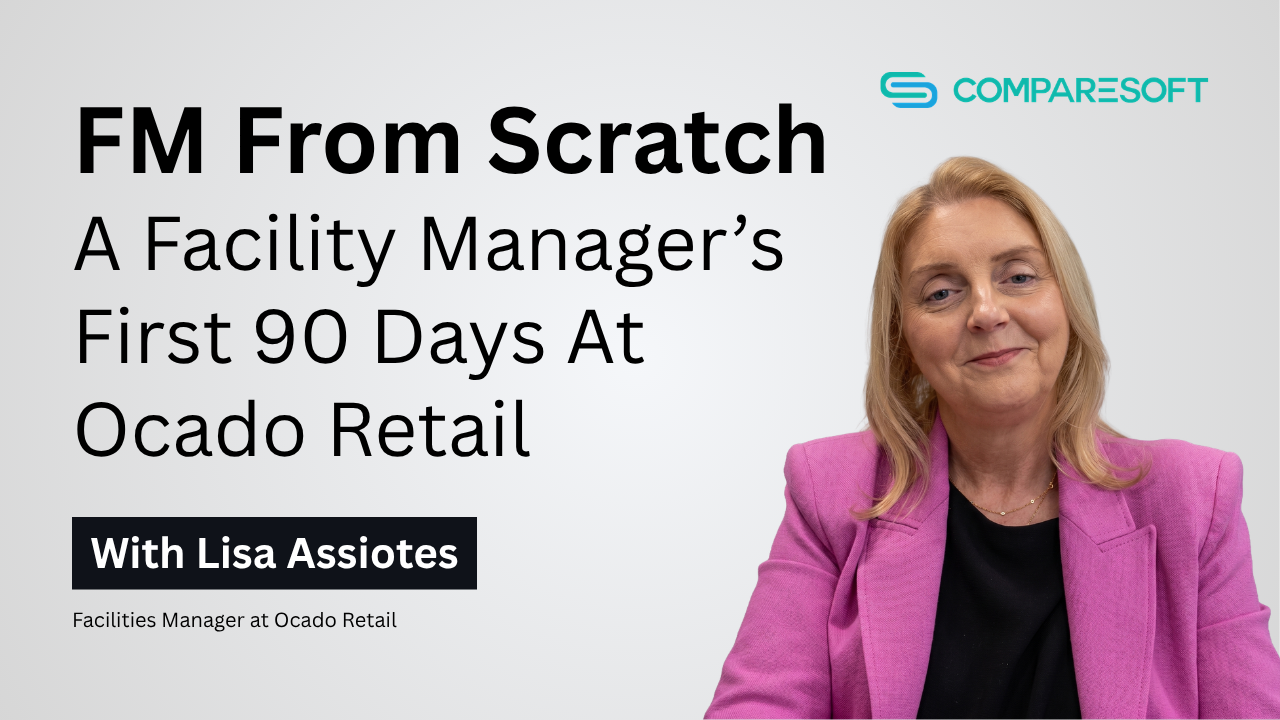
Lisa Assiotes, Facilities Manager at Ocado Retail, shares how she built an in-house FM function from scratch, how a small team works with an integrated service provider, and where AI is streamlining FM tasks.
In this episode
- What a Typical Day Looks Like in Retail Head Office Facilities Management
- How to Build an FM Function From Scratch in a New Retail Environment
- How Listening to Colleagues Shapes the FM Service at Ocado Retail
- Why an Integrated Service Provider Works for Ocado Retail’s FM Model
- When a CAFM System Is (and Isn’t) Worth It for FM Teams
- Where AI Fits in Day-to-Day Facilities Management at Ocado Retail
- How to Manage FM Budgets and Get Value From Suppliers
- How to Demonstrate the Value an FM Function Brings
- Lisa’s Advice for New FMs: Be Curious
Facilities management rarely gets noticed until something breaks. The lighting fails, the heating stops, and suddenly everyone knows who the FM team is. The rest of the time, a well-run facilities function is quiet enough that most colleagues never think about it.
Lisa Assiotes has spent 25 years in that world. She started on the help desk at Lloyd’s of London and worked her way up through corporate, charity, gaming and retail environments. Today, she is Facilities Manager at Ocado Retail, where she runs the head office, manages contract services, and hosts supplier events for a workforce of self-confessed foodies.
In this episode of the Comparesoft Facilities Management Podcast, Lisa explains how she built an FM function from scratch, why culture sits at the heart of service delivery, and where software and AI actually earn their place in a busy retail head office.
What a Typical Day Looks Like in Retail Head Office Facilities Management
No two days look the same in retail head office facilities management. Lisa’s role spans the building, the contracts that keep it running, and the events that bring colleagues together.
“My day varies, as any FM’s day would,” she says. “I manage the building and the contract services here, but I’m also really fortunate to work with some of our suppliers. I host all of our supplier events on site, working with different brands across breakfasts, samplings and lunch menus.”
Food is central to the Ocado Retail culture. “Food is really at the heart of everything we do here. Our colleagues are real foodies.” That breadth is part of the appeal. “No two days are the same, but it’s a really great, varied role, and one of my favourites from my FM career.”
How to Build an FM Function From Scratch in a New Retail Environment
Building an FM function from scratch in a new retail environment starts with a gap analysis, not a hiring spree. One thread runs through Lisa’s career: she keeps arriving before the FM function does. Her last four roles have all been brand new, and Ocado Retail was no exception.
“My first 90 days here was a gap analysis,” she explains. “Where are we at? What’s working, what’s not? We didn’t actually have an established FM team when I joined, so I could look at what was in place, the priorities, and what the team needed to look like.”
Building the team came first. The right people in the right roles make the case for getting service delivery right before any system rollout. “Without the right team, the service delivery to our colleagues is key to what we do,” Lisa says. “Culture and engagement is massive here at Ocado. My team spend a large proportion of their time on initiatives, events and supporting colleagues, so we can make it a great place to work.”
She is candid about her preference for a fresh start. “Honestly, I prefer stepping into a new role where it’s a blank canvas. A fresh pair of eyes walking into an environment, looking and listening to what’s working, gives you a fresh opportunity to raise the service level.”
How Listening to Colleagues Shapes the FM Service at Ocado Retail
Listening to colleagues shaped the three biggest FM initiatives at Ocado Retail: 100% standing desks, a dogs-in-the-office scheme, and the desk booking system that ties both together. Each was planned around health, safety and inclusion, not just popularity.
Standing desks came from listening, then measuring. Lisa’s team runs annual display screen equipment (DSE) assessments and offers a home-working setup that mirrors the office. “There was a huge increase in people asking for standing desks, not just those with medical requirements, but those who felt they needed to move around a little bit more.”
Behind the dogs-in-the-office scheme sits real planning. “It was finding that balance, the risk versus reward of letting people bring their dogs into the business, but work safely, in a secure environment, and make sure the dog owner and our other colleagues were happy.” The team runs a registration programme for vaccinated, well-socialised dogs and limits numbers to one per floor.
CAFM Software supports both initiatives. A desk booking system lets colleagues find and reserve standing desks in advance, while a separate booking system manages which dogs are in and where. “We have about 15 regular colleagues who bring their dogs in. We have a booking system so we give awareness as to who’s going to be in and where they’re going to be.”
Why an Integrated Service Provider Works for Ocado Retail’s FM Model
An integrated service provider gives Lisa’s team visibility and accountability that managing multiple separate vendors rarely matches. Ocado Retail’s FM model is unusual: a small in-house team sits alongside a provider that delivers cleaning, catering, security and maintenance from the same office.
“They are an extension of our team,” she says. “If something comes up, there’s a quick and easy solution, and we can all work together to resolve it. Our job is to cause as little disruption as possible, and by being in the office together we understand how the business works.”
The model also shapes her view on team size. “The benefits of a smaller team is they’re more engaged. You build really good relationships, you build trust, share knowledge, and you see people grow through internal promotion.”
The KPIs she sets reflect what matters most. “Health and safety is top of our agenda, and compliance. We work really closely with them on our planned preventive maintenance (PPM) programme, making sure we’re compliant at all times.”
When a CAFM System Is (and Isn’t) Worth It for FM Teams
A computer-aided facilities management (CAFM) system is worth it when the estate is large enough to justify the overhead. Ocado Retail’s head office runs without one, and Lisa’s view on why is refreshingly honest.
Her decision logic comes down to estate scale:
Estate size | CAFM system needed? | Why |
Single site, lean asset portfolio | Probably not | A RAG report, shared calendars and the service provider’s help desk are sufficient. Manual tracking stays manageable. |
Multiple sites or large asset register | Yes | Tracking compliance, performance and assets across locations is where a CAFM system starts to pay for itself. |
Multi-country portfolio | Yes | The need for centralised oversight and standardised reporting outweighs the overhead of running the system. |
At Ocado Retail, the foundation is process discipline rather than software. “Probably the thing that’s helped me and the team the most is a RAG report,” she says. “All of our compliance is tracked. We know each month where we’re at and what’s due. That’s probably key to our success in maintaining health and safety and compliance on site.”
Discipline matters more than the tool. “We won’t close anything off until we have the certificates, so we’ve got a fully auditable system should someone ask us to confirm our compliance.”
The same logic applies to the asset register. “We don’t have a huge asset portfolio here, so it’s easier to manage. In other businesses with multiple locations, you do need an asset management system. It’s really easy to miss equipment if you don’t have that asset register linked in with all your PPM servicing.”
If you are weighing up FM software for your estate, the takeaway is simple: match the tool to the estate.
Where AI Fits in Day-to-Day Facilities Management at Ocado Retail
AI is finding its place in day-to-day facilities management at Ocado Retail through repetitive tasks, not strategic decisions. Ocado encourages colleagues to spend 15 minutes a day on learning they can apply to their role, a programme the team calls the 15 days of AI.
“Quite a lot of the tasks we do are repetitive, and we think there’s room for improvement with some collaboration with AI,” Lisa says. The team already uses it on daily cleaning audits. “I input the information into AI, download my photographs, and it gives me an overview against our KPIs and where we might need an action plan. It’s something we do every day. It won’t save us hours, but it saves us time and gives a consistent approach to feedback.”
She is firm that AI supports the team rather than replacing it. “You need that human element, the understanding of the contract, the business and the way we work.” The team has trialled AI on DSE assessments with a clear limit. “Where the response is that everything’s okay, it’s really good. But where there are concerns or assistance is required, it really does need that human element.”
Her expectation is steady, practical adoption. “There’s an element of AI that will be integrated across our team over the next 6 to 12 months for some of those repetitive processes,” she says, citing dog and event bookings as candidates.
How to Manage FM Budgets and Get Value From Suppliers
Managing FM budgets means controlling four distinct categories of cost, each with its own discipline:
- Planned preventive maintenance: Predictable and controllable. Lisa knows what needs doing and what compliance costs are, and budgets accordingly across a 12-to-18-month horizon.
- Reactive maintenance: The hardest to forecast. Buildings with high usage generate unpredictable failures on doors, access control and shared equipment.
- External cost pressures: National living wage rises and contract increases compound across large service agreements and must be factored into forecasts.
- Critical spares inventory: Forward planning hedges against supply disruption. Ocado Retail keeps a list of critical spares on site to maintain service continuity.
“We look at our plans for the next 12 to 18 months, so any large works or equipment coming to end of life can be built into the budget,” Lisa says. “For larger jobs, we get several quotes to get value for money.”
The hardest cost to manage is reactive maintenance. “Planned maintenance is easy to control. You know what you need to do and what your compliance costs are. Reactive maintenance is very difficult for any FM to manage, particularly as buildings get more usage, so things like doors and access control.”
External pressures make forecasting harder still. “With the current increases in cost of living, you have to allow for national living wage and contract increases and factor those into your budgets. It can have a huge impact, particularly when you’re running large service contracts.”
How to Demonstrate the Value an FM Function Brings
FM has an image problem because the function spends money rather than generates it. Lisa names it directly. “Not everybody understands what FM does or the value it brings, quite often because we’re the team that spends the money rather than generates it.”
That can make investment a hard sell, but she values being the team people turn to in a crisis. “When something goes wrong, you are the go-to person. People have developed trust, understanding that FM are there to support, to deliver, to keep the business operational. I like that we’re a trusted team that can deliver what the business needs.”
Demonstrating the value of an FM function relies on continuous feedback, not a single annual review. Proving the worth of a function that succeeds by going unnoticed is a perennial FM challenge.
Lisa’s team measures value through three channels:
- Annual colleague engagement survey: Includes specific questions on the working environment, giving year-on-year benchmarks.
- Open feedback on Slack: A dedicated safer-working channel lets colleagues raise environment issues at any time.
- Peer recognition nominations: Colleagues shout out FM team members after a well-delivered project or event.
“Our biggest measurement of success is the feedback from our colleagues,” Lisa says. In a small team, every success is shared. “Any success is seen as a team success.”
Lisa’s Advice for New FMs: Be Curious
Lisa’s advice for any new FM, or anyone setting a strategy for the first time, is straightforward.
“Listen, talk, go into the environment and understand the culture. What are the challenges? The most important thing is to go in and embrace what’s happening, and work out how you can help improve and shape things.”
It comes back to a value she holds, and one Ocado shares. “Be curious. Have the opportunity to talk, listen and understand, and maybe shape or change something that has a huge impact on colleagues, that you might not have known about had you not been curious.”
For a function that is so often invisible until it is not, that curiosity may be the most valuable tool of all. No system required.
What Type of Facilities Do You Manage?
Meet the Speakers
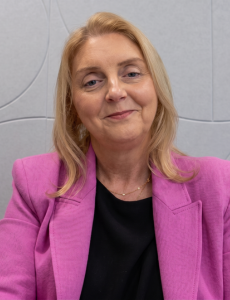
Lisa Assiotes
Facilities Manager at Ocado Retail
Former Facilities Manager at NSPCC, Paddy Power Betfair, and Hotel Chocolat, current FM at Ocado Retail.

Ryan Condon
Head of Content
Podcast Host and Head of Content of Comparesoft, joining the team in 2019.

Latest Facilities Management Podcast Episodes
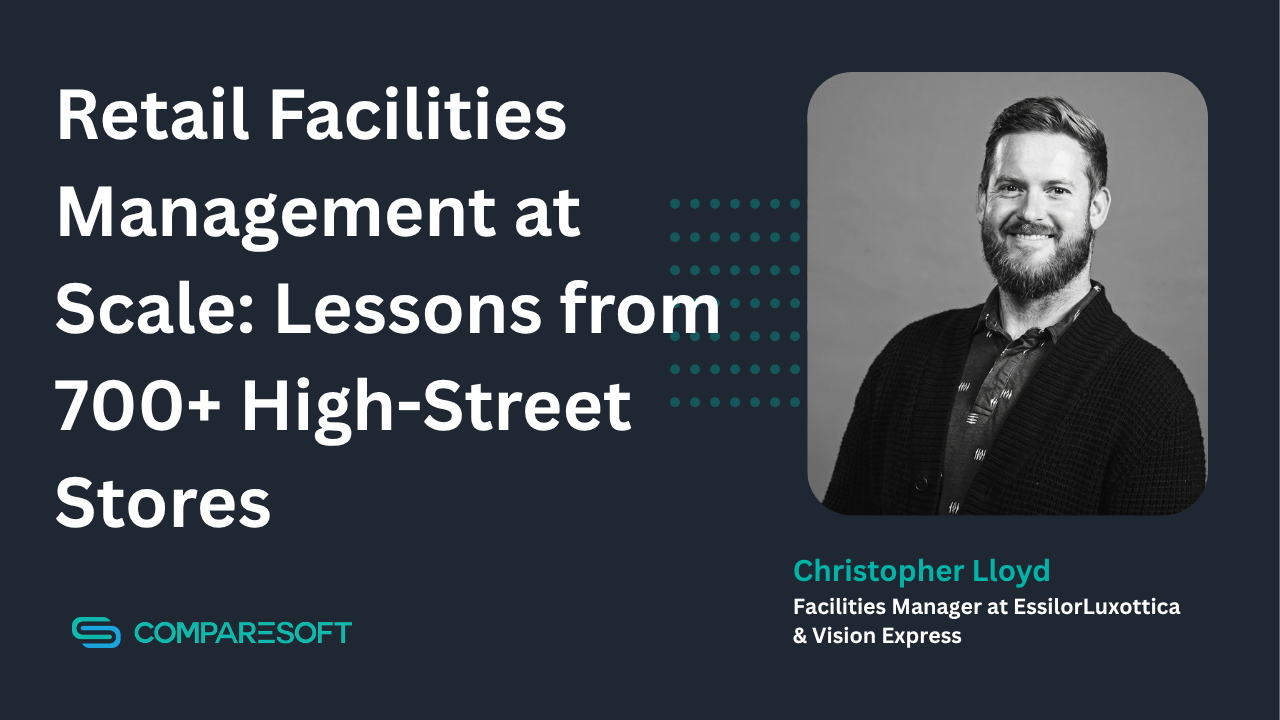
Retail Facilities Management at Scale: Lessons from 700+ High-Street Stores
Christopher Lloyd, Facilities Manager at EssilorLuxottica UK, explains what it actually takes to maintain over 700 high-street retail stores, covering brands including Ray-Ban, Oakley, Sunglass Hut, and Vision Express.
Listen and Watch the Podcast →
How to Become a Facilities Manager: The Skills, Qualifications & Digital Tools You Actually Need
Having started his career driving forklifts & working as a street warden, Daniel Hughes, Facilities Manager at a JLL 61-unit industrial estate, shares what the transition into facilities management really looks like, and how a people-first approach to tenants & contractors shapes how he runs his site.
Listen and Watch the Podcast →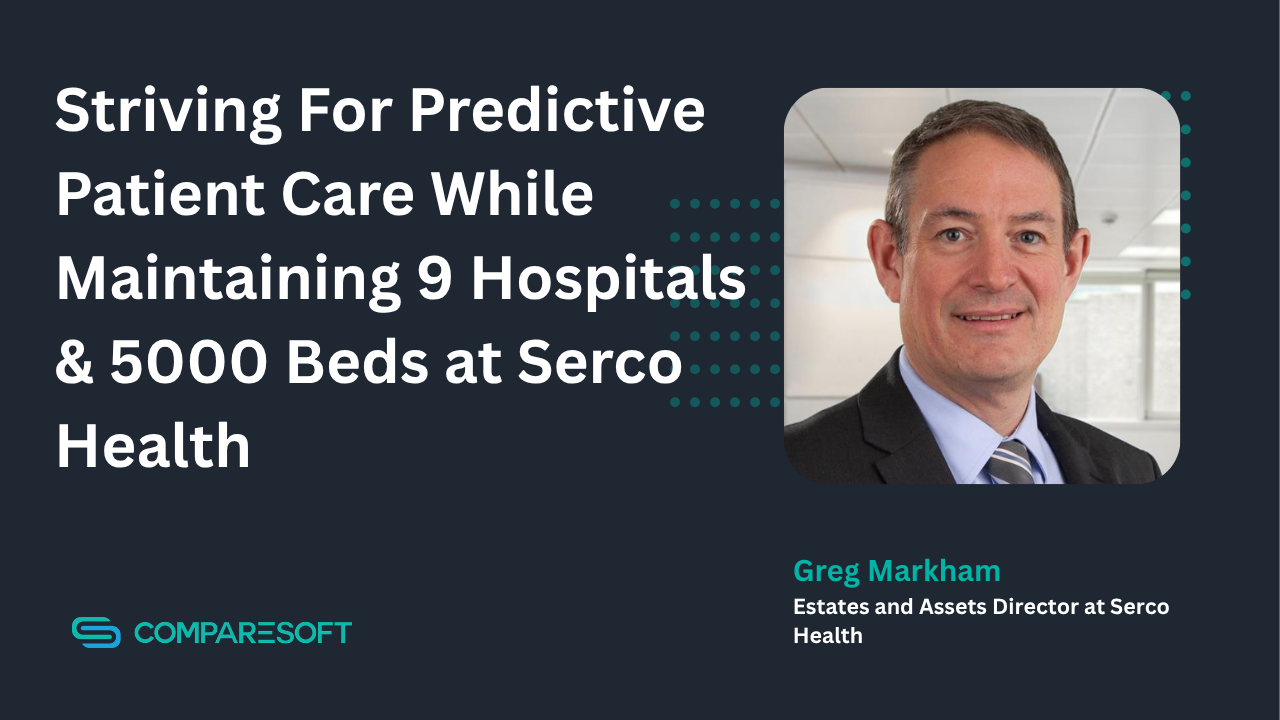
Striving For Predictive Patient Care While Maintaining 9 Hospitals & 5000 Beds at Serco Health
Greg Markham, Estates & Assets Director at Serco Health, explains how the reality of working on the frontline can open your eyes to appreciating the work of FM teams and how predictive technology is being readied to improve patient care in healthcare facilities.
Listen and Watch the Podcast →Find the Right CAFM Software for Your Retail Operation
Whether you're triaging urgent repairs across hundreds of stores or tracking contractor performance site by site, the right CAFM software should give you visibility without the chasing. Compare tools built for retail facilities teams in just 40 seconds.