
How to Become a Facilities Manager: The Skills, Qualifications & Digital Tools You Actually Need
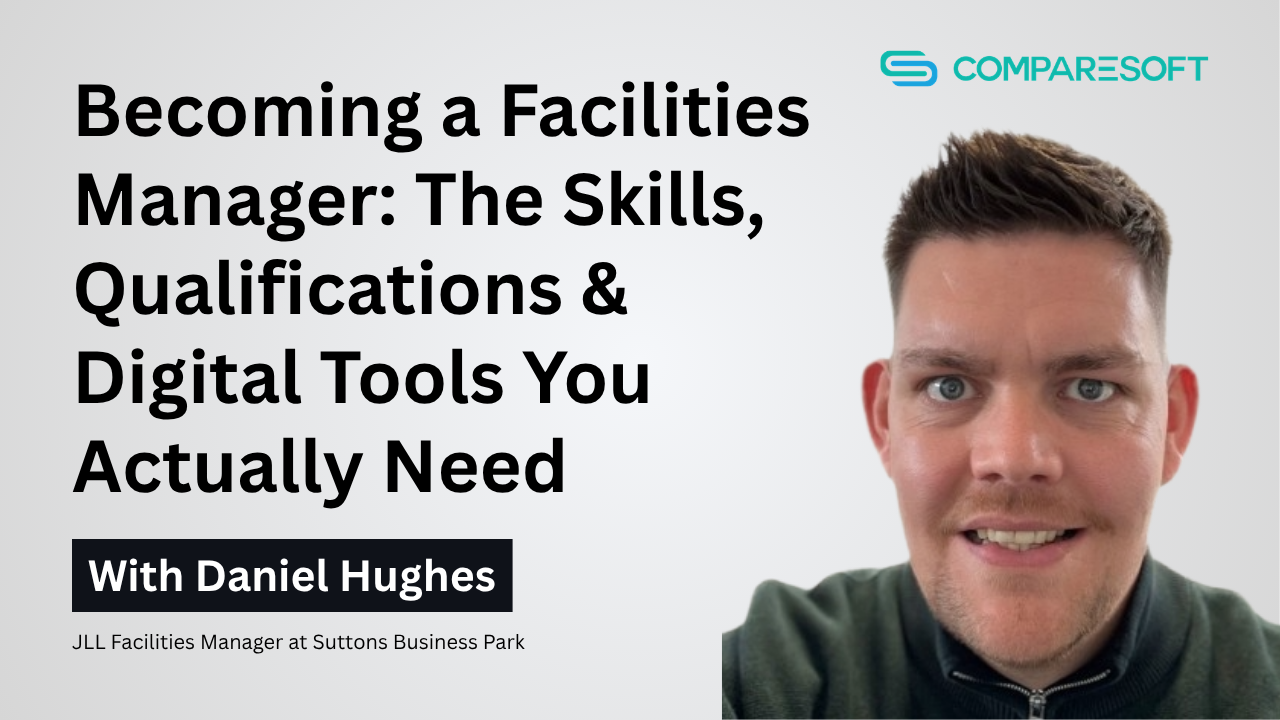
Having started his career driving forklifts & working as a street warden, Daniel Hughes, Facilities Manager at a JLL 61-unit industrial estate, shares what the transition into facilities management really looks like, and how a people-first approach to tenants & contractors shapes how he runs his site.
In this episode
- Becoming a Facilities Manager from a Non-Traditional Background
- What Qualifications Do You Need to Become a Facilities Manager?
- The Learning Curve: What Surprises New Facilities Managers
- Managing Teams and Contractors for the First Time
- How to Prioritise Tasks as a New Facilities Manager
- How to Communicate with Tenants Effectively as a Facilities Manager
- What Facilities Management Tools to Use for Managing Work Requests and Contractors
- What Key Metrics Should a New Facilities Manager Track?
- The Key Skills Required to Succeed as a Facilities Manager
- Full Transcript
Becoming a Facilities Manager from a Non-Traditional Background
There is no single route into facilities management. Industry guides often point to undergraduate degrees or IWFM diplomas, but many of the most capable FMs working today followed a very different path.
In this episode of the Comparesoft Facilities Management Podcast, Daniel Hughes, Facilities Manager at a 61-unit industrial estate, shares how he became an FM after starting his career driving forklifts, working as a street warden, and managing security operations. His route was practical, not academic — built on mentorship, an IOSH qualification, and a willingness to take on more than his job description required.
For anyone considering a move into FM, Daniel’s experience offers a grounded, realistic picture of the qualifications that matter, the learning curve to expect, and the day-to-day realities of managing a site, a team of contractors, and the expectations of tenants.
What Qualifications Do You Need to Become a Facilities Manager?
Daniel left school without formal grades. He has ADHD and dyslexia, and his school education, by his own account, was not strong. But he is clear that this did not prevent him from building a career in facilities management.
His first formal qualification was an IOSH (Institution of Occupational Safety and Health) certificate, which he describes as giving him the safety foundations that are non-negotiable in FM. A building manager named Richard mentored him and helped fund the course, which proved to be the stepping stone from security into an assistant building manager role.
Daniel’s view on formal qualifications is balanced: they validate what you learn practically, but they should not be a barrier to entry. Some of the best FMs he knows started in reception, security, and maintenance. A degree might teach you theory about an HVAC system, but hands-on experience teaches you why a particular unit always overheats on a Wednesday.
The Learning Curve: What Surprises New Facilities Managers
The biggest surprise Daniel faced when moving from security into FM was the sheer scope of responsibility. Security has clear protocols: an incident occurs, you respond according to procedure. FM requires juggling maintenance schedules, budget issues, and compliance deadlines simultaneously. Where security is reactive, FM demands proactive thinking — sometimes six months ahead.
Daniel also expected FM to be primarily technical: fixing the heating, managing contractors, and maintaining compliance. What he quickly discovered was that around 70% of the job is communication and relationship management. Learning to translate technical issues into business impact language and managing expectations from tenants, proved to be the steepest part of the learning curve.
His early experience in an assistant FM role helped. It gave him a direct line to tenants that a more senior FM might not have had, and he used it to build the face-to-face relationships that now underpin how he manages the entire site. The lesson for new FMs is clear: the technical skills matter, but the ability to communicate effectively across different stakeholders is what separates a competent FM from a good one.
Managing Teams and Contractors for the First Time
Daniel works with outsourced contractors rather than an in-house maintenance team, which is common across industrial estates and commercial properties. His approach to managing these relationships is built on a simple philosophy: treat contractors as partners, not vendors.
In practice, this means choosing language like ‘help me understand what happened’ over ‘why did you mess that up?’ By listening first, Daniel removes barriers rather than demanding results. He believes this builds loyalty, and it shows in how his contractors respond: in one example, an M&E contractor offered to pop in on their way past the site to help diagnose a leak in a void unit, cutting out days of formal process.
When evaluating contractors, Daniel puts attitude and communication ahead of technical skill. A contractor with excellent technical ability but poor people skills can damage tenant relationships, creating more problems for the FM to resolve. For new FMs choosing between suppliers, he advises that price matters but is rarely the deciding factor. References from FMs managing similar property types are critical, and cultural fit matters enormously: are they solutions-focused, or do they hide behind contract clauses?
Daniel also stresses the importance of helping contractors understand why they do what they do. His current security guard, for example, was initially reporting information without understanding the purpose behind it. By explaining the protocols and their reasoning, Daniel has made the guard more effective and more invested in the site’s operations.
How to Prioritise Tasks as a New Facilities Manager
The core functions of a facilities manager are typically split into four pillars: maintenance, project management, safety, and space planning. Daniel explains that maintenance coordination takes up roughly 40% of his time, with tenant relationship management — which cuts across all four pillars — accounting for another 30%.
Critically, Daniel does not treat these pillars as separate disciplines. Good maintenance prevents safety issues. Strong tenant relationships make space planning easier. When he does a maintenance round, he is simultaneously building relationships with tenants. The key for new FMs is recognising how these areas connect rather than trying to manage them in isolation.
A clear example of this interconnection is Daniel’s approach to grounds maintenance and landscaping. On his industrial estate, landscaping commands a larger share of the annual budget than many would expect. Proper grounds maintenance means clear sight lines for vehicle movements (safety), drainage systems that prevent loading bays from flooding (maintenance), vegetation control that protects building fabric (project management), and an estate frontage that attracts new tenants looking for lease space (space planning). One area of focus feeds directly into all four pillars.
Daniel’s estate has also transitioned an area into a wildflower meadow, which requires cutting only twice a year instead of weekly. This reduces the carbon footprint for maintenance operations while supporting pollinators and improving tenant wellbeing — a practical example of how a new FM can deliver results across multiple priorities with a single initiative.
How to Communicate with Tenants Effectively as a Facilities Manager
Daniel has a strict preference for phone calls and face-to-face conversations over email. A five-minute conversation, he explains, resolves what a ten-minute email chain would. It also allows him to ask follow-up questions, understand the real urgency behind a request, and provide solutions on the spot.
He shares a clear example of why this matters: a tenant emailed about needing more parking. Rather than replying by email, Daniel walked over and had a conversation. During that chat, he showed the tenant a larger vacant unit on the estate with more parking and a yard. Within two weeks, the tenant had committed to moving into the bigger building — a result that would never have come from an email saying there was no spare parking available.
Beyond day-to-day conversations, Daniel writes a regular newsletter for his tenants. He describes it as relationship insurance: when tenants understand what is happening on site and why, they are far more patient with disruptions and less likely to assume that problems are down to poor management. The newsletter also creates feedback loops — tenants respond with suggestions and concerns that might otherwise go unreported.
The key, Daniel stresses, is making the newsletter useful rather than corporate. Practical information, seasonal reminders, and emergency contact changes keep tenants engaged. It also makes the FM’s work visible — tenants often do not realise the day-to-day effort that goes into running a site, and proactive communication helps bridge that gap.
What Facilities Management Tools to Use for Managing Work Requests and Contractors
Daniel relies on e-logbooks (now rebranded as Banify) and Excel spreadsheets to manage his day-to-day operations. His non-negotiable requirement for any FM tool is mobile access. He is rarely at his desk — he is walking the site, meeting contractors in loading areas, inspecting roofs, and checking drainage. If a system requires him to go back to his office to update or check information, it is already broken for his way of working.
His second priority is immediate visibility of what needs attention. When he opens a system in the morning, he should immediately see what is overdue, what is escalating, and what needs his attention that day. He should not have to click through multiple screens or scroll through spreadsheets to figure out what is urgent.
For reactive maintenance, Daniel’s workflow follows a clear path using the Vantify system: identify and photograph the issue on his mobile, log it in the app, receive confirmation that the job has been routed to a contractor, receive an attendance date, and then receive a completion notification. For an FM on a single site, this works well, but for anyone managing multiple buildings, the completion notification becomes critical for keeping track of open jobs.
The system breaks down when tenant-submitted requests lack clarity. Daniel gives the example of a tenant logging ‘toilet handle broken’ — which could mean the flush handle or the door handle. Encouraging tenants to upload photos when logging issues saves time and ensures the right contractor is dispatched first time.
If budget were no constraint, Daniel’s priority would be real-time communication between everyone involved — tenants, contractors, and management — in a single transparent chain delivered in a Facilities Management Software package. Currently, updates flow through him as an intermediary. He wants a system where a tenant submits a request with photos, the system automatically captures location data, and the request routes to the right contractor with all site access details and asset information, without the FM acting as a manual relay.
What Key Metrics Should a New Facilities Manager Track?
While Daniel does not work from a formal KPI dashboard, the metrics he tracks day to day reflect what matters most in FM operations. Based on what he describes in this episode, the key performance indicators a new FM should focus on include:
- Contractor response times and attendance dates: Daniel tracks these through his Vantify system notifications, monitoring how quickly jobs are acknowledged and attended after being logged.
- Job completion rates: Receiving completion notifications is critical for knowing that a job is genuinely finished and the FM can move on. For multi-site FMs, this becomes essential.
- First-time fix rates: Daniel highlights the cost of unclear work requests (such as ‘toilet handle broken’) leading to the wrong contractor or the wrong repair. Tracking how often jobs are resolved on the first visit reveals gaps in request quality or contractor capability.
- Tenant satisfaction and feedback: Daniel’s newsletter creates a feedback loop where tenants share concerns and suggestions. Tracking tenant complaints and positive feedback over time provides a direct measure of site management quality.
- Grounds and landscaping condition: As the first thing visitors see when arriving on site, the state of landscaping directly influences tenant retention and new lease enquiries. Daniel monitors this through regular site walks rather than formal scoring.
- Budget allocation and spend against contingency: Daniel keeps a dedicated contingency budget for tree care and safety-related landscaping issues like root heave. Tracking actual spend against these contingencies helps a new FM anticipate recurring costs.
For a new FM, the important thing is not to over-engineer a reporting framework, but to track the indicators that directly affect tenant satisfaction, contractor performance, and site safety — and to use the tools available to surface overdue or escalating items before they become bigger problems.
The Key Skills Required to Succeed as a Facilities Manager
Daniel is clear that the most critical skill for a new FM is one that is rarely talked about: calm decisiveness under pressure. Emergencies happen consistently in FM — contractors not showing up, budget surprises, unexpected leaks. People look to the FM for direction, and the ability to quickly assess a situation, make sound decisions even without complete information, and communicate with confidence is what separates an effective FM from one who gets overwhelmed.
Communication runs through everything Daniel describes. Whether it is resolving a tenant’s parking complaint in a five-minute face-to-face conversation, translating a technical maintenance issue into language a tenant can understand, or choosing the right tone with a contractor to remove barriers rather than create friction — the ability to communicate well across different audiences is fundamental to the role.
Proactive ownership is another quality Daniel emphasises. For anyone wanting to move into FM from a support role, the first step is to stop waiting for someone to tell you about problems. If you are in security and you notice a lighting failure in the car park that has been broken for a week, do not just log it — follow it up, understand the process, and get it resolved. If you are in reception and tenants keep asking the same confusing question, research how the system actually works and propose clearer communication to management. Document everything you learn.
Finally, relationship-building underpins Daniel’s entire approach. The loyalty he has built with contractors means they go above and beyond when urgent issues arise. The trust he has established with tenants means difficult conversations about disruption or delays are easier to navigate. For a new FM, investing time in these relationships from day one pays dividends across every aspect of the role.
Full Transcript
Ryan (00:00): Daniel, it’s great to have you on the podcast. How are you?
Daniel Hughes (00:03): I’m good. Thanks for having me on. It’s a bit of a surprise, but no, I’m really looking forward to it.
Ryan (00:10): Awesome, you mentioned there it’s a bit of a surprise. So I’m going to get straight into it. When people think of becoming a facilities manager, they might not picture your background, Daniel. Can you walk us through that transition from driving forklifts and being a street warden to then managing a 61-unit industrial estate?
Daniel Hughes (00:27): Starting off through school really, I left with no grades. I have ADHD and dyslexia, which I’m diagnosed with. So my school education wasn’t the best. I think when I left, my parents thought, my god, what’s he going to do?
Daniel Hughes (00:50): But I think my journey into facilities management wasn’t a plan, but looking back, I think every role built the foundation I needed really. Driving forklifts taught me about operational safety and equipment maintenance. As a street warden, I learned how to deal with difficult conversations and assessing risk quickly. I was also lucky to be helped along the way by people in the industry as well. There were some lucky times for me to get into the position that I’m in, but I like to think that I earned it.
Ryan (01:45): Yeah, that’s a great angle to take. People who are getting into this role now, they’ll often think, well, I need an undergraduate degree or an IWFM diploma. You took a very practical route. You started with an IOSH course. Do you think that hands-on experience and mentorship can outweigh formal degrees in some form?
Daniel Hughes (01:56): I think formal qualifications validate what you learn practically. There shouldn’t be barriers to entry into the industry. Some of the best FMs I know started in reception, security, maintenance. A degree might teach you theory about an HVAC system, but hands-on experience teaches you why that particular unit always overheats on a Wednesday sort of thing.
Daniel Hughes (02:30): FM is fundamentally a practical discipline. You can’t learn tenant psychology from a textbook or understand how buildings actually behave without walking through them daily, really.
Ryan (03:01): Yeah, so it’s important to have that balance, but to be hands-on and to walk around and see what is actually going on. That’s really important.
Daniel Hughes (03:10): Yeah, I think my IOSH course gave me the safety foundations, which is non-negotiable really. But the real education comes from shadowing experienced FMs and making mistakes in a supportive way.
Ryan (03:26): I love that — making mistakes. That’s how we all learn.
Daniel Hughes (03:30): I have made plenty of mistakes and I like to think — this is not just in work life, my wife has probably told me in personal life as well. But I like to think that I learned from it in some way. Mistakes are key. Everybody makes mistakes.
Ryan (03:45): Coming directly from a security background, what were the biggest surprises or challenges you faced when first stepping into an assistant building manager role?
Daniel Hughes (03:59): I think the biggest surprise was the scope of responsibility. Security has clear protocols. An incident occurs, you respond according to procedure. FM requires juggling maintenance schedules, budget issues, compliance deadlines. Security is very reactive, while FM needs to be proactive. Learning to think ahead, sometimes by six months.
Daniel Hughes (04:30): I also thought FM was primarily technical — fixing the heating, managing the contractors, maintaining compliance. But I quickly learned that I’d say 70% of the job is communication and relationship management. Learning to translate technical issues into business impact language and managing expectations from the tenants.
Ryan (05:00): You find it’s 70% communication. You only really find that out once you’re in the role, once you’re hands-on. That’s nothing education is going to teach you about.
Daniel Hughes (05:12): Yeah, it’s not. I was lucky to have an assistant FM role, which gave me a direct line to tenants that probably an FM wouldn’t take. And I used to be the face-to-face person that they used to go to. It quickly gave me the opportunity to build relationships and they help in situations, especially when things aren’t going right.
Ryan (05:49): So the core functions of a facility manager are often split into maintenance, project management, safety and space planning. Which of those four key pillars takes up most of your day, Daniel?
Daniel Hughes (05:57): Maintenance coordination probably takes up about 40% of my time. But here’s the thing — I don’t see the pillars as separate. I think good maintenance prevents safety issues, and strong tenant relationships make space planning easier.
Daniel Hughes (06:20): Tenant relationship management, which cuts across probably all four pillars, probably takes up another 30%. I think the key is recognising how these areas connect with each other. When I’m doing a maintenance round, I’m building up relationships with the tenants.
Ryan (06:50): What would you say is your most important role in that aspect then, that touches on all those pillars?
Daniel Hughes (06:59): I think tenant relationships are really key. It can help when stuff like maintenance coordination doesn’t go to plan. And you have to speak to the tenant — usually if you’ve got a good relationship with them, it’s easier to have that conversation.
Ryan (07:25): If we go a bit more into your role and your management style, you have a strict preference for phone calls and face-to-face chats over sending emails. How has that communication style improved your relationship with tenants?
Daniel Hughes (07:37): Phone calls and face-to-face conversations build trust faster because people engage with you. When a tenant calls about something, a five-minute conversation resolves what a ten-minute email chain would, and you can ask follow-up questions as well, which is important. You immediately understand the real urgency behind the request and can provide solutions on the spot.
Ryan (08:26): Is there an example where that communication prevented an issue from escalating with a tenant?
Daniel Hughes (08:33): There’s been a lot of times it’s prevented issues. To give you an example — this is why I love communication — I had not long ago an email from a tenant to say they had an issue with parking on site. They needed more parking spaces. How can you help? So I went around and had a chat with them directly.
Daniel Hughes (09:01): I said, you do realise we’ve got a building that’s double the size of yours, with a lot more parking and a big yard that you can use. Have you looked into that? Did you want me to show you around? I grabbed the keys, took them on a tour. He went, oh, I’ll speak to my bosses about this. In two weeks’ time, they’re moving into that building.
Daniel Hughes (09:30): Which just shows you — having that community, that face-to-face interaction. They probably wouldn’t have been moving into a bigger unit with more parking if I had just sent an email back saying, we haven’t got parking, I can’t help you.
Ryan (09:54): Yeah, that face-to-face interaction moved it within two weeks. That’s incredible.
Daniel Hughes (09:58): Yeah, they’re moving in in two weeks and it works. We’ve got letting agents that deal with that on site. But when you can say, look, you’ve showed them around already, they want to discuss it straight away, it saves them time. They have a good relationship with you. And also you keep a tenant on the site in a bigger building. Wins all around really.
Ryan (10:34): Something you do, Daniel, that I find really interesting is you write a regular newsletter for your tenants to keep everyone in the loop. How vital is that proactive communication to prevent complaints from snowballing?
Daniel Hughes (10:43): It’s relationship insurance really. When a tenant understands what’s happening and why, they’re far more patient with disruptions and less likely to assume problems are down to poor management. It also creates feedback loops. Tenants respond with suggestions and concerns they’ve got on site.
Daniel Hughes (11:10): I think the key is making it useful and not just corporate stuff. Try and get people to read it and they get some insight into it. Practical information, seasonal reminders, emergency contact changes. Prevention is always cheaper and less stressful than damage control.
Ryan (11:51): Do you get much feedback from tenants on that newsletter?
Daniel Hughes (11:54): Yeah. When I have my rounds, they’ll say thanks for the newsletter. I think it’s good for people to be updated about the site because they don’t understand the day-to-day running of the site. They probably think I just sit in my office with a nice cup of coffee, doing nothing all day. They don’t realise what I have to do day to day, especially the maintenance around the site. So it’s good from my point of view to put it on paper so they can see that I am trying to manage the site the best I can.
Ryan (12:30): There’s always that saying — you only notice the maintenance guy if something’s going wrong. If everything’s absolutely right, they don’t notice you.
Daniel Hughes (12:37): Yeah, that is 100% correct.
Ryan (12:44): As an FM, it’s not just your tenants you’re keeping happy, you’re also managing suppliers. You’re making sure these suppliers are meeting their SLAs, their KPIs. Your philosophy is that if you speak to someone in the right way, you’re going to get the right reply back. How does that help you manage contractor performance without micromanaging?
Daniel Hughes (13:10): With most contractors, they want to do good work. They just need clear expectations and the right support. My approach is treating them as partners rather than vendors on site. It’s like saying, help me understand what happened, rather than, why did you mess that up? My big thing about communication is how you interact with them.
Daniel Hughes (13:40): By listening first, I can help remove barriers rather than demanding results. I believe it just builds loyalty. It often leads to contractors going above and beyond in certain situations, and it has — when urgent situations arise.
Ryan (14:02): And that obviously makes them feel like an integrated part of the team.
Daniel Hughes (14:07): Yeah, we’ve had many issues, especially on void units. We had a problem with a leak and I didn’t know whether it was coming from the gutter. I phoned up our M&E people and they said, I’m passing there tomorrow, if you want me to pop in. It just cuts it all out. I can get straight to it, they can give me their expertise, I can log the job, get someone out who’s going to fix it there and then. And you only get that by the relationship you have with the contractors.
Ryan (14:46): When it comes to evaluating contractors, what does good look like from your point of view? Is it response times, communications, first-time fix, or something completely different?
Daniel Hughes (14:57): Attitude and communication really come first. A contractor with excellent technical skills but poor people skills can damage tenant relationships. I’ve seen it firsthand. It creates a lot more issues for me to solve. I need contractors that can work professionally around operating businesses, explain what they’re doing clearly, and handle tenant interaction.
Ryan (15:29): So if a new FM is choosing between two suppliers, would you say communication is the biggest signal that matters more than just the quote?
Daniel Hughes (15:41): Yeah, 100%. I’ll be honest with you, price matters as well. But it’s rarely the deciding factor anymore. References are critical. I want to speak to FMs managing similar properties, other industrial estates. Someone who’s brilliant in a managed office building might be completely out of their depth with our loading bays, heavy goods vehicle movements.
Daniel Hughes (16:10): Cultural fit matters enormously as well. How they treat the tenants when they’re on site. Are they solutions-focused, or do they hide behind contract clauses? It all builds itself together really.
Ryan (16:38): One thing that really stood out to me, Daniel, is you stated that landscaping is arguably a higher priority for you than security on site. Why do you believe grounds maintenance is so crucial for your industrial estate, and how does that tie into the estate’s broader sustainability and environmental goals?
Daniel Hughes (16:58): It does surprise a lot of people when I say that, but hear me out. Grounds maintenance is the first thing every person sees when they arrive on site — tenants, their clients, delivery drivers, potential new businesses looking for lease space. Neglected landscaping doesn’t just look unprofessional, it sends the message that the management don’t care about details, I believe.
Daniel Hughes (17:28): When you walk up to a house, you don’t particularly look for a ring doorbell. You have a look at what the front looks like, what the garden looks like. That’s the first thing you see, you make a judgement. We all make very quick judgements in life, whether we’re meeting new people or looking at something. What I say about the landscaping is that the front of the estate where you come in has to look immaculate because it gives people coming onto the site an expectation.
Daniel Hughes (18:00): Proper grounds maintenance means clear sight lines for vehicle movements, which directly impacts safety. Drainage systems that work properly, preventing loading bay areas from flooding due to heavy rain. Controlling vegetation that could damage building fabric.
Daniel Hughes (18:20): We’ve got an area where we transitioned into wildflower meadow. They look great. They need cutting probably twice a year instead of weekly, which reduces our carbon footprint for maintenance operations. And they’re brilliant for pollinators as well.
Ryan (18:49): That’s a big part of tenant health and wellbeing as well. They’re coming on site and seeing these wildflower meadows. It gives a good feeling as they’re going into the building.
Daniel Hughes (19:02): Yeah, little bits and pieces around the site as well, like sitting areas in the summer. On the estate in summer, it’s absolutely lovely. We’ve got some tenants on site who have people working for them that sit down for long periods of time. So when they have their break, they’re walking around the industrial estate, and little things like benches to sit down and have their break. The landscaping is a massive part. I’m really lucky to be fair because I’ve got two landscapers on site who are really, really good. They’re proactive. I don’t need to get involved much.
Ryan (19:54): As you’re prioritising grounds maintenance and landscaping, does it take a fair chunk of your yearly budget, or would it be behind maintenance in that budget?
Daniel Hughes (20:05): No, landscaping — we have more in the budget for landscaping, especially the trees around the estate. I have to have quite a large chunk just in case anything happens with a tree. We’ve had a lot of what they call root heaves on site where the root comes up through the tarmac. These trees don’t stop. It’s having that budget there because there’s a safety element to it.
Ryan (20:42): Again, that ties into the four pillars that we mentioned earlier. One thing always leads to another.
Daniel Hughes (20:46): Yes, that’s right.
Ryan (20:51): Daniel, I’m really intrigued to know how you use certain tools to manage your day-to-day facilities management operations. You’ve got a lot to think about in your role. You mentioned you use e-logbooks, Excel spreadsheets. With any tool, what specific functionalities are absolute must-haves to help manage your workload?
Daniel Hughes (21:05): Mobile access. I can’t stress this enough. I’m never at my desk, which I stated earlier. I’m walking around the site, meeting contractors in loading areas, inspecting roofs, checking drainage. If I have to go back to my office to update a system or check information, the system is already broken for my way of working.
Daniel Hughes (21:42): I need to see priorities immediately. When I open a system in the morning, I should immediately see what’s overdue, what’s escalating, what needs my attention today. I shouldn’t have to click through screens and scroll through spreadsheets to figure out what’s urgent.
Ryan (21:59): And do you also use these tools to manage your contractors as well, your suppliers?
Daniel Hughes (22:06): Yeah, so I keep calling it e-logbooks, but I believe they’ve changed their name to Banify now. It’s a really good system where you speak to the contractors on a log. You’ve got a log of everything. You can update pictures. And you can get real-time insight into situations and dates and times when you log these items.
Ryan (22:39): If you could walk me through your workflow from issue raised to work completed to tenant updated, where do these tools help, and where do they fall down?
Daniel Hughes (22:52): Let’s say for example we’ve got a damaged fence on site. I will take some pictures of it. I will go on to the Vantify system with a mobile phone app. I would update it. It would then go to the people that work in Vantify. They will have their own contractors, or the company I work for has contractors as well for priority issues. It will get loaded straight away.
Daniel Hughes (23:20): I will get a message to say this has been passed on to this company with the company name. I will then hopefully over the next day or so, depending on how urgent it is, get a message to say we will be attending on this date at this time. And then when it’s been done, you get a completion notification. I’m quite lucky that I’m on one site pretty much all day every day. But if I was managing various different buildings or industrial estates, it’s critical that you know that job’s complete and can move on to the next job.
Ryan (24:24): So there’s nowhere that system falls down at all? It’s all quite perfectly laid out for you?
Daniel Hughes (24:31): To be fair, there’s always areas where it can. On site at the moment, we don’t have tenants that upload maintenance problems or anything. The building I worked in before, they did. When tenants upload issues, they see it from a different angle. So they might say, for example, what I’ve had before is ‘toilet handle broken.’ So I go, oh, the handle on the toilet is broken. No — the door handle of the toilet is broken.
Daniel Hughes (25:10): It’s little bits like that, but this is tenant management as well. You can go to them, they don’t know. You can just say, look, just be able to upload a picture. It saves time, I can get the right people to the job and it can be sorted.
Ryan (25:33): Yeah, it saves that additional step of following up and checking. You’ve probably wasted a day or two just in that roundabout way.
Daniel Hughes (25:38): 100%. It helps. It’s a great system when used correctly, and I think there’s a lot of systems out there that are the same.
Ryan (25:51): If you were to upgrade your tech stack, the tools you use, and budget wasn’t an issue, what’s the single biggest operational gap you’d want that system to solve?
Daniel Hughes (26:05): I think real-time communication between everyone involved — tenants, contractors, management. A tenant submits a request or reports on the phone, including photos. The system automatically captures the location data. The request routes to the right contractor with all the site access details and asset information. It would help my job immensely.
Daniel Hughes (26:40): I don’t know if there are other systems out there — I haven’t worked with any other systems — but maybe it’s the transparency between everybody involved, rather than it going to me and then me going to the tenant to say it’s been completed. The link between all people involved needs to be really clear.
Ryan (27:16): You want that automated chain of communication just flowing through each time.
Daniel Hughes (27:21): Yeah, definitely. It’s so important.
Ryan (27:26): Daniel, we like to save the last few questions here for sharing your insights and advice for fellow FM listeners. If someone is in security, reception or maintenance today and wants to move into FM within 12 months, what first step would you recommend they take?
Daniel Hughes (27:46): I think the first step, and I’ll say this to everybody who asks, is to demonstrate proactive ownership beyond your current role’s boundaries. Stop waiting for someone to tell you about problems. Start identifying and resolving issues before they escalate or before anyone even asks.
Daniel Hughes (28:10): If you’re in security — and what I used to do — if you notice a lighting failure in the car park that’s been broken for a week, don’t just log it in your handover notes. Follow it up, find out what’s taken so long, understand the process, get it resolved.
Daniel Hughes (28:30): If you’re in reception and the tenants keep asking confusing questions about the car park allocation system, don’t just answer the same question 50 times. Research how the system actually works, identify why it’s confusing, propose clearer communication and processes to management. And document everything you learn. That’s a key one that helped me a lot.
Daniel Hughes (29:00): I’ve been in that position, and security sometimes — like my security guard on the estate at the moment — there’s a lot of time that he’s not doing anything. There’s a lot of stuff I’ve been trying since I got there to make him understand about protocol and reasons why he does the job that he’s doing. Why he tells me contractors are on site working in a specific area. Why they need work documents. I think it helps their job as well. They have a good understanding rather than reporting stuff that they don’t really know why they’re reporting it.
Ryan (29:45): So the gist there is to take that extra step and to understand the processes and you’ll gain further knowledge.
Daniel Hughes (29:51): Yeah, understand, yeah.
Ryan (29:55): And finally, Daniel, what are the most important soft skills and leadership qualities a new facility manager needs to develop if they want to operate at this level?
Daniel Hughes (30:06): I think the most critical one, that’s not really talked about enough, is calm decisiveness under pressure. Emergencies happen consistently in an FM role — contractors don’t show, budget surprises, wall leaks. People are looking at you to know what to do. Sometimes I don’t.
Daniel Hughes (30:30): But I think the ability to quickly assess the situation, make sound decisions even when you don’t have the complete information, and communicate with confidence — tenants get a lot from that. If you’re confident about an emergency happening, they feel less stressed about it.
Ryan (31:06): Daniel, you’ve been a fantastic guest. You’ve given a really honest account of what it takes to break into facilities management, especially from that non-traditional background. I find that really fascinating. And the practical advice you’ve shared, particularly on communication, contractor relationships, and the tools you use — it’s going to be valuable to anyone considering that move into being a facilities manager. So thank you so much for joining us, Daniel.
Daniel Hughes (31:11): I hope so. No problem. Thanks for having me.
Ryan (31:34): And thank you all for listening. We’ll see you on the next episode. Bye, Daniel.
Daniel Hughes (31:39): Bye.
What Type of Facilities Do You Manage?
Meet the Speakers

Daniel Hughes
JLL Facilities Manager at Suttons Business Park
Facilities Manager at a 61-unit industrial estate, responsible for maintenance coordination, contractor management, tenant relationships, and grounds upkeep.

Ryan Condon
Head of Content
Content architect and strategist at Comparesoft, helping software buyers make confident decisions through purposeful, well-structured content. Podcast Host and Head of Content since joining the team in 2019.

Latest Facilities Management Podcast Episodes
Striving For Predictive Patient Care While Maintaining 9 Hospitals & 5000 Beds at Serco Health
Greg Markham, Estates & Assets Director at Serco Health, explains how the reality of working on the frontline can open your eyes to appreciating the work of FM teams and how predictive technology is being readied to improve patient care in healthcare facilities.
Listen and Watch the Podcast →
Managing the Upkeep of Teaching Environments & Boarding Accommodation On a 40-Acre Site
Tim Peacock, the Director of Estates and Facilities at Sherborne Girls School, explains how working with the pathology and history of older buildings is key to managing and maintaining the upkeep of a 40-acre site with both educational buildings and boarding accommodation.
Listen and Watch the Podcast →
10 Years in Hospitality FM From Grade I Listed Hotels to Richard Branson's Moskito Island
Charlie Wilson, the Head of Property and Estates at Gaucho and M Restaurants, talks us through the post-pandemic challenges in the hospitality industry, the risks associated with FM in Grade I listed buildings, and why you should never ignore your LinkedIn messages.
Listen and Watch the Podcast →Find the Right Facilities Management Software for Your Site
Whether you're managing work requests from a loading bay or tracking contractor performance across multiple buildings, the right FM software should work the way you do. Compare tools built for facilities managers in just 40 seconds.