
What FMs Need to Get Right First: Team, Tools & Knowledge
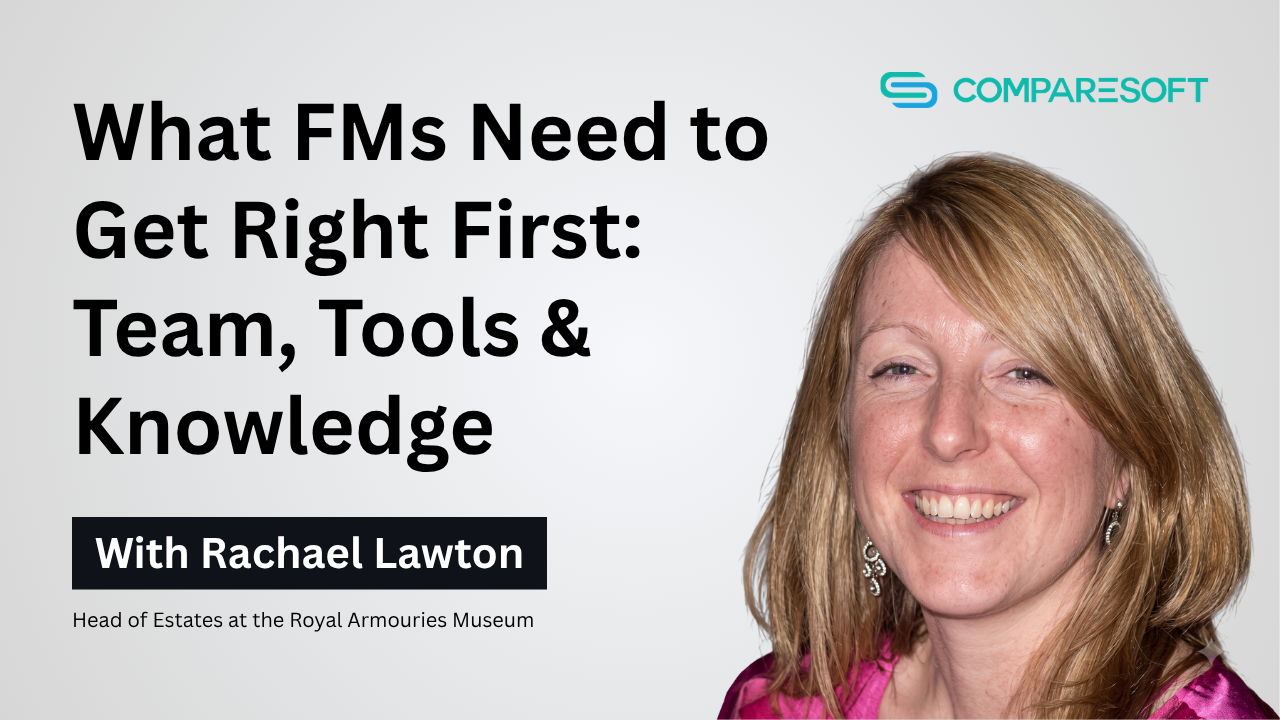
Rachael Lawton shares practical advice for new and entry-level facilities managers. Drawing on more than two decades in FM, Rachael explains why you do not need an expensive Computer-Aided Facilities Management (CAFM) system to run an estate well. She leads a team of 24 on SharePoint, spreadsheets and a ticketing tool.
In this episode
- Get Experience on the Ground, Then Add the Qualifications
- You Do Not Need a Complex Set-Up to Run an Estate Well
- Keep Your Team In-House Where You Can
- Communication Is the Heart of Facilities Management
- Only Track KPIs That Earn Their Place
- Be Clear About What You Want AI to Do
- Show the Value of FM, Then Make the Case for Budget
- Do You Actually Need CAFM Software Yet?
- Three Things Every New FM Should Get Right
- Building the Confidence to Step Up
- Rachael’s Advice to New FMs at a Glance
Rachael Lawton has spent more than two decades in facilities management (FM), working her way up from an accommodation assistant to running the estate of a national museum. Today she is Head of Estates at the Royal Armouries Museum, where she leads a team of 24 and keeps a 30-year-old building safe for roughly a million visitors a year.
What makes her advice useful for anyone starting out is how she does it. There is no expensive, fully fledged Computer-Aided Facilities Management (CAFM) system behind the operation. Rachael runs the estate on SharePoint, spreadsheets and a ticketing tool, and she is clear that new facilities managers do not need a complex set-up to succeed.
Here is her advice for entry-level FMs, drawn from a career across two very different sectors.
Get Experience on the Ground, Then Add the Qualifications
Rachael trained formally in FM, but only after several years of doing the job. She is wary of treating education as the starting point, which makes her route a useful counterpoint to the standard advice on the skills and qualifications you need to become a facilities manager.
“When you first start working in facilities, you’re a bit institutionalised by the organisation’s interpretation of facilities, and you go along with the norm a little bit,” she explains. The training changed that. “It certainly helped me look at things from a different perspective.”
Her order of priority is firm. “It is good to have the experience on the ground, and that is
essential, because you really need to know your organisation,” she says. “You really need to know the workings of the building. How does it work? What makes it tick? You need that to apply your training. Initially you do need some experience first, before you start your education.”
She also values training that is not strictly technical. “I’ve just been doing my ILM Level 3 in leadership and management,” she adds, referring to the Institute of Leadership and Management qualification. “It’s nothing really to do with facilities. It’s about you as a leader and a manager, and understanding the difference between the two.”
You Do Not Need a Complex Set-Up to Run an Estate Well
The Royal Armouries holds more than 8,000 objects, yet the FM operation behind it is deliberately simple.
“Not as sophisticated as it sounds, unfortunately,” Rachael says of her set-up. “We tend to be a little bit old school. We use SharePoint and Excel spreadsheets to produce trackers and action lists.”
That approach does more than log jobs. “It’s a way to have information shared with different departments, so everybody’s included,” she continues. “We use SharePoint for all our fire risk assessments, our water risk assessments, and all the actions on there.” Keeping the trackers up to date takes time, she admits, “but once it’s there, it’s very effective, and it works for the Royal Armouries.”
Her team of 24 splits into four direct reports covering maintenance, cleaning and security. The maintenance team is multi-skilled rather than specialist, so the technical hard and soft FM services go out to contractors. “We tend to outsource a lot of our planned preventive maintenance (PPM) servicing, particularly the specialist skills you need for chillers and air handling units,” she says.
In practice, that splits the work cleanly into two groups:
Kept in-house | Outsourced to contractors |
Multi-skilled maintenance team | Specialist planned preventive maintenance (PPM) |
Cleaning | Chiller servicing |
Security | Air handling unit servicing |
Keep Your Team In-House Where You Can
Rachael’s previous role at LGC, a science and laboratory services group, ran almost entirely on outsourced contracts. The museum is the opposite, and she prefers it that way.
“With LGC everything was outsourced, so we didn’t have the day-to-day management of staff,” she says. “You don’t necessarily get the same care and attention that you’d get from staff who are in-house, because they’re employed by the Royal Armouries.”
Managing in-house people takes a different kind of effort. “You’ve got to do the nurturing, the coaching, and support their self-development,” she explains. The payoff is engagement. “They get much more invested. They feel they’re being heard and supported, and they genuinely want to do a good job, because they get to see their work and think, I was part of that team.”
Communication Is the Heart of Facilities Management
If there is one skill Rachael returns to, it is communication, both sideways across departments and upwards to senior management.
A recent gallery redevelopment, which involved a significant amount of space planning, showed why. When the FM team explained how building plant affects the conditions objects are kept in, the relationship with conservation colleagues changed. “They really appreciate it, because they can make a note on their records that servicing was done or filters were changed,” she says. “It got them to understand that we are working with them, not against them.”
That principle extends to everyone in the building. “It’s a lot of customer service. You’re dealing with so many different people at different levels,” she says. Her rule for the team is to treat everyone the same: “Everybody is a very important person, no matter what their status.” Even turning up matters. “Just having a presence is sometimes enough for people to think, I need to remember to include facilities in my next conversation.”
Only Track KPIs That Earn Their Place
Rachael is honest that the museum does not yet run Key Performance Indicators (KPIs). The team logs tickets through a ticketing tool, and she can see the reporting potential, but she will not measure for the sake of it.
“I’m a firm believer that KPIs need to be useful,” she says. “Don’t just do KPIs for the sake of doing a KPI. What are you going to use that information for? It needs to be beneficial. It needs to drive whatever you’re trying to achieve.”
When KPIs do arrive, she wants them tied to decisions. “We need to agree what we want to do, and how we’re going to use those KPIs to drive future budgets and future project planning,” she explains. For a new FM, that is a useful filter: a metric only matters if it changes what you do next.
Be Clear About What You Want AI to Do
AI is a live topic in FM, and Rachael’s take is practical for anyone who feels behind on it. Her starting question is not which tool to buy, but what problem to solve.
“What is it that we want AI to do?” she asks. “Is it writing policies and procedures? You can put the information in, and it can save you hours of typing and checking. That’s a really good use, if the information is correct and relevant.”
She is also alert to the downside. “We could potentially get lazy if we do too much AI, that’s my personal opinion,” she says. “It’s about understanding what that technology out there can do.” The same logic applies to any system: “We just need to know what it is we want to streamline and make easier for ourselves.”
Show the Value of FM, Then Make the Case for Budget
FM is often seen as a cost rather than a contribution, and Rachael has worked hard to change that perception of the facilities manager’s role. She publicises her team’s wins, including a long-standing lighting fault in the museum’s Hall of Steel that her team finally fixed.
“People assume we just clean toilets and empty bins, and there is so much more in the facilities world,” she says. “We’ve worked really hard to change the face of the department and get people to understand we are a useful department, beneficial in making the organisation operate.”
That visibility matters when the budget conversation comes, because FM rarely brings money in. “We don’t make any revenue. We just spend it, which we’re very good at doing, so we have a lot of justification for why we need to spend that money,” she says.
Her argument links spend to risk. With the building turning 30 and the plant ageing, she recently oversaw a generator replacement. “If we don’t replace this plant, the museum might fail, and if we can’t open for the day, it turns into conversations about reputation,” she explains. Framing maintenance as a reputational and operational risk, not just a cost, is how she wins support from senior management.
Do You Actually Need CAFM Software Yet?
Plenty of FMs assume CAFM software will solve every problem. Rachael’s advice is to slow down and define what you actually need first.
“I’m not saying CAFM systems aren’t beneficial, because they certainly are,” she says. “It’s about finding the right one that’s appropriate for your organisation. But you don’t want to rush into something like this, because you really need to know the organisation. You really need to know what your assets are, and what information you currently have. Is it working? Is it okay for now? Can you build it up over time?”
Before you rush into a purchase, her questions are worth working through:
- What are your assets, and do you have a complete record of them?
- What information do you already hold, and where does it live?
- Is your current set-up working, or is it causing real problems?
- Can you build on what you have over time, rather than replacing everything at once?
It is a requirements-first message. Before you compare Facilities Management Software, get clear on your assets, your data and the problems worth solving.
Three Things Every New FM Should Get Right
Asked for the three things that matter most, whatever your budget or tools, Rachael keeps it simple: team, tools and knowledge.
- The right team. “If you don’t have the people on the ground to make those functions work, you’re not going to get anywhere.”
- The right tools. “You need the right plant and equipment, and the right tools to do your servicing and PPMs.”
- The right knowledge. “Understand the building. Be curious. Talk to people, talk to your team members.”
She is clear that knowing everything yourself is not the goal. “I’m not an engineer, I’m not at that level where I really know how something works. You employ those people because they’ve got the knowledge, so learn from them,” she says.
Building the Confidence to Step Up
Rachael has worn hearing aids since she was seven, and she is open about the barriers that created on the way into senior management. Her advice to anyone in a similar position is to be open too.
“I was told not to be ashamed of my disability, to talk about it and let people know what it is,” she says. “Once you’re open about it, people are fine. You just set expectations: don’t talk to me with your back turned, look at me. They sound simple, but they make a big difference.”
She has also watched more women move into senior FM roles. “It was very much a male-dominated world when I started,” she says. “I don’t see why women can’t be at that level. The respect is there now. It took a while, but it’s there.” Her wider point is one any new FM can hold on to: “It doesn’t stop you from doing anything you want to do. You just have to go about it a slightly different route, and you can still get there.”
Rachael’s Advice to New FMs at a Glance
Focus area | What to do |
Experience vs qualifications | Get hands-on experience first, then add formal FM training. |
Tools and systems | Start simple. SharePoint, spreadsheets and a ticketing tool can run an estate well. |
Staffing | Keep your core team in-house where you can, and outsource specialist PPM. |
Communication | Build relationships sideways and upwards. Presence and clarity win support. |
KPIs | Only track metrics that change a decision. |
AI | Define the problem before choosing a tool. |
Budget | Frame FM spend as operational and reputational risk, not just cost. |
CAFM software | Define your assets, data and problems before you compare options. |
What Type of Facilities Do You Manage?
Meet the Speakers
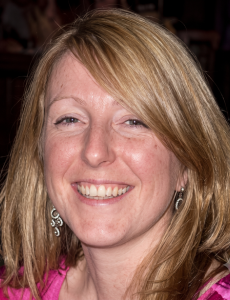
Rachael Lawton
Head of Estates and Facilities
Head of Estates and Facilities at the Royal Armouries Museum

Ryan Condon
Head of Content
Podcast Host and Head of Content of Comparesoft, joining the team in 2019.
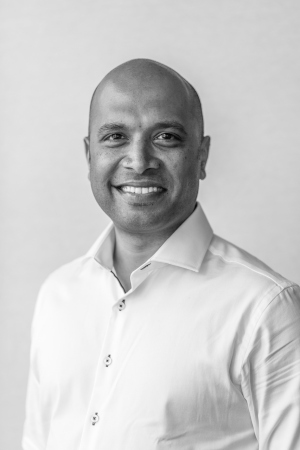
Prasanna Kulkarni
Founder, Product Architect & CEO
Product Architect and Founder of Comparesoft.

Latest Facilities Management Podcast Episodes
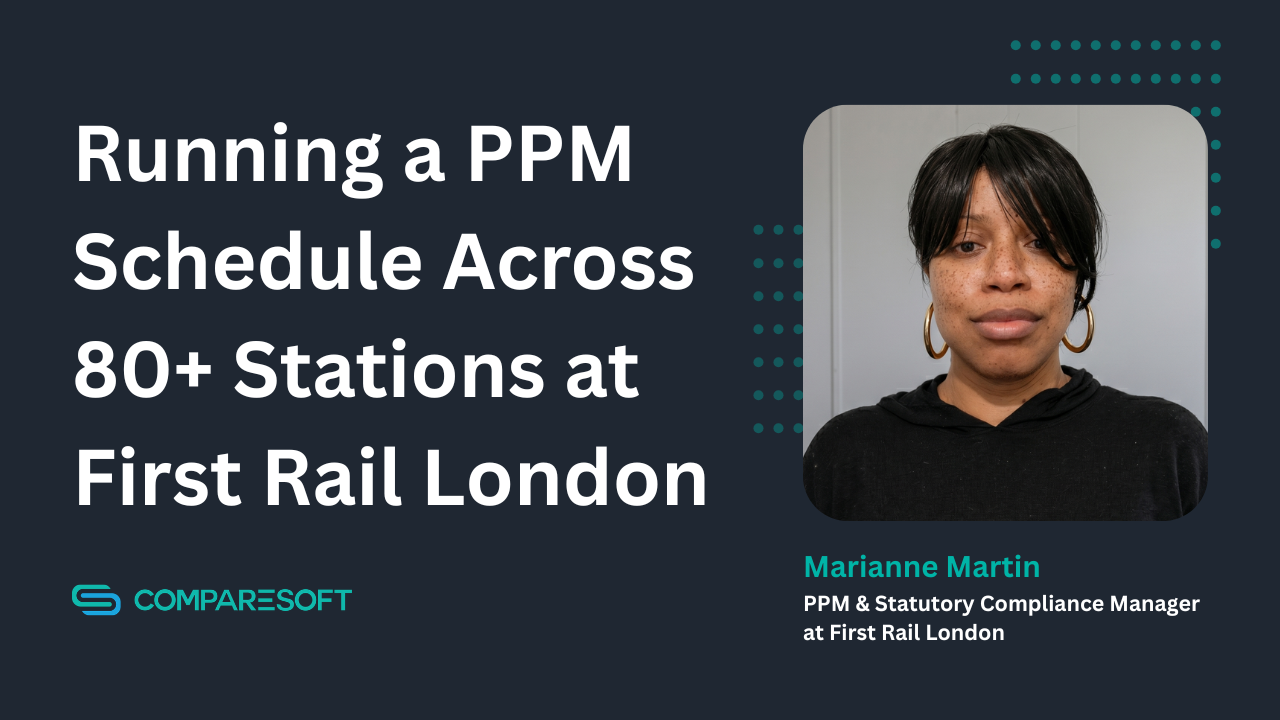
Running a PPM Schedule Across 80+ Stations at First Rail London
Marianne Martin, PPM and Statutory Compliance Manager at First Rail London, explains what it takes to build and manage a planned preventive maintenance (PPM) schedule across more than 80 London Overground stations, sidings and depots.
Listen and Watch the Podcast →
Leading Facilities Management at Ocado Retail
Lisa Assiotes, Facilities Manager at Ocado Retail, shares how she built an in-house FM function from scratch, how a small team works with an integrated service provider, and where AI is streamlining FM tasks.
Listen and Watch the Podcast →
Retail Facilities Management at Scale: Lessons from 700+ High-Street Stores
Christopher Lloyd, Facilities Manager at EssilorLuxottica UK, explains what it actually takes to maintain over 700 high-street retail stores, covering brands including Ray-Ban, Oakley, Sunglass Hut, and Vision Express.
Listen and Watch the Podcast →Find the Right Facilities Management Software for Your Site
Whether you're managing work requests from a loading bay or tracking contractor performance across multiple buildings, the right FM software should work the way you do. Compare tools built for facilities managers in just 40 seconds.