
Retail Facilities Management at Scale: Lessons from 700+ High-Street Stores
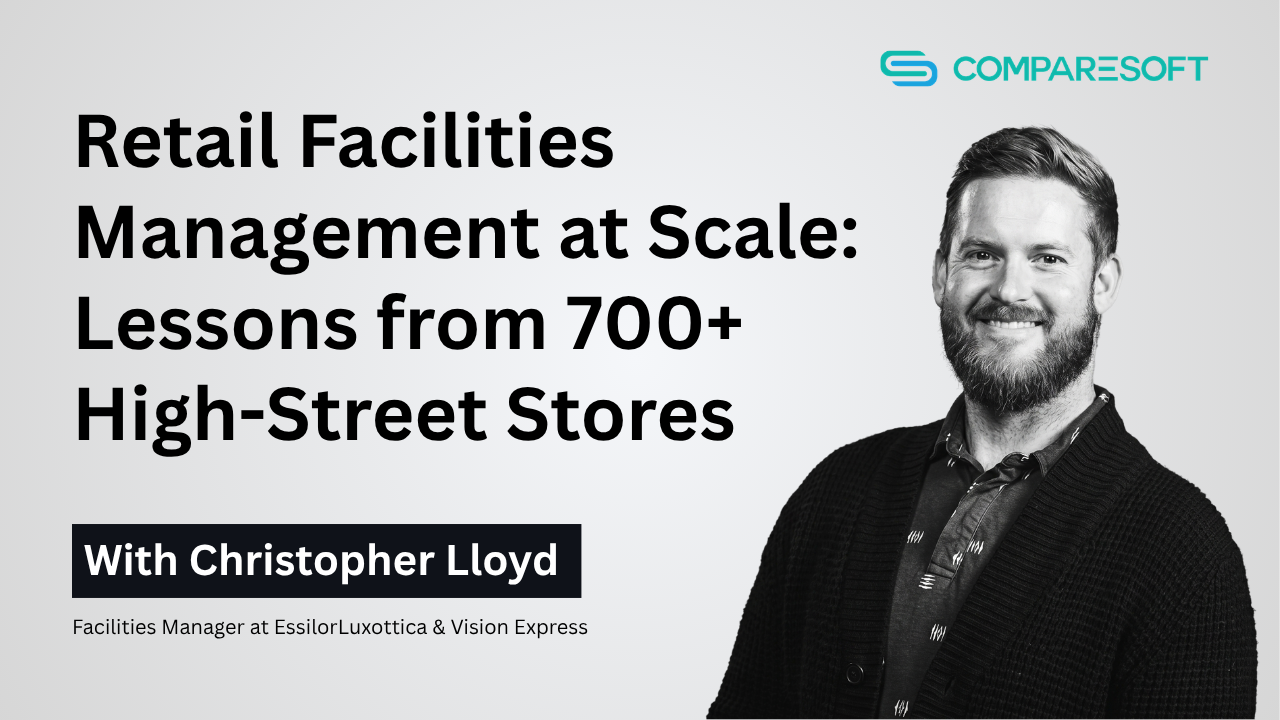
Christopher Lloyd, Facilities Manager at EssilorLuxottica UK, explains what it actually takes to maintain over 700 high-street retail stores, covering brands including Ray-Ban, Oakley, Sunglass Hut, and Vision Express.
In this episode
- What Does Facilities Management Look Like Across 700+ Retail Stores?
- How FM Teams Prioritise Thousands of Reactive Work Requests
- Why Store Presentation Is a Facilities Management Issue
- How Optical Healthcare Stores Differ from Fashion Retail
- Managing Suppliers and Contractors at Scale
- What a Self-Managed CAFM System Delivers That a Vendor-Led Platform Does Not
- Why First-Time Fix Rates Are More Important Than Headline SLAs
- Practical Advice for Facilities Managers Stepping into Multi-Site Retail
- Full Transcript
What Does Facilities Management Look Like Across 700+ Retail Stores?
When facilities management operates across more than 700 high-street locations, the role extends far beyond fixing faults. For Christopher Lloyd, Facilities Manager at EssilorLuxottica UK, it is a constant exercise in prioritisation, communication, and stakeholder management.
Chris’s estate spans two distinct business units: an optical division covering over 600 Vision Express and John Lewis Opticians stores, and a fashion division covering 143 units across Ray-Ban, Oakley, and Sunglass Hut. Each has different operational demands, compliance requirements, and customer expectations.
In this episode of the Comparesoft Facilities Management Podcast, Chris explains how his team handles this complexity and what other FM professionals can learn from the process.
How FM Teams Prioritise Thousands of Reactive Work Requests
With hundreds of stores raising tickets daily, the challenge is not just responding to requests but deciding what to respond to first. Chris describes a three-tier priority structure that starts with health and safety, moves to operational disruption and customer experience, and then addresses improvement and development work.
The key to making this work is effective triage. When a store reports an issue, a scripted set of questions helps the helpdesk understand the real severity. Two stores may both report a leaking roof, but one might be a contained drip into a bucket, while the other is flooding the shop floor. The difference determines whether a job is treated as an emergency or a scheduled repair.
Supporting evidence plays a role too. Asking stores to submit photographs or videos alongside their tickets gives the FM team and senior stakeholders a clearer picture of what is actually happening, without needing to be on site.
For FM teams looking to improve their own triage processes, a strong Facilities Management Software platform with configurable priority coding can make a significant difference.
Why Store Presentation Is a Facilities Management Issue
In fashion retail, store appearance is not just about merchandising. Lighting, fixtures, flooring, and general upkeep all contribute to the brand environment, and customers notice quickly when standards slip.
Chris explains that EssilorLuxottica operates a tiering system across its estate. Flagship and high-turnover stores receive more frequent preventive maintenance visits, covering everything from aesthetics to compliance. For globally recognised brands like Ray-Ban and Oakley, even a single faulty light in a store can be treated as a priority because of the impact on customer perception.
This tiering approach means that planned preventive maintenance (PPM) is not one-size-fits-all. The compliance and statutory package forms the baseline, but stores with higher brand expectations receive additional scheduled visits to maintain appearance and performance.
How Optical Healthcare Stores Differ from Fashion Retail
Vision Express stores operate under NHS requirements that create additional facilities obligations. Test rooms must contain specific assets to comply with NHS audit standards, and the equipment used for eye testing requires specialist maintenance from a dedicated internal team.
Chris describes how his FM team collaborates closely with the specialist equipment department, as the two functions share many transferable actions and skills. The relationship between general facilities upkeep and clinical equipment maintenance is a practical example of how FM professionals need to adapt their approach depending on the operating environment.
For facilities managers working across mixed-use or healthcare-adjacent estates, understanding these regulatory differences early is essential.
Managing Suppliers and Contractors at Scale
With the majority of hard and soft services outsourced, Chris manages a broad ecosystem of contractors and service providers. His approach is structured and tiered, much like his approach to work orders.
Main service providers receive multiple touchpoints each week, from Monday catch-ups on weekend incidents to mid-week quote reviews. Other contractors are reviewed on a quarterly, six-monthly, or annual cycle depending on their impact.
Beyond scheduled meetings, Chris uses direct store feedback as a performance signal. Speaking to store managers, regional managers, and store colleagues regularly helps identify recurring patterns. If multiple stores report frustration with the same contractor, it becomes a reliable indicator of a problem.
The new CAFM system Chris is rolling out adds another layer to this. Stores can now leave live reviews of contractors after each visit, creating a continuous net promoter score-style feedback loop. This kind of real-time contractor performance data is one of the key capabilities FM teams should look for when evaluating CAFM software.
What a Self-Managed CAFM System Delivers That a Vendor-Led Platform Does Not
One of the most significant changes Chris discusses is the move from a vendor-led CAFM system to a self-managed platform. Under the previous arrangement, the FM team had limited visibility into job progress. Stores would report a fault, receive an update from the contractor, and then hear nothing until an engineer requested access. There was no timeline, no status tracking, and no easy way for store teams to follow progress.
The new self-managed system changes this by connecting stores, contractors, and the FM team through a single platform. Every job has a visible timeline showing who has done what, when it was done, and when the next step is expected. Stores no longer need to chase updates because the information is available to them directly.
Beyond transparency, the system also delivers price comparison intelligence. As more data flows through the platform, it begins to flag whether incoming quotes are in line with historical pricing. This means the FM team no longer relies solely on individual experience to challenge costs.
Another benefit is the ability to assign jobs to specific contractors rather than routing everything through a single main service provider. If a job requires a regional specialist or a particular trade, the system supports that redirection, which helps improve first-time fix rates and reduces failed initial attendances.
Why First-Time Fix Rates Are More Important Than Headline SLAs
Chris makes a clear distinction between attendance and completion SLAs and the metric that actually drives long-term performance: first-time fix rates. He describes a situation where the reported first-time fix KPI was running at nearly 90%, yet store satisfaction remained low and completion SLAs were suffering.
The root cause was that contractors were marking jobs as fixed without addressing the underlying problem. The fault would reappear six to twelve months later, creating repeat visits and eroding store confidence.
The real measure, Chris argues, is fewer revisits. A genuine first-time fix means the root cause has been addressed, not just patched over. This requires the right trade attending in the first place, which brings the conversation back to effective triage and intelligent contractor assignment.
For FM teams benchmarking their own supplier performance, tracking revisit rates alongside first-time fix percentages gives a far more accurate picture of service quality.
Practical Advice for Facilities Managers Stepping into Multi-Site Retail
Chris’s closing advice is straightforward. Facilities management is messy, and trying to fix everything perfectly all the time will only create frustration. Instead, the priority should be clear communication with stakeholders and transparent expectation-setting with contractors.
If both sides of that relationship are managed honestly, the rest follows. Pressures can be applied in the right areas, problems can be escalated appropriately, and teams can focus on continuous improvement rather than firefighting.
For anyone stepping into a large-scale retail FM role for the first time, that combination of structured communication and honest expectation management is the foundation everything else is built on.
Full Transcript
Ryan (00:01): Chris, it’s great to have you on the podcast. How are you?
Chris Lloyd (00:04): Very good, thank you. How are you?
Ryan (00:06): I’m awesome, thank you very much. So Chris, when people hear facilities management, they often think about fixing faults, managing maintenance tickets, but when you are overseeing 700 high-street stores, what does the reality of this role look like on a day to day?
Chris Lloyd (00:23): I would say that it’s about constant prioritisation. So with so many requests coming in from different areas of the business, you have to have a robust structure behind those requests. I think that categorising that into certain aspects, so health and safety, operational disruption, customer experience, down to the nice to haves almost, is kind of the bread and butter of that sort of element of managing those jobs.
Chris Lloyd (00:50): But then also ensuring that you triage those jobs with a strong team behind you. For example, we’ve got main service providers that we use who act as that vital helpdesk to be able to make sure that we are informed and kept up to date on exactly what’s going on. So alerts with anything that is considered to be super important or an emergency, but then also down to how do we review all of those other jobs and how do we make sure that they do get addressed, but they get addressed appropriately and at the right time.
Chris Lloyd (01:25): And by what type of approach do we take with it. Is it something that needs to happen straight away? Is it something we can incorporate into a bigger project maybe? So there’s different areas that we do it really and it’s all about I think just balancing that urgency versus impact more than anything else.
Ryan (01:59): And you sort of touched on it there, like the nice to haves, the priorities. You must get thousands of requests coming through your ticketing systems. How do you go about managing and prioritising such a large volume of incoming requests? And how do you decide what gets your immediate attention?
Chris Lloyd (02:16): Yeah, and I think it’s just going back to that sort of what do you categorise as an emergency? What do you categorise as an urgent job? And I think that’s different, dependent on the company in some aspects when you start going down that list. But I think ultimately, as an FM professional, we are heavily involved in health and safety and the impact that our built environment has around the people that are adopting and occupying that space. You’ve always got to put health and safety at the forefront of everything. So it starts with that.
Chris Lloyd (02:55): And then you start looking more into, right, okay, what are we here to do as a business? Where, in our aspect, we’re here to serve customers, we’re here to sell a product and to provide a service. So the next priority for us is ensuring that that experience is protected. And then beyond that, you’re looking more at a case of how do we develop, how do we improve process so that it’s not just about whether it’s safe, whether it works, it’s more about how do we make it work better.
Chris Lloyd (03:25): So I think as soon as you start getting that sort of priority structure in place, then that’s when you can really start to manage exactly what’s going on, what’s happening, and when do we expect to resolve it by essentially. Going back to the example with emergency work orders, we’ve set up processes that will help elevate the urgency, elevate the awareness of those through alerts and through ring-fenced teams who will then manage and apply hypercare essentially to those jobs.
Chris Lloyd (03:55): So I think that’s what it’s about mainly is looking at it and thinking, right, how do we manage something that is super urgent? But then also, how do we still acknowledge something that’s just a nice to have?
Ryan (04:12): You mentioned there, the priority is health and safety. Would you say that’s more the issues that frequently appear in retail environments and how does that get tagged when there’s so many ticket requests coming through?
Chris Lloyd (04:29): So in regards to the health and safety aspect of it, what we do is we will triage those jobs when they’re reported from a store. So there are a series of questions that are asked to establish actually what is the urgency of this job. And that really helps in being able to understand how quickly we can respond or how quickly we need to get a contractor out there.
Chris Lloyd (04:55): So I think that in regards to being able to identify those issues, it’s those important questions that are asked and those probing questions that are asked at that point that really guide what sort of priority we should put something on. So we have a coding system of priorities that they will get allocated dependent on what the answers to those questions are.
Chris Lloyd (05:18): A difference between a roof that’s got a giant leak in it and it’s flooding a store compared to a leak that’s dripping into a bucket. But those two situations could be described as exactly the same thing. We’ve got a leak. So it’s about just making sure that we delve into that detail and then beyond that we then make sure that the right people are aware of what the severity is of that.
Ryan (05:48): How do you ensure that detail? So say if two tickets are raised, we have a leaky roof, exactly the same. How do you differentiate between, okay, this one’s taken priority over this one, this one’s leaking into the bucket, this one’s leaking into the store?
Chris Lloyd (06:01): It is very much a scripted triage dependent on what they select. So you start with an area of a store. Tell me where the problem is. Tell me what the problem is. Tell me what the piece of equipment is in that area and what the problem is with that piece of equipment. That’s the very basics of being able to understand what the situation is. And then beyond that, dependent on their answers is where you start to tailor those questions to that specific problem.
Chris Lloyd (06:30): We will have in there, for example, is it a contained leak, is it an uncontained leak? So it’s giving us that good indication there as to could this cause a bigger problem or is it something that we’ve got under control? Similarly, when we’re looking at a lighting issue, have we got one light out in a store? Have we got five lights out in a store? Somebody just saying that they’ve got a couple of lights out in a store or our lights aren’t working doesn’t give us that full picture.
Chris Lloyd (07:00): So we need to make sure that we interrogate or triage those requests so that we get a full picture of exactly what’s going on. And another way that really helps as well, very simple one, we’re looking after so many stores at the moment that you can’t be everywhere all at once, right? So we make sure that the supporting evidence comes with that as well and documentation.
Chris Lloyd (07:20): So have you got any pictures of the situation is such a simple thing to ask, but it’s amazing how much light it sheds on a situation just by getting that. I had a perfect example actually, only a couple of nights ago where we had a request come in, a sprinkler head has been activated in one of our stores. As soon as you get the video through, panic ensues. And then four hours later, I got some other images through of a clean store, rectified as if nothing had happened.
Chris Lloyd (07:50): And that type of information and being able to pass that information onto the likes of key stakeholders in the business who have got the vested interest of the operational wellbeing of that store and the wellbeing of the people in there.
Chris Lloyd (08:22): You’d be providing them those two stories and that evidence, it informs them, but then it also reassures them. So it’s a combination, I would say, of those two key elements is how do you triage a job? What questions you need to ask compared to how do you then communicate that information within our business?
Ryan (08:43): Yeah, and I think there’s that saying where people really don’t know where maintenance or facilities management is until something bad has gone wrong.
Chris Lloyd (08:53): 100%. If we’re doing our job right, nobody hears about us.
Ryan (08:57): So Chris, you’re working with fashion brands like Ray-Ban and Oakley where store presentation is critical. How does that influence your facilities management decisions in these retail stores?
Chris Lloyd (09:11): I think that’s where we sort of almost go back to that prioritisation piece in some ways. It’s a known fact that there are tiering systems throughout retail. There are flagship stores, there are high turnover stores, so on and so on. And so we have to be very mindful of this.
Chris Lloyd (09:30): Now there are ways in which that we can support this tiering process. One of the key ways is proactive maintenance. If we’ve got flagship stores and stores that are going to be in the public eye and brands that are very recognisable from a global level and an expectation that is a lot higher as well from those types of luxury brands, we can look at implementing preventative maintenance that just helps along with the appearance of that store.
Chris Lloyd (10:00): And it’s one thing that we’ve heavily implemented throughout our estate is if we’ve got the requirement where a store needs to be reviewed on a more regular basis, then we’ve got those reviews put in place to make sure that certain aspects of the store, the aesthetics of the store, are looked after in a very regular preventative manner.
Chris Lloyd (10:20): So we do tailor our preventative maintenance from almost what you could consider to be the essential package and the compliance package where we’re ensuring that legislation and statutory compliance is covered right the way up to, well, if a light goes out in this store it’s a big deal and we need to get it sorted right away. There is definitely a tiering system that we follow that suits the business needs definitely.
Ryan (11:12): Okay, and like you said, your PPM goes into that tiering system as well. So you’re scheduling PPM more often in these sort of stores and maybe other stores that you’ve got.
Chris Lloyd (11:22): Yeah, exactly. And I think that it’s very difficult to be able to manipulate reactive maintenance at such large scale because you have to standardise the response times and the completion times of something like that when you’re looking at an estate of this size. Otherwise, there’s no way of being able to properly manage that.
Chris Lloyd (11:46): But there is certainly ways in which we can look to reinforce the support of one location by implementing more regular planned visits to capture anything before it becomes an issue. And then similarly another approach that we take is we have not just our main service providers but we also have specialist suppliers and contractors who we can call upon regionally if something that’s quite delicate is required beyond the expectations of a service level agreement.
Ryan (12:17): On top of the sort of fashion brand led stores, you’re also looking after the Vision Express stores, which have more of a healthcare component to them. Does that change how facilities need to operate compared to more traditional retail environments?
Chris Lloyd (12:32): There is definitely an impact there, especially regarding the NHS. Obviously we have certain requirements to be able to benefit from how we operate as an optician. There are audits that will be carried out, an expectation set by the NHS. So yes, there are different ways in which we look to ensure that we provide certain aspects of the store.
Chris Lloyd (12:55): For example, we have a requirement to have certain assets within test rooms so that it conforms and it complies with NHS requirements. Whereas when you’re looking at something that is purely a sunglass store, that is a retail fashion environment compared to a practising opticians.
Chris Lloyd (13:15): So I think that there’s definitely this difference between the two stores in how we would operate and how we would look to maintain even just the basics of the fixtures and fittings in that store. And then on top of that, obviously with us having the testing capacity within these stores, there’s equipment that comes along with that. We have a specialist department who look after that equipment and make sure it’s maintained and managed. And so we support that team quite heavily to make sure that the two departments have so many transferable actions and skills, they blend quite nicely with each other in being able to work and collaborate.
Ryan (13:48): So Chris, with so many contractors and suppliers to manage, how do you keep on top of it? Is there a system you have that continuously monitors them, monitors their performance and how do you stay in communication with them as well?
Chris Lloyd (14:05): I’m very structured to be honest. I’m ex-military so for me I am controlled and reassured by structure and process. I think as well it depends on how much do you need to interact with a contractor. There are some contractors I’m speaking to on virtually a daily basis. There are other contractors that I speak to on a quarterly basis.
Chris Lloyd (14:30): I think when you’re setting out those reviews, it’s very similar to work orders. Prioritise the contractors that cause the most impact and deal with the most things. And then from there a sort of grading system. And so that’s kind of the way that I initially keep communication alive.
Chris Lloyd (14:50): For example, the likes of our main service providers, there are multiple types of meetings throughout the week, ranging from a simple catch up on a Monday as to what happened at the weekend and what does the week ahead look like, to sort of reviewing quotes and stepping through the 10, 20, 30 quotes that might have come through in the last day or two.
Chris Lloyd (15:15): That is the initial sort of structure that I work by and then that’s then graded into the type. So obviously you’re going to have your quarterly, six-monthlies and annuals in there as well for that. Then there’s almost holistic ways that we will look through a view just by general feedback of stores. What are we hearing?
Chris Lloyd (15:35): Through these stores, they’re essentially our customer. So what are their opinions, their interactions, their experiences like with the engineers that are coming on site, with the response times, has something been fixed properly the first time? And so going out to stores and speaking with our store managers and store colleagues and regional managers, one of the key questions that I like to ask is, what’s one of your frustrations? Where are you not happy at the moment? And you very quickly start hearing that there is a trend and a pattern if there’s an issue. So it’s very reliable in that regard.
Chris Lloyd (16:05): And we’ve very recently with the implementation of our new CAFM system that we’re now going to be self-managing, we have a feature on there where our stores can instantly review contractors. So that they can give live feedback on not only jobs, but just the contractor in general and their experience. So another area of a sort of net promoter score, if you will, on what they think of our contractors and how their experience is with them.
Chris Lloyd (16:30): So yeah, it’s a blend really from feedback to trends to regular communication with the contractor. So you’re getting sort of both sides of the story, so to speak.
Ryan (16:45): Yeah, Chris, you just touched on it then, a new CAFM system, and my eyes lit up. I’m really intrigued to figure out what sort of tools you’re using to manage your day-to-day operations. Could you just talk me through this new CAFM system, like what it’s replacing and really what you’re trying to get out of it?
Chris Lloyd (17:05): 100%. So two of the key things that we, and I think most FM professionals will strive towards in the industry, is transparency and communication. FM can be a very messy environment and a lot of the time you’re not looking to fix everything first time perfectly because the reality is that’s not going to happen. The key is to set expectations and make sure you communicate clearly.
Chris Lloyd (17:30): Having that structure in place provides reassurance that the activities that are being requested are being addressed also. The current setup that we have with one of our main service providers is a self-managed CAFM system that we have implemented, which has taken over what was the historic approach of having a vendor-led CAFM system where we only have as a company limited exposure really to actually what’s going on.
Chris Lloyd (18:00): We have client-facing dashboards that will advise us of KPIs so that we can understand what SLAs are being achieved, what aren’t, where prioritisation of jobs is going and we can see trends. But the stores can’t see a lot of this. The store reports a job and then gets an update from the contractor and that’s a very limited interaction. The next time that they hear from that contractor usually the engineer is asking to come on site, turns up on site and even then is there follow up? Is there remediation beyond that?
Chris Lloyd (18:30): So having a self-managed CAFM system has given us that control and that ability to be able to tell a story on each job. We link our current supply chain in with the CAFM system. We link the stores in with the CAFM system so that then you’ve got free-flowing communication between the two and you can see that there is an expectation for the job to be attended to and closed by.
Chris Lloyd (19:00): There are activities that have happened on that particular request, whether that be simply an update on progression, a status change, maybe a quotation has been uploaded, all of these bits of information previously, because again, with an estate this sort of size, having that sort of time to be able to update every store individually would be impossible for a small group of people.
Chris Lloyd (19:25): Yet if you’re able to use the efforts of everybody involved through one system, it makes it so much easier to start painting a picture of a timeline of exactly who’s done what, when has it been done, and what’s the expectation of getting it sorted. So that’s what this system provides. It provides that notes area, that reference point of what the expectation is for starting and completing works and also it gives them the ability through this to be able to review those contractors as well.
Chris Lloyd (19:50): So it’s just opening up that channel of communication a lot more but also making sure that those clear expectations are set out so stores aren’t wondering when somebody’s going to turn up to fix their leak.
Ryan (20:10): So that transparency for each store, that was the main requirement going into this new system?
Chris Lloyd (20:18): I would say, yeah, the transparency and communication were the two biggest benefits in regards to the implementation with other benefits that are still yet to be fully explored, I think. I mean, the implementation of price comparison through intelligence supporting on the system. So basically the amount of information you feed into it, it will then use that information to be able to guide you on future requests that come in from a price comparison perspective.
Chris Lloyd (20:45): Which again is information that previously you would have to have years and years of experience in facilities management to know. Well, it costs X amount of money for this and it costs that much for that, so this is expensive. Whereas now we’re not solely relying on somebody’s memory or expertise or experience to be able to tell us that.
Chris Lloyd (21:05): Having the information stored, used, and then delivered back to us as an instant tool of feedback to tell us you need to challenge this or that’s a fair price, you can continue. So there’s that sort of added value that it brings to it that before didn’t seem like it was going to be an aspect or even a consideration. We were focusing so much on the communication side of it.
Chris Lloyd (21:25): When you start implementing these new aspects into it, these new tools, it’s just increasing that level of service that we can provide really.
Ryan (21:35): And I suppose that goes back to the hypothetical we took earlier. If there’s a leaky roof, it’s dripping into a bucket, one’s dripping into a store, you now understand that, okay, the one that’s dripping in store, this is what it’s going to look like in the next three, four days if we don’t resolve this instantly, if we don’t prioritise this. You have a better understanding of that.
Chris Lloyd (21:55): Yeah, 100%. I mean, I would say that in regards to specific scenarios of a request or an incident that’s happened, from a managerial point of view to that supplier, we would be aware of this regardless, whether we’re using our system or whether we’re using a supplier-led system.
Chris Lloyd (22:10): I think that where it’s really provided the insight is to the stores and to the people that are getting this service. They’re so focused on what their role is, quite rightly. They are there to provide a service to our customers as EssilorLuxottica UK throughout all of our brands. They’re not there to manage contractors coming in trying to solve issues with the store, that’s our job.
Chris Lloyd (22:35): So if we can provide them that information and keep providing them more updates and more relevant communication about what’s going on in their store, it’s saving them time chasing it, being in the dark, and it’s giving them that reassurance that it’s being handled.
Ryan (22:55): Yeah. And when it comes to implementing a new system, there’s bound to be a few challenges. It’s bound to be a few hiccups along the road. Have you come across anything like that? I’m presuming in training store managers and how to use these new systems.
Chris Lloyd (23:15): 100%. You want to set out that you roll any sort of initiative out as best as you can. There are always going to be hiccups. We’ve had part of the estate go live so far where we’ve had enquiries back on certain aspects. We’ve had difficulties in certain aspects. And I think the key is how do you manage that? How do you make sure that you address those issues? And that’s the key thing.
Chris Lloyd (23:40): We know it’s never going to be absolutely perfect, but let’s make sure that we address any issues that do arise, learn from it, so that then if we’ve got other elements that we’re rolling out later on, these issues can be addressed. I think that there’s definitely going to be learnings and development in any type of rollout. You’re never going to do it 100%. Anybody that does, I take my hat off to them.
Chris Lloyd (24:05): But I would say that you should always be able to learn something from providing something new, and we definitely have. We’ve fed back on quite a number of things, and especially development areas. A little one, for example, only today, regarding contractors being able to attend certain types of shopping centres, the additional requirements and additional permits that are required for that.
Chris Lloyd (24:30): And how do you manage that? Well, a lot of the time that was very much the onus on the store to make sure they do what they need to do so that the centre can grant permissions to the contractor to start their process. New processes like that come and go all the time in shopping centres, airports, wherever it might be, where you’ve got a higher regulation and that heightened level of safety and security.
Chris Lloyd (24:55): We found ways now that we can start notifying stores of this on our new system and we can just help them with that little bit more information to advise them or remind them that this is part of that process and this is what needs to happen. Yeah, there’s a lot of benefits towards it definitely.
Chris Lloyd (25:15): And also there’s one that I completely forgot to mention, which is the ability to be able to choose who we assign jobs to. Whereas previously it was very much a blanket approach to this where you’ve got your main service providers, let them tackle it and deal with the situation. Where actually we’re finding there’s a lot of benefit in making sure that you are appropriate with where some of these requests go and maybe just think a little bit more tailored towards what benefits there could be by using a regionalised contractor.
Chris Lloyd (25:45): To address some issues that might have a high impact if not addressed quicker or may just need that additional level of hypercare or specialism to make sure that the job’s fixed first time. So it’s given us that ability to be able to redirect into certain areas where previously we might have had an initial attendance that could have failed because there was a certain requirement to that work that unfortunately the attending contractor was unable to achieve at that time.
Chris Lloyd (26:10): If we can pick that up early and we can redirect it to somewhere else that is more appropriate, again, it’s just increasing that first-time fix, providing that reassurance to stores and just making sure that we’re closing out jobs as quickly as we can, but as efficiently as we can as well.
Ryan (26:30): And that first-time fix, that’s the metric you’re really looking at. That’s the main KPI for situations like this when you’re assigning contractors.
Chris Lloyd (26:42): Yeah, definitely. I mean, you’ve got the basics, which I think are your attendance and completion SLAs. But I think once you get beyond understanding and achieving a certain level of SLA, there’s got to be almost like an improvement somewhere with that contractor. There’s got to be continuous development with them.
Chris Lloyd (27:05): The first-time fix is something that a long time ago I was advised that it was the other way around and that a first-time fix determines the completion SLA. And I soon came to learn that actually if that’s not managed correctly, it’s very far from the truth. And that actually making sure that you get the right trade there and the job is completed satisfactory the first time is the key to ensuring the completion SLA.
Ryan (27:30): Would you say it’s more of the less revisits metric then?
Chris Lloyd (27:34): 100% definitely. The amount of times that we were scratching our heads over wondering why a first-time fix KPI was so high, sort of nearly 90% on these first-time fixes, yet we’re seeing this completion SLA and the satisfaction of stores at a real low point thinking what’s going on here?
Chris Lloyd (27:55): Finding out that actually this is due to, yes, okay, you’re advising it’s a first-time fix, but is it addressing the root cause of the issue? Are you stopping this problem from reoccurring six to twelve months down the line, or are you just putting a plaster over it and saying that you fixed it first time?
Chris Lloyd (28:15): And that’s where we’ve really identified the benefit of that core triaging of jobs and making sure it goes to the right contractor. And we’re not having someone essentially try to tick a box on a KPI. They go in there to fix the problem.
Ryan (28:30): Yeah, and this new system is going to help you address that.
Chris Lloyd (28:34): 100%. The benefits that this brings for us to be able to provide long-term solutions to what previously would be repeat offenders is one of the key benefits that we’re finding on our side of the platform at the moment.
Ryan (28:50): Is this rollout nearly finished, Chris? How long have you got left on it?
Chris Lloyd (28:55): So we’re anticipating that the completion of the rollout, I would anticipate by probably end of May we should be all done and dusted in regards to aftercare as well and making sure the stores are completely comfortable with the system. We should have completed rollout I would say April, that everything should be all provided to stores, but we’ve just got to make sure that we don’t stop there and that those following weeks are quite vital to make sure that it lands really well and that the engagement is as high as it can be to really help stores buy in.
Chris Lloyd (29:25): Because I mean, the last thing that you want is that you try and deliver something this sort of size to their estate and people don’t buy into it. So yeah, it’s just making sure that we’re providing the benefit and showing the benefit as well. 100% definitely, wouldn’t have it any other way.
Ryan (29:40): So a few busy months ahead for you, Chris. Excellent. So I just want to save this last question here for really getting good insights and advice from you, Chris. If someone was stepping into a role similar to yours, managing hundreds of retail stores for the first time, what advice would you give them?
Chris Lloyd (30:00): I think I’d probably go back to what I mentioned earlier which is FM is messy. Don’t try and fix everything perfectly all the time because you’ll end up just tying yourself in knots. It’s about ensuring that the communication with key stakeholders and the expectation set is clear and that’s on both sides. That’s with the contractors that you’re managing and that’s with the stakeholders that you’re communicating with within your business.
Chris Lloyd (30:25): If you can keep those two aspects clear, transparent, honest, I don’t think you’ll go far wrong. You can start applying the right pressures in the right areas then.
Ryan (30:40): Excellent, Chris, you’ve been a brilliant guest. You’ve given us such a really practical look at what goes on behind the scenes of such a large-scale retail operation. So thank you so much for joining us today.
Chris Lloyd (30:52): Not a problem at all.
Ryan (30:55): And thank you all for listening and we’ll see you on the next episode. Bye for now.
What Type of Facilities Do You Manage?
Meet the Speakers

Christopher Lloyd
Facilities Manager at EssilorLuxottica UK & Vision Express
Facilities Manager at IREOptical, Sun Retail, Vision Express & EssilorLuxottica, specialising in multi-site retail estates, focused on delivering safe, compliant, and high-performing environments.

Ryan Condon
Head of Content
Content architect and strategist at Comparesoft, helping software buyers make confident decisions through purposeful, well-structured content. Podcast Host and Head of Content since joining the team in 2019.

Latest Facilities Management Podcast Episodes
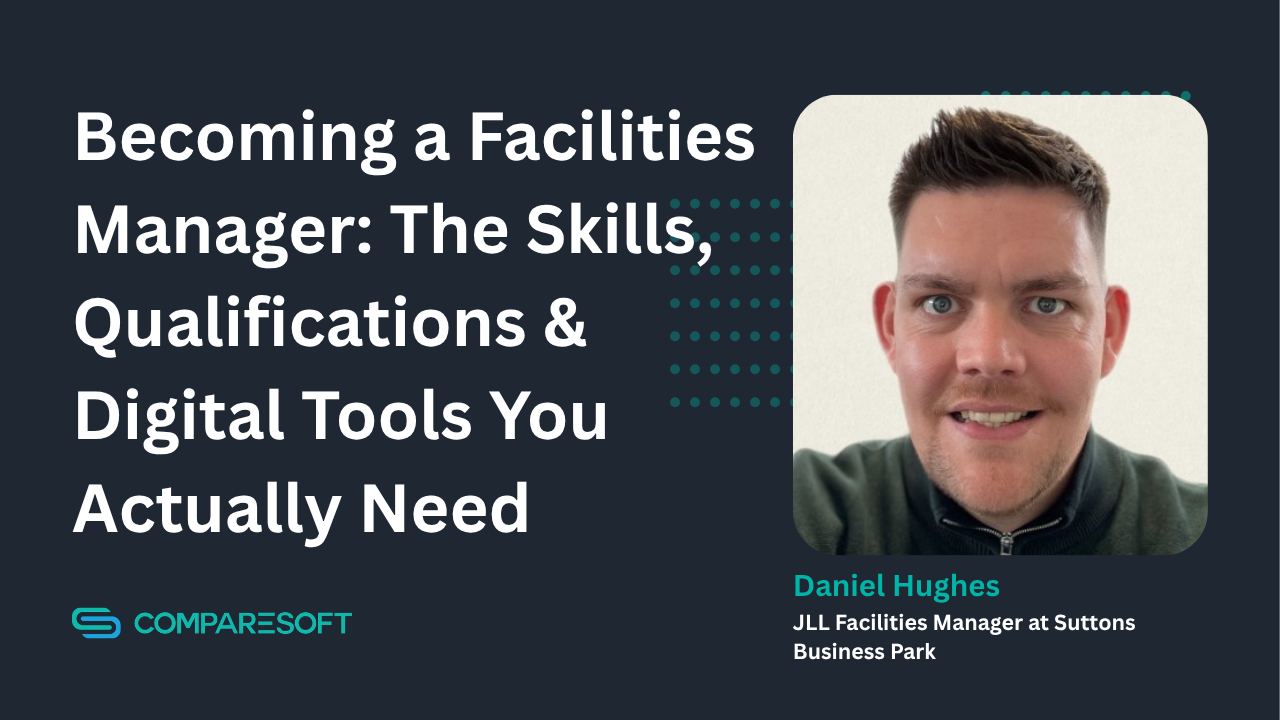
How to Become a Facilities Manager: The Skills, Qualifications & Digital Tools You Actually Need
Having started his career driving forklifts & working as a street warden, Daniel Hughes, Facilities Manager at a JLL 61-unit industrial estate, shares what the transition into facilities management really looks like, and how a people-first approach to tenants & contractors shapes how he runs his site.
Listen and Watch the Podcast →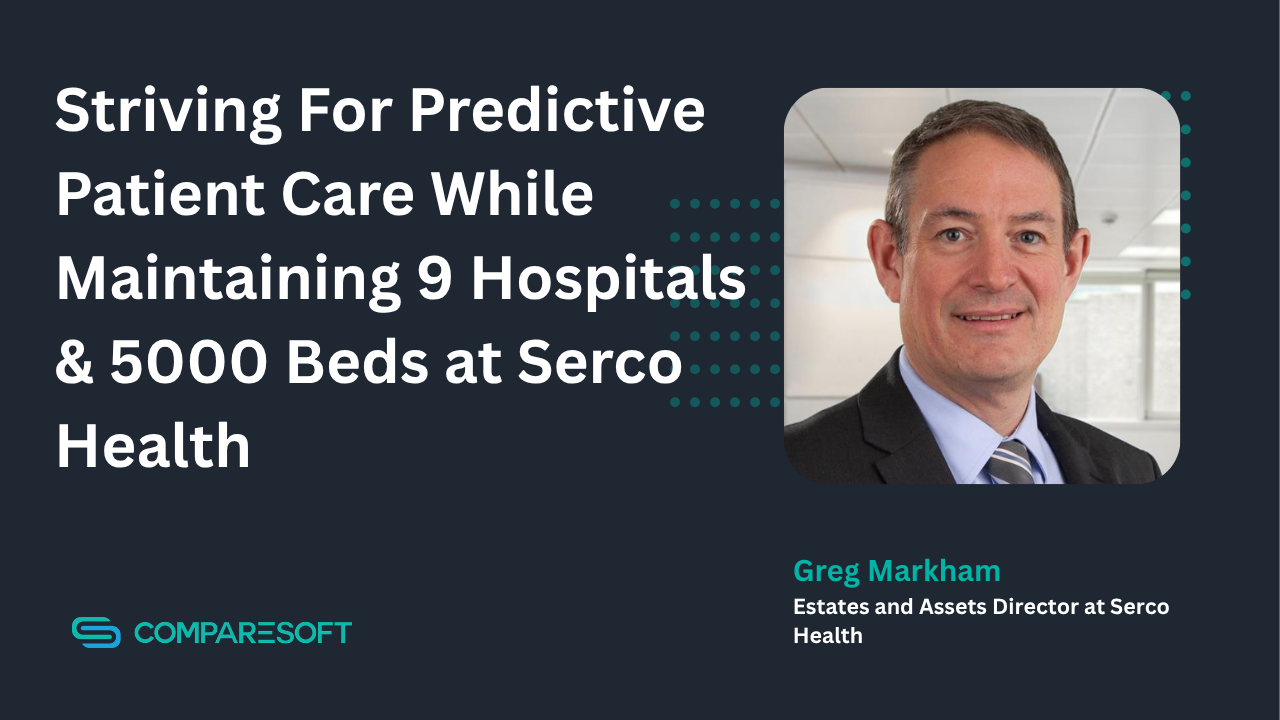
Striving For Predictive Patient Care While Maintaining 9 Hospitals & 5000 Beds at Serco Health
Greg Markham, Estates & Assets Director at Serco Health, explains how the reality of working on the frontline can open your eyes to appreciating the work of FM teams and how predictive technology is being readied to improve patient care in healthcare facilities.
Listen and Watch the Podcast →
Managing the Upkeep of Teaching Environments & Boarding Accommodation On a 40-Acre Site
Tim Peacock, the Director of Estates and Facilities at Sherborne Girls School, explains how working with the pathology and history of older buildings is key to managing and maintaining the upkeep of a 40-acre site with both educational buildings and boarding accommodation.
Listen and Watch the Podcast →Find the Right CAFM Software for Your Retail Estate
Whether you're triaging urgent repairs across hundreds of stores or tracking contractor performance site by site, the right CAFM software should give you visibility without the chasing. Compare tools built for retail facilities teams in just 40 seconds.