
How ERP Phase 0 Prevents Scope Creep, Governance Drift & Data Chaos
Bryan Oak unpacks ERP Phase 0 and why it is the decision work that protects scope, governance and data from chaos later. Drawing on decades of experience advising leadership teams, Bryan explains what Phase 0 actually covers, what “good enough” looks like, and why organisations default to vendor selection before they have aligned on outcomes.
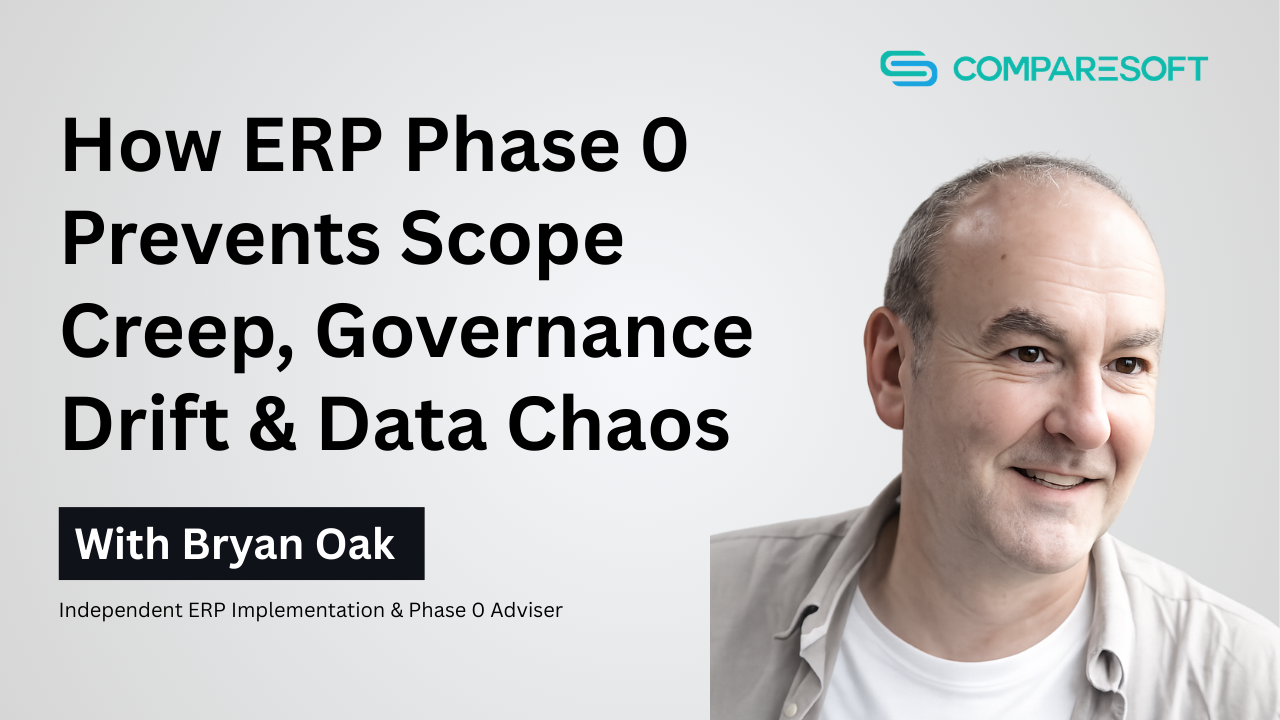
ERP programmes often begin with a familiar request: “We need help selecting a new ERP system.” Experienced advisers, like Bryan Oak, know that jumping straight to vendor shortlists or feature comparisons is one of the most common reasons ERP initiatives struggle later.
Before technology decisions are made, organisations need clarity on outcomes, ownership and operating models. This early groundwork is commonly referred to as ERP Phase 0, and it often determines whether an implementation delivers value or slowly drifts off course.
What Is ERP Phase 0?
ERP Phase 0 is the pre-implementation stage of an ERP transformation. It happens before system selection, before implementation partners are engaged, and before delivery timelines start to dominate discussions.
At its core, Phase 0 is about answering fundamental business questions rather than technical ones. Organisations use this stage to define why they are pursuing ERP Software, what problems they are trying to solve, and what success should look like once the programme is complete.
Instead of focusing on software features, Phase 0 centres on strategic clarity. Leadership teams examine the organisation’s operating model, business processes, and data structures to determine what needs to change. The goal is to create a clear foundation so that any future technology decision supports the organisation’s objectives rather than introducing new complexity.
Without this stage, ERP selection can turn into a search for a “silver bullet” system. When that happens, organisations risk implementing technology without aligning on the operational decisions the system will enforce.
What Does ERP Phase 0 Involve?
Although ERP Phase 0 varies from organisation to organisation, it typically combines strategic analysis, operational review, and leadership alignment. Five activities tend to define this stage.
1. Define Business Objectives
Leadership teams must clarify the outcomes they want ERP to achieve. This might include improving operational visibility, enabling growth, strengthening financial control, or replacing fragmented legacy systems. Establishing clear goals helps prevent scope creep later in the programme.
2. Review Processes and Capabilities
Organisations examine how work currently flows across departments such as finance, procurement, manufacturing, or logistics. This step identifies inefficiencies, duplicated processes, and inconsistencies between sites or teams.
3. Align Data and Governance
Data ownership and data definitions are critical ERP foundations. Phase 0 requires organisations to agree how key data, such as products, customers, or financial structures, should be structured and maintained.
4. Align Stakeholders Early
Successful ERP programmes require strong executive sponsorship and cross-functional collaboration. Phase 0 ensures the right stakeholders are involved early, including CIOs, finance leaders, operational managers, and programme sponsors.
5. Define Programme Governance and Scope
Clear governance structures help organisations decide who owns key decisions during implementation. Phase 0 also defines the boundaries of the programme so the project does not gradually expand without oversight.
Why ERP Phase 0 Is Important to Get Right
The importance of Phase 0 becomes clear when organisations skip it. Many ERP programmes begin with technology selection rather than strategic preparation. While this approach can appear to accelerate progress, it often creates hidden problems that surface later.
Without early alignment, teams may disagree about programme goals, operational processes, or data ownership. These issues usually emerge during implementation, when timelines are tight, and change becomes expensive. Programmes then experience scope creep, governance confusion, or delays as teams try to resolve problems that should have been addressed upfront.
Real-world examples show the pattern. Organisations that rush into ERP selection can spend years navigating complex implementations before achieving a successful go-live. In these cases, the technology is rarely the primary issue. Instead, the programme struggles because critical decisions about processes, ownership, and data were not made early enough.
Phase 0 acts as a safeguard. By forcing strategic decisions early, it reduces uncertainty and creates shared understanding across leadership teams. That clarity allows system selection to focus on fit rather than assumptions.
Ultimately, ERP implementations succeed when the business is ready to adopt the operational changes the system requires. Phase 0 helps build that readiness before the programme begins.
What are You Looking to Improve with ERP?
Meet the Speakers

Bryan Oak
Independent ERP Implementation & Phase 0 Adviser
Independent adviser helping manufacturing, supply chain leaders and CIOs turn ERP and operating model ambiguity into clear, actionable decisions that actually deliver.

Ryan Condon
Head of Content
Content architect and strategist at Comparesoft, helping software buyers make confident decisions through purposeful, well-structured content. Podcast Host and Head of Content since joining the team in 2019.

Easily Shortlist & Compare ERP Software
Discover ERP systems for your accounting, sales, manufacturing, operations and delivery processes. See verified pricing, real features, realistic implementation plans & authentic erp reviews. Takes just 40 seconds. Save up to 33% on ERP costs.