
How to Ensure a Successful ERP Implementation Go-Live
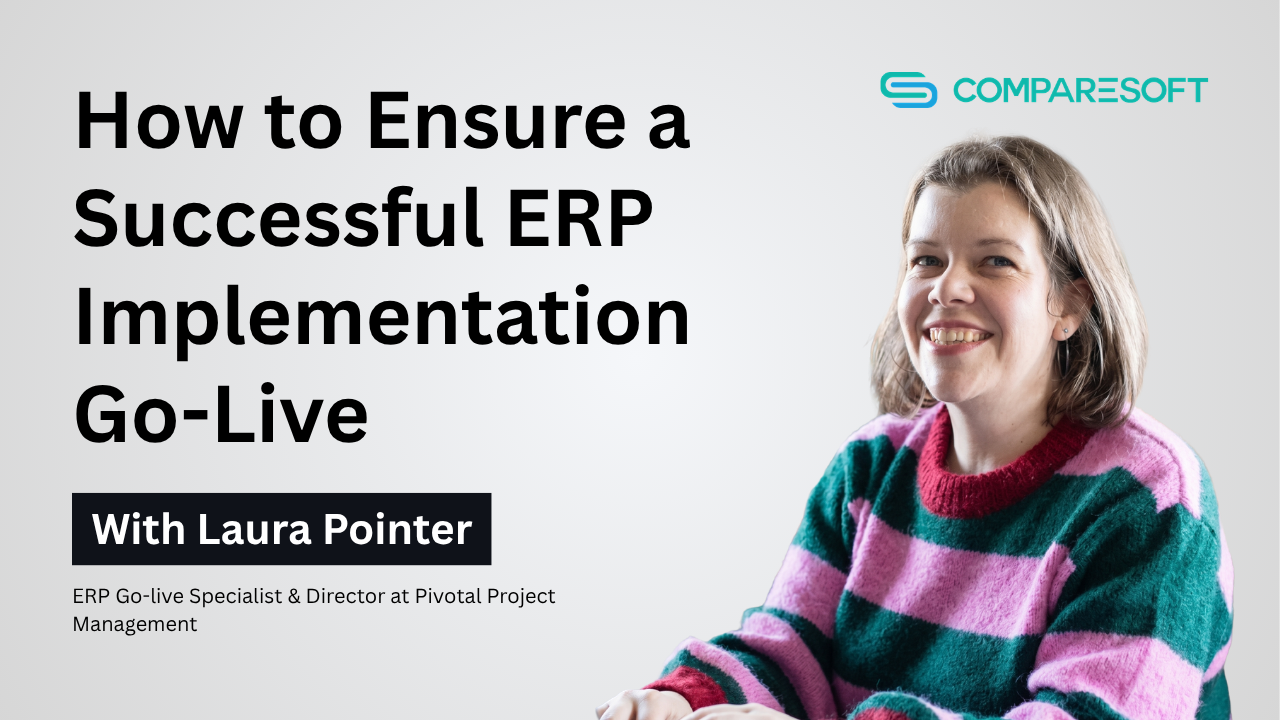
Laura Pointer explains the methodology behind her 100% ERP go-live success rate. Drawing on her experience across oil and gas, engineering, manufacturing and facilities management, Laura unpacks what go-live really means, why most programmes mistake it for the finish line, and the checklist non-negotiables that keep hers on track.
In this episode
- What ERP Go-Live Actually Means for the Business
- What a Successful ERP Go-Live Actually Looks Like
- What ERP Go-Live Day Actually Looks Like in Practice
- The Methodology Behind Laura’s 100% ERP Go-Live Record
- Why Saying No to ERP Customisation Protects Go-Live
- Why Change Management Defines ERP Go-Live Success
- Big Bang or Phased ERP Go-Live: Does the Checklist Change?
- How to Sustain an ERP Go-Live in the First Six Months
- Laura’s Final Advice on Settling an ERP Go-Live
ERP go-live is the moment most ERP Software implementation programmes are judged on, yet it is also the moment most often misunderstood. Industry data puts ERP failure rates between 30% and 95%, and most of those failures show up at, or shortly after, go-live.
In this episode of the Comparesoft ERP Podcast, Laura Pointer, Founder of Pivotal Project Management, explains how she has built a 100% go-live success rate across ERP implementations in oil and gas, engineering, manufacturing and facilities management. The thread running through her approach is not technical. It is honesty, ownership, and refusing to let people, process and system get out of order.
What ERP Go-Live Actually Means for the Business
ERP go-live is a milestone, not a finish line. Laura’s first job with any client is to dismantle the idea that the switch-on is the end of the journey.
“For me, the go-live is nothing more than a milestone. People kind of mistake go-live as the end goal. Whereas actually, it’s just part of the journey,” she says. “Go-live is the moment when you are fully in that new system. Every user is on board. That is now the system.”
Treating go-live as a milestone rather than a finish has practical consequences. It means budgeting for what comes after the switch is flipped, not just up to it.
“Go-live is almost your MVP,” Laura explains. “If you’ve got your minimum viable product version of it, the business can carry on and tick along. But then what do you want to do with it? How are you going to keep adding to it? How are you going to deal with it when this particular thing falls over because a random user suddenly entered some completely wonky data?”
What a Successful ERP Go-Live Actually Looks Like
A successful ERP go-live is measured by user adoption and the business standing on its own two feet once the consultants leave. The system being switched on is not the same as the system being used.
“A successful go-live isn’t just that the system is on and working. It’s user adoption. It’s driving things forwards. It’s being able to improve and enhance as we go. It’s the post-hypercare phase as well.”
Hypercare is the support window immediately after go-live, typically lasting around a quarter to cover at least one full financial cycle. Laura’s measure of success is what the business looks like once that window closes.
“After the demobilisation of the consultant support, can the business truly stand on its own two feet, support themselves, troubleshoot stuff. It’s not just, have we flicked the switch, are people now in there? It’s, can the business truly run?”
What ERP Go-Live Day Actually Looks Like in Practice
ERP go-live day is, in Laura’s words, “all extremes.” She recalls one programme where a fully integrated solution started misbehaving the moment it went live, despite exhaustive testing. The cause was a single change made by the head of engineering, who had been given access to the live environment a week earlier to check his data and had decided to rename a few fields.
“He said, ‘I wasn’t happy with how we’d named some stuff. So I changed it last week.’ He changed it on the Thursday/Friday, and we went live on the Monday,” Laura says. “Because it’s a fully integrated solution, all of the finance postings had been set to look for certain criteria that were now suddenly not there.”
The fix was unglamorous: rework the finance configuration to match the new field names. The interesting part, for Laura, was the culture that allowed it to be solved at all. “It’s a massive win that he felt able to stand up and go, ‘Yeah, I changed that,’ and he wasn’t trying to hide it. If you haven’t got that culture where people aren’t afraid to make mistakes, that’s not what you want.”
The Methodology Behind Laura’s 100% ERP Go-Live Record
Laura’s 100% ERP go-live record comes down to honesty, not a clever framework. Pressed for the secret, she is unequivocal.
“I’d say my secret is honesty. I can’t sugar-coat stuff. If I can see people going into something that’s going to cause them a world of pain, I will stop them.”
Her sharpest concern is the quiet drift she calls greenwashing: a RAG status that stays green because nobody wants to be the person to turn it red. This is one of the recognised critical success factors behind ERP implementations, and one of the failure modes that most often pushes a programme toward recovery work.
“Greenwashing of a RAG score, and just everyone pretending that everything is fine because that’s what the management want to see, will kill it faster than any technical issue ever could. There are a few acceptable surprises on a programme: chocolate, food, booze, flowers. Any other type of surprise, it’s not okay, because it should have been called out earlier.”
The other ordering principle Laura applies is to sequence the programme around people, not technology.
“A lot of people approach it whereby they’ll have system first, then process, then people. For me, I always try to flip that. I will always try to go people first, because they’re the ones who are going to be the users. They’re the ones who will make or break it. Then we’ll look at the processes. Then we’ll see how we can work those into the system.”
This sequencing logic is part of what makes early decision work, the Phase 0 stage of an ERP programme, so important. Get the people-process-system order wrong at the start and the rest of the programme spends its budget catching up.
Why Saying No to ERP Customisation Protects Go-Live
Saying no to ERP customisation protects go-live and every upgrade after it. Laura is blunt about when a customisation request is really a comfort blanket in disguise.
“A lot of people fall into the trap of trying to customise the system because they want this particular field. Forgetting that ERPs are used by thousands of companies the world over. If you’re genuinely arguing that your process is so wildly different that it won’t work on the standard way, that’s probably an indication that your stuff is a bit weird, not the system.”
The more a system is customised, the harder every future upgrade becomes. “If you can stick to as core a solution as you can without a million and one customisations, the future upgrade path is so much more simple. It’s always the customisations that have to be checked, that a knock-on consequence can throw all of those customisations out of whack.”
When customisations are genuinely needed, Laura’s checklist focuses on dates and dependencies. A “ready by” date from a developer is not the same as a date the users can actually work with. “I want multiple dates. I want to know it’s in test phase at this date. We’ve built in enough time within that for any revisions. I want the worst possible scenario dates that I’m signing off on.”
Why Change Management Defines ERP Go-Live Success
Change management defines ERP go-live success more than any technical decision in the programme. The single biggest cause of ERP failure, in Laura’s view, is treating change management as optional.
“I think change management is often viewed by a lot of companies as a nice to have, rather than a true, genuine essential part of it.”
The cost of getting it wrong shows up fast.
“You only get one chance to make a first impression. If your users are seeing something that they don’t feel is fit for purpose, and that is their first impression, you’ve already lost half your battle. Otherwise, within six months, probably sooner, they’re going to go back to working on a spreadsheet, just entering in the bare minimum so it looks like they’re using the system, when actually they’ve got workarounds galore.”
This is also where Laura’s intelligence and surveillance background quietly does its work. She watches for the people who have already decided the system will not work for them, and she does not look for them in the loud objections.
“The shouty ones don’t need treating first. They’re noisy. The ones who are genuinely at risk are often incredibly quiet. You’ve got to watch the quiet ones.”
Her method for turning resistors into advocates is mostly listening, then visibly acting. “It’s having offline conversations with them one-on-one. As soon as they see that not only have you listened, but you’ve taken it to the steering committee, and you’ve put in change stuff to make sure that what they addressed is now actually going to feature within the system, suddenly they’re like, ‘Hey, she’s doing something for me.'”
Big Bang or Phased ERP Go-Live: Does the Checklist Change?
The choice between a big bang ERP go-live and a phased rollout shapes the entire programme. Laura’s view is that the underlying checklist is the same; the way risk lands is what changes. For manufacturing ERP rollouts in particular, where multiple sites and supply chains compound the decision, this is one of the most consequential choices in the planning stage.
“For big bang, we’re talking potentially multiple sites, multiple countries, everything happening in one go. So that’s more of a front-loaded risk. Sometimes it works nicely. Sometimes it can be a bit terrifying.”
A phased rollout, by contrast, gives later sites something the first site never had: peers who have lived through it. “Because they’ve already seen it happen in front of them, the pilot site can be super useful in preparing the next sites. It’s not the externals anymore telling them it’s not going to be that bad. It’s people they know, people they trust, giving them the message of, ‘We’ve done it, we’ve survived, it’s been okay.'”
How to Sustain an ERP Go-Live in the First Six Months
Sustaining an ERP go-live in the first six months means watching for the slow revival of old behaviours. Workarounds creep in. Spreadsheets reappear. The way to prevent it is hypercare, listening to users, and top-down messaging that makes the change non-negotiable. This is the part of ERP implementation that gets least airtime in vendor pitches and the most airtime in post-mortems.
“Don’t underestimate the importance of hypercare. It’s not just that your partner is trying to get some more money out of you. They’re genuinely making sure that you’ve got what you need.”
She recalls one client who took the bluntest possible route to stop the spreadsheet drift. “I worked with one client who switched off the network location for where the old spreadsheets were stored. They removed everyone’s access. But it was driven by top-down messaging. The C-suite was so invested that they were like, ‘We’re just not having it.’ All of their messaging was, ‘This is happening. This is when it’s happening. This is why it’s happening.'”
For Laura, the “why” is what separates messaging that lands from messaging that gets ignored. “Often in your little department, you may not have sight of the bigger picture. Once that change and the why is communicated, and it is coming from senior people, and every hierarchy point within that organisation is brought into that, it’s a far easier thing.”
She is also realistic about the size of what an ERP programme actually is. “An ERP programme is an entire business transformation programme. It will impact every team within your entire organisation. If people are not engaged and they don’t treat it as that level of importance, it’s not going to work.”
Laura’s Final Advice on Settling an ERP Go-Live
Laura’s closing advice for anyone whose ERP programme has just gone live is to let it settle before changing it. The first wave of “could we just change this” requests from users almost always softens with time.
“It’s really important after you’ve gone live, but let it settle. Initially you will have end users who weren’t involved in the implementation and only had the training. They’re like, ‘If we could do this and this…’ But give them six months of actually doing it, and then you go back and ask them the same question. They’d be like, ‘No, it’s fine.’ What they thought was an issue in week one isn’t.”
The caveat sits in the same breath, and it is the line that captures her whole approach.
“So give it a chance to embed. Make sure you’re keeping your finger on the pulse though, because if you’re not, it’s going to fall over.”
What are You Looking to Improve with ERP?
Meet the Speakers

Laura Pointer
Founder of Pivotal Project Management
Founder and Director of Pivotal Project Management, boasting a 100% ERP go-live success rate.

Ryan Condon
Head of Content
Podcast Host and Head of Content at Comparesoft

Latest ERP Podcast Episodes
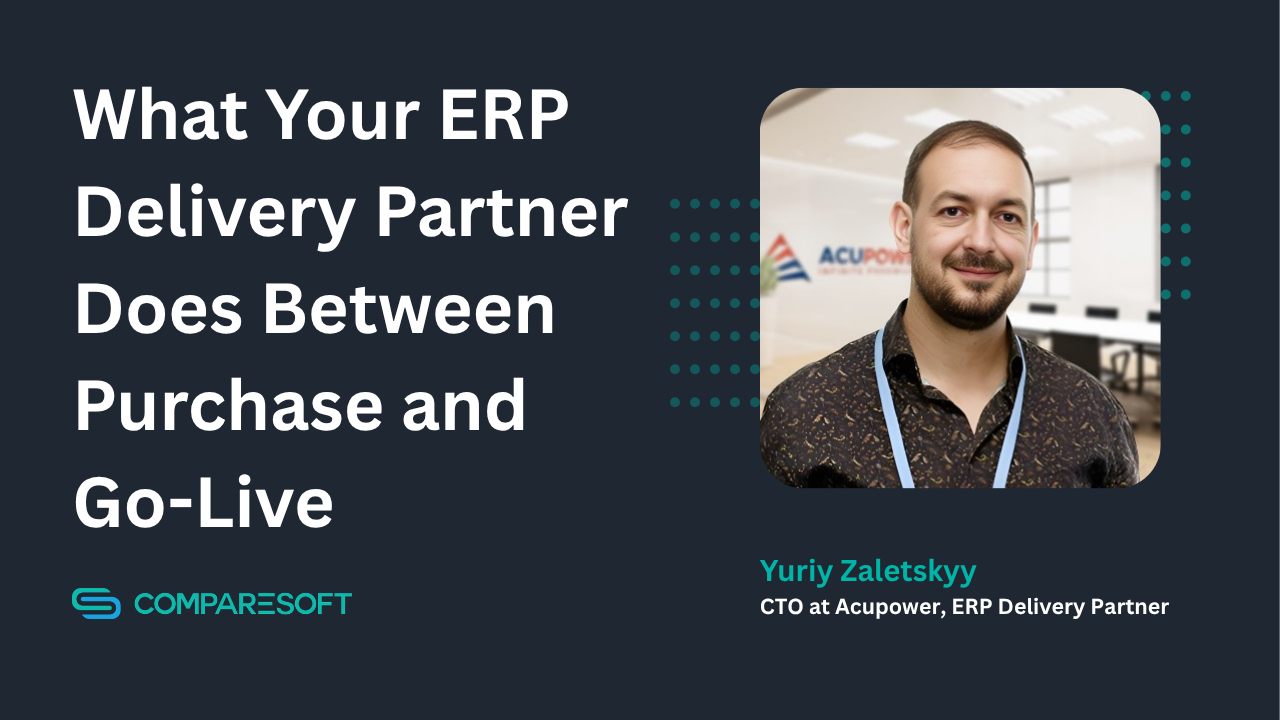
What Your ERP Delivery Partner Does Between Purchase and Go-Live
Yuriy Zaletskyy draws on 13 years of hands-on implementation experience to explain what really happens once a business has chosen its ERP and an ERP delivery partner takes over.
Listen and Watch the Podcast →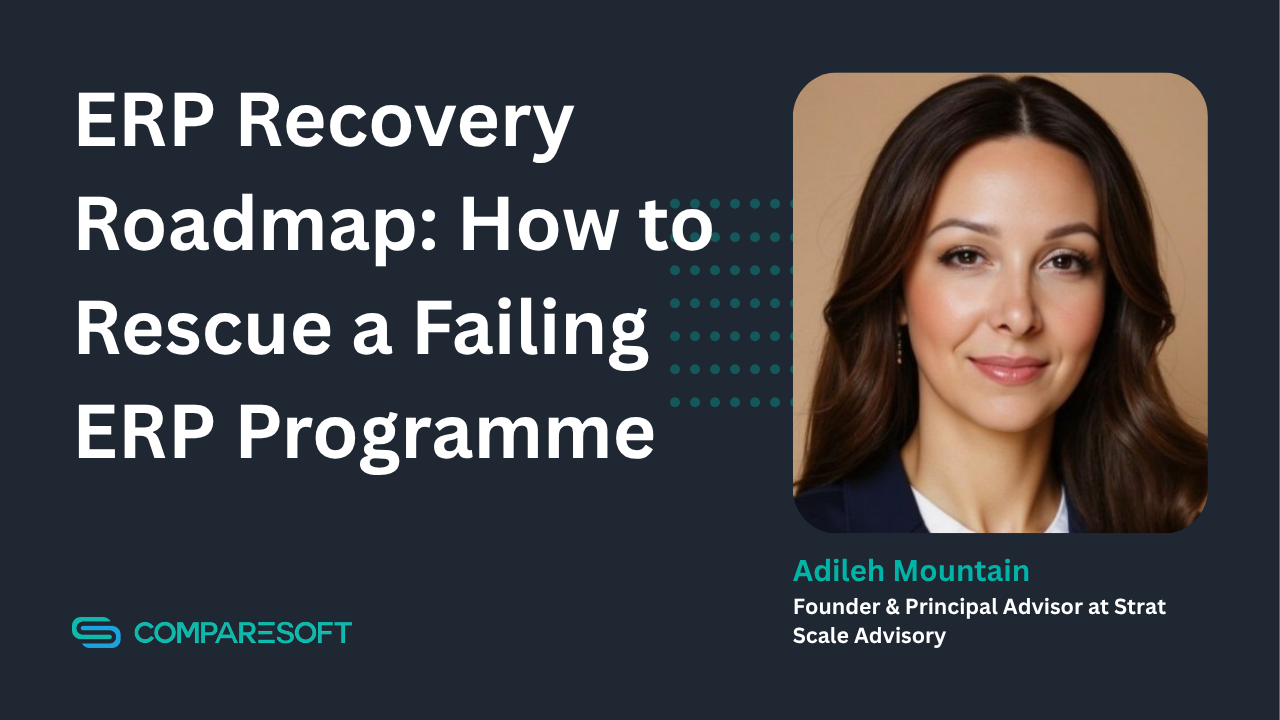
ERP Recovery Roadmap: How to Rescue a Failing ERP Programme
Drawing on 15 years in construction and EPC operations and her experience leading ERP transformation and recovery work at Deloitte, Adileh Mountain unpacks what causes ERP programmes to go off the rails and what a practical recovery plan looks like.
Listen and Watch the Podcast →
AI-Native ERP: What Buyers Should Know Before Selecting a System
John Cusick joins the Comparesoft ERP Podcast to explain what AI-native ERP actually means for software buyers. He breaks down the practical differences between AI-native and traditional ERP systems, from implementation and evolution to integrations, training, and post-go-live governance.
Listen and Watch the Podcast →Easily Shortlist & Compare ERP Software
Discover ERP systems for your accounting, sales, manufacturing, operations and delivery processes. See verified pricing, real features, realistic implementation plans & authentic erp reviews. Takes just 40 seconds. Save up to 33% on ERP costs.