
What ERP Failure Really Looks Like and How to Prevent It
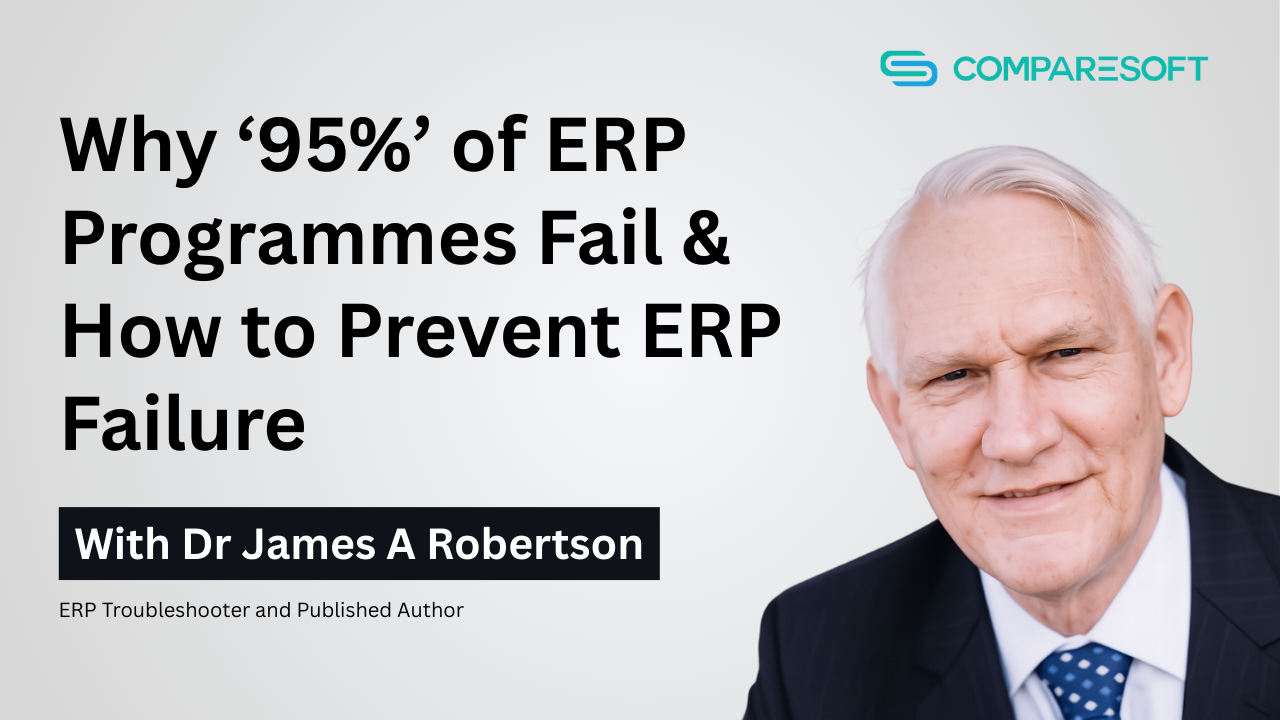
James Robertson, ERP Troubleshooter & Published Author, explains what ERP failure really looks like today and why it is far more common than most organisations realise, arguing that up to 95% of ERP programmes fail at the executive decision-making level.
What Is ERP Failure?
ERP failure is often portrayed as a dramatic event: a project cancelled, budgets blown, or systems switched off. But according to ERP troubleshooter James Robertson, most ERP failures are far quieter and far more expensive.
In this episode of the Comparesoft ERP Podcast, James explains that up to 95% of ERP programmes fail at the strategic decision-making level. ERP systems may go live, transactions may process, and reports may run, yet leadership still cannot rely on the ERP to support decisions that matter.
When executives do not trust the data, work returns to spreadsheets, confidence erodes, and the ERP quietly stops delivering value.
What ERP Failure Really Looks Like In Practice
ERP failure does not have to be catastrophic to be damaging. A system that processes transactions but fails to improve profitability, productivity, or competitive advantage has already failed.
If ERP is not embedded into executive decision-making and treated as a strategic asset, it is not delivering value. This type of ERP failure is often overlooked because organisations measure success by go-live milestones rather than outcomes.
Shortlist the UK’s Best ERP Systems That Match Your Implementation & Process Requirements
What Do You Need An ERP Software For?
Why ERP Implementations Fail When Treated As IT Projects
One of the most common causes of ERP failure is treating the implementation as a technology project. James argues that ERP requires an engineering mindset, not a technology-first approach. Engineers are trained to design against failure by identifying weaknesses early and testing rigorously before anything goes live.
When ERP programmes prioritise software selection, timelines, and optimism over risk analysis and validation, the same failure patterns repeat regardless of vendor or industry.
The Accountability Problem at the Heart of ERP Failure
A recurring theme in the episode is accountability. James argues that ERP failure often occurs because no single leader truly owns the outcome. ERP programmes without clear executive custody become politically driven, with unresolved issues pushed downstream.
To address this, James advocates formal accountability certificates signed before go-live, confirming that each business area is genuinely ready. This shifts ERP from shared responsibility to clear ownership, significantly reducing the risk of failure.
Why ERP Training Should Never Be Time-Limited
ERP training is frequently rushed to meet project deadlines. According to James, this is one of the most overlooked contributors to ERP failure. Training should not end when the schedule dictates, but when users can confidently operate the system under real-world conditions.
ERP systems should only go live once people are capable, not simply trained. Without this discipline, adoption issues emerge after go-live, when they are far more expensive to fix.
What the Lidl SAP ERP Failure Teaches Leaders
Using Lidl’s abandoned SAP programme as an example, James explains that the failure could have been identified early. The issue was not software quality, but a strategic mismatch that should have been diagnosed before implementation began.
With proper executive accountability and a structured diagnostic approach, Lidl’s ERP failure could have been avoided or corrected in days rather than after years and hundreds of millions spent.
The lesson is clear. ERP failure is not inevitable. With clear ownership, engineering discipline, and the right preparation, most ERP implementations can be fixed rather than replaced.
What are You Looking to Improve with ERP?
Meet the Speakers

Dr James A Robertson
ERP Troubleshooter & Published Author
Specialises in strategic ERP troubleshooting and turnaround including full remediation, often where clients feel they have “tried everything” and still cannot get the executive-level value they expected.

Ryan Condon
Head of Content
Content architect and strategist at Comparesoft, helping software buyers make confident decisions through purposeful, well-structured content. Podcast Host and Head of Content since joining the team in 2019.

Easily Shortlist & Compare ERP Software
Discover ERP systems for your accounting, sales, manufacturing, operations and delivery processes. See verified pricing, real features, realistic implementation plans & authentic erp reviews. Takes just 40 seconds. Save up to 33% on ERP costs.