
What Your ERP Delivery Partner Does Between Purchase and Go-Live
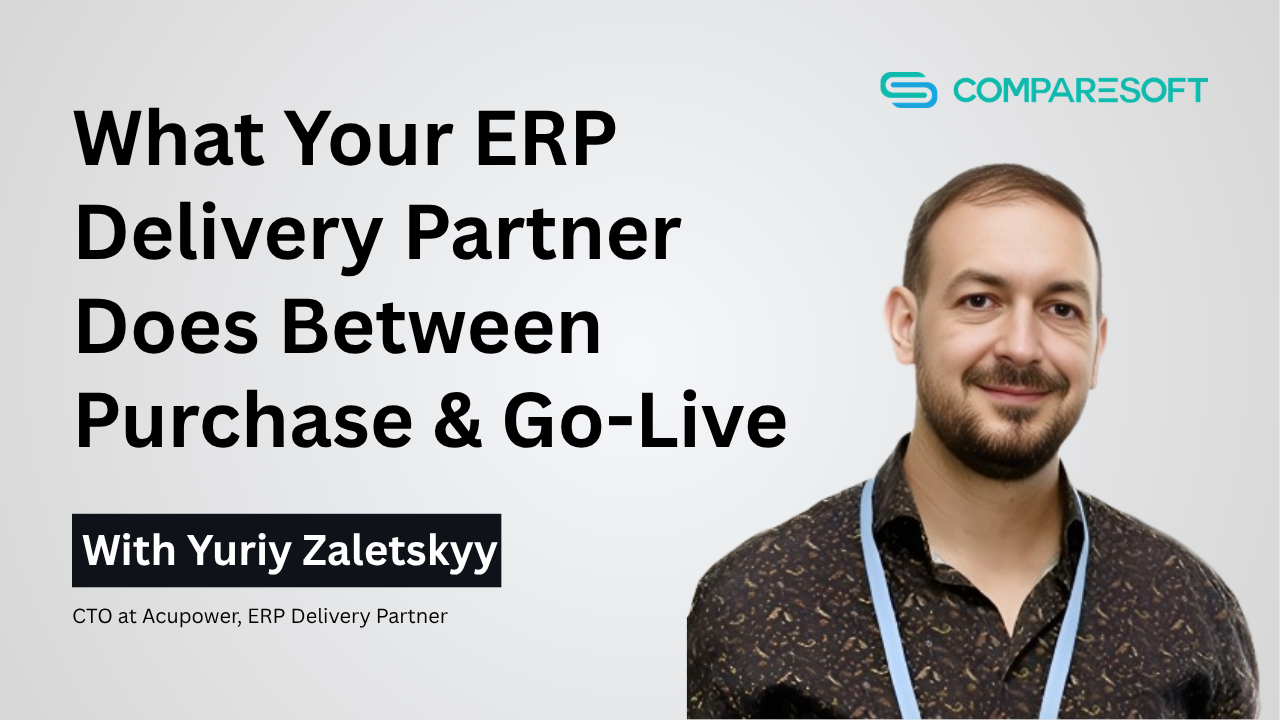
Yuriy Zaletskyy draws on 13 years of hands-on implementation experience to explain what really happens once a business has chosen its ERP and an ERP delivery partner takes over.
In this episode
- What Does an ERP Delivery Partner Actually Do?
- How an ERP Delivery Partner Bridges the Gap Between Demo and Delivery
- How Your ERP Delivery Partner Should Handle the 70% Failure Rate
- When Your ERP Delivery Partner Should Recommend Customisation
- What Your ERP Delivery Partner Does in the First Two Weeks
- How Long ERP Delivery Partners Take to Get You Live
- How an ERP Delivery Partner Builds What Does Not Exist Out of the Box
- What to Ask Your ERP Delivery Partner Before You Sign
What Does an ERP Delivery Partner Actually Do?
You have chosen your ERP Software. The contract is signed. Now what?
This is the point where an ERP delivery partner takes over. An ERP delivery partner sits between the software vendor and your organisation. They configure the platform, map your business processes, build integrations, and support you through go-live and beyond. Without one, a software purchase stays exactly that: software you have paid for but cannot yet use.
For most businesses, this is unfamiliar territory. The relationship is new, the language is technical, and the stakes are high. Whether you are a small or mid-sized business deploying your first system or an enterprise replacing a legacy platform, the questions are the same.
In this episode of the Comparesoft ERP Podcast, Yuriy Zaletskyy, CTO and Co-Founder of Acupower, explains what you should expect from your ERP delivery partner, where implementations go wrong, and why the partner you choose matters as much as the software itself.
How an ERP Delivery Partner Bridges the Gap Between Demo and Delivery
The person who demonstrated your ERP is rarely the person who implements it. Demonstrators tend to be sales-focused and charismatic. Implementers are technically oriented. The quality of the handover between these two roles directly affects how smoothly your project starts.
This is where a good ERP delivery partner earns their value. Yuriy explains that detailed discovery sessions are the single most important step in closing the gap between what you were shown and what you will actually work with. A strong delivery partner invests significant time upfront understanding your real business processes, your data, and your workflows, rather than relying on assumptions carried over from the sales cycle.
In one case, Yuriy describes a buyer who spent nine months in prototype and discovery phases, testing how the ERP handled their real data volumes and bundled items before any implementation work began. That process surfaced internal contradictions that the buyer’s own team had not identified.
Yuriy also notes that buyers are increasingly using AI tools to validate RFP responses, which is creating a new dynamic between buyers and delivery partners. A polished demo does not reveal those gaps. Your ERP delivery partner should.
How Your ERP Delivery Partner Should Handle the 70% Failure Rate
Research suggests that 70 to 80 per cent of ERP implementations fail. It is a widely cited figure, and Yuriy challenges how it should be read.
He argues that failure is reported far more loudly than success. A business with a smooth go-live is unlikely to publicise it. One that experienced problems has every reason to raise the alarm. The figure reflects genuine risk, but it is shaped by reporting bias.
That said, the statistic still signals something important for you as a buyer. The variables that derail ERP projects (internal politics, data quality, change readiness, partner capability, etc.) are real. The question to ask your ERP delivery partner is not whether implementations can fail. It is whether they have the processes, discipline, and transparency to reduce that risk for your specific project.
When Your ERP Delivery Partner Should Recommend Customisation
Customisation is often treated as the root of all problems in ERP delivery. Yuriy pushes back on this. Whether customisation is appropriate depends on two things:
- Whether the ERP platform supports it by design
- Whether it serves a genuine business need
Some platforms are built to be deeply customisable, allowing changes to business logic, workflows, and interfaces without compromising future upgrades. Others are not. In those cases, the warning against customisation is fair. The distinction matters because blanket advice to avoid customisation can force you into rigid processes that do not reflect how your business actually operates.
Yuriy illustrates this with a practical example. A jewellery company opened a precious metals pricing report roughly 20 times per hour. Customisation reduced the load time by 30 to 40 seconds per opening. Across the workforce, that saved an estimated 100 hours of labour per day. The client considered it a straightforward investment.
His broader point is that customisation should be driven by measurable outcomes, not technical preference. If a process is genuinely unique and commercially important, a good ERP delivery partner will help you stretch the ERP to support it rather than force your team to adapt to a standard process that does not fit. This applies whether you operate in construction, e-commerce, or any other sector with distinct operational workflows.
What Your ERP Delivery Partner Does in the First Two Weeks
Once you sign with an ERP delivery partner, the first two weeks focus on structure rather than building. Yuriy describes this phase as the foundation for the entire project.
Your delivery partner will run discovery sessions to understand how your business operates. They will set up a meeting cadence, assign responsibilities across both teams, and confirm which of your people will be involved. This includes matching specialist consultants to your requirements, whether that is accounting and financial management, manufacturing, distribution, or supply chain. Yuriy stresses that ERP implementation should not be treated as a punishment assignment. You need your best people on the project.
A critical part of this early phase is separating ownership. Your ERP delivery partner is responsible for technical delivery, configuration, and advisory. You are responsible for decisions about your own processes.
Yuriy frames this clearly: “The ERP is your product, not the partner’s. You are in the driving seat. Setting that expectation in the first two weeks prevents misalignment later.”
How Long ERP Delivery Partners Take to Get You Live
Timelines vary, but Yuriy is direct about what you should expect. The shortest Phase 1 delivery his team has completed was two months. The overall project timeline is open-ended, because no business has the same processes forever.
Acupower structures contracts around milestones rather than fixed calendar dates. This matters because the factors that push timelines out are often on the buyer’s side: internal sign-offs, staff availability, and decisions that require cross-departmental alignment. Yuriy describes situations where his team completed a section of work in two months, then waited a further two months for the buyer to sign off.
External factors add further unpredictability. Regulatory changes, tariff shifts, and organisational restructuring can all affect scope and sequencing. For buyers, the lesson is that implementation speed depends as much on your own readiness as on your ERP delivery partner’s capability.
How an ERP Delivery Partner Builds What Does Not Exist Out of the Box
Every ERP has limits. When your requirements go beyond what the software offers as standard, your ERP delivery partner needs to decide whether to customise, integrate, or build from scratch.
Yuriy walks through a real example. An international client operating across the USA, Canada, South Africa, and Ukraine needed multi-country payroll support. They used Deel for international payroll, but no native integration existed between Deel and their ERP platform, Acumatica. Acupower built the integration in approximately one month, then extended it as the client expanded into new markets with different regulations.
This kind of work is where an ERP delivery partner adds value beyond standard configuration. It is also where costs can escalate if the scope is not well managed. Yuriy’s approach is to build working prototypes quickly and extend them iteratively, keeping you informed at each stage.
What to Ask Your ERP Delivery Partner Before You Sign
Most buyers evaluate the software far more carefully than the ERP delivery partner who will deliver it. Yuriy’s advice is to flip that balance by focusing on two points:
- Test whether the delivery partner listens. Ask 10 questions. If you receive substantive answers to fewer than eight of them, that is a signal to look elsewhere. A good ERP delivery partner should demonstrate that they have heard and understood your specific requirements, not just presented a generic capability pitch.
- Push the delivery partner to show you what the ERP can actually do. Yuriy identifies this as the most common mistake he sees: buyers who do not understand the full potential of the platform they have purchased, because their delivery partner never explained it. In one recent case, a client discovered that their ERP could automate a time-entry process they had been managing manually. Their existing partner had never mentioned it.
For any business about to appoint an ERP delivery partner, the principle is simple. Evaluate the partner with the same rigour you apply to the ERP Software itself. The right partner closes the gap between what you bought and what you actually need. The wrong one leaves that gap wide open.
What are You Looking to Improve with ERP?
Meet the Speakers

Yuriy Zaletskyy
CTO and Co-Founder of Acupower ERP Delivery Partner
Yuriy Zaletskyy is the CTO and Co-Founder of Acupower, an ERP delivery partner specialising in Acumatica implementations.

Ryan Condon
Head of Content
Content architect and strategist at Comparesoft, helping software buyers make confident decisions through purposeful, well-structured content. Podcast Host and Head of Content since joining the team in 2019.

Latest ERP Podcast Episodes
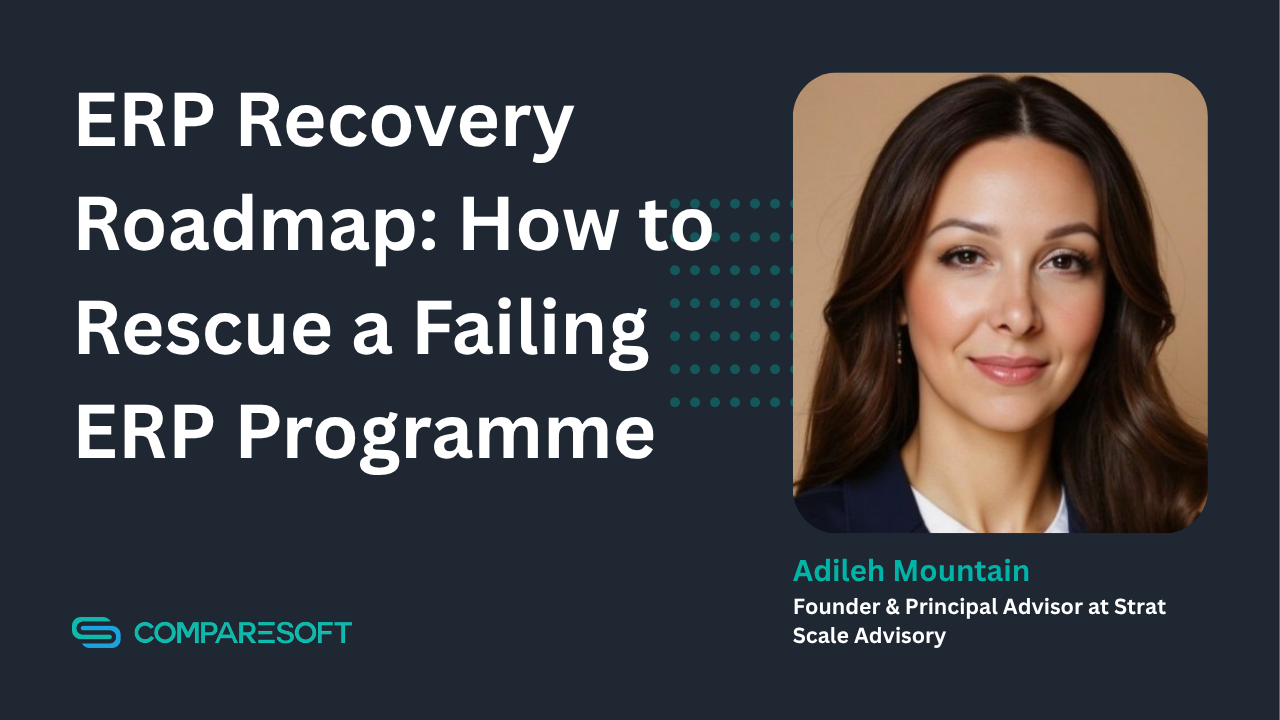
ERP Recovery Roadmap: How to Rescue a Failing ERP Programme
Drawing on 15 years in construction and EPC operations and her experience leading ERP transformation and recovery work at Deloitte, Adileh Mountain unpacks what causes ERP programmes to go off the rails and what a practical recovery plan looks like.
Listen and Watch the Podcast →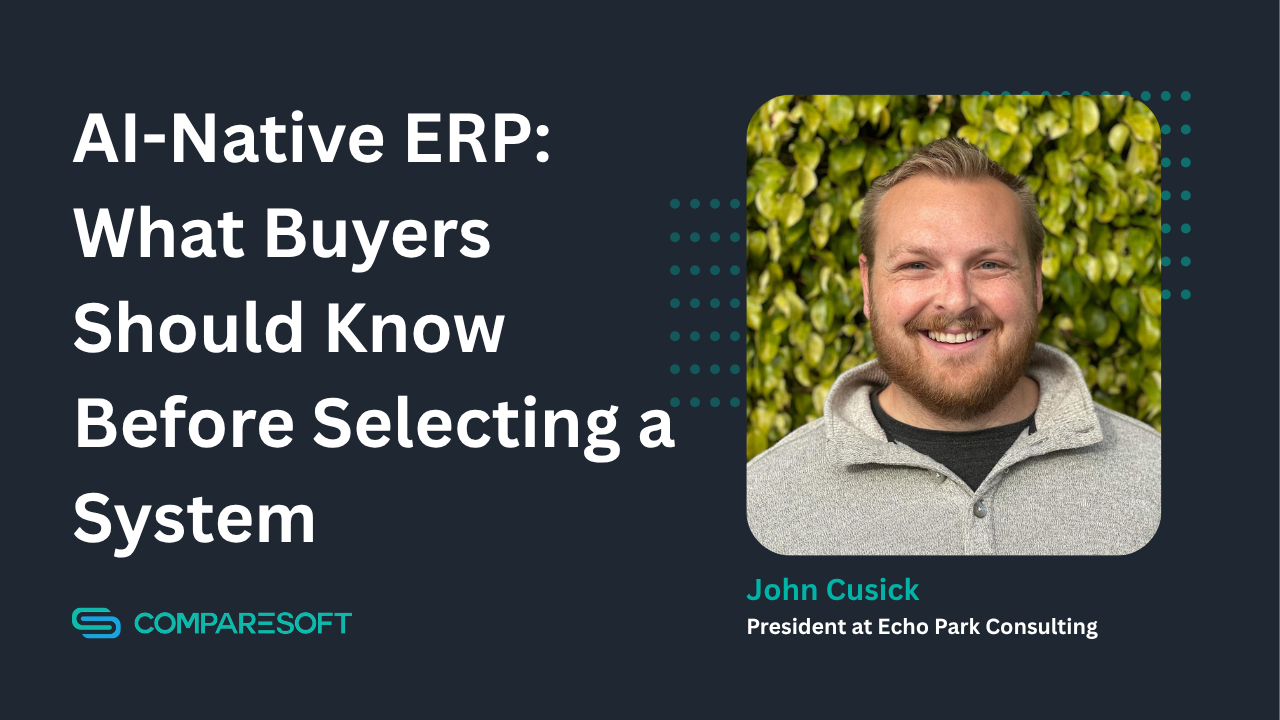
AI-Native ERP: What Buyers Should Know Before Selecting a System
John Cusick joins the Comparesoft ERP Podcast to explain what AI-native ERP actually means for software buyers. He breaks down the practical differences between AI-native and traditional ERP systems, from implementation and evolution to integrations, training, and post-go-live governance.
Listen and Watch the Podcast →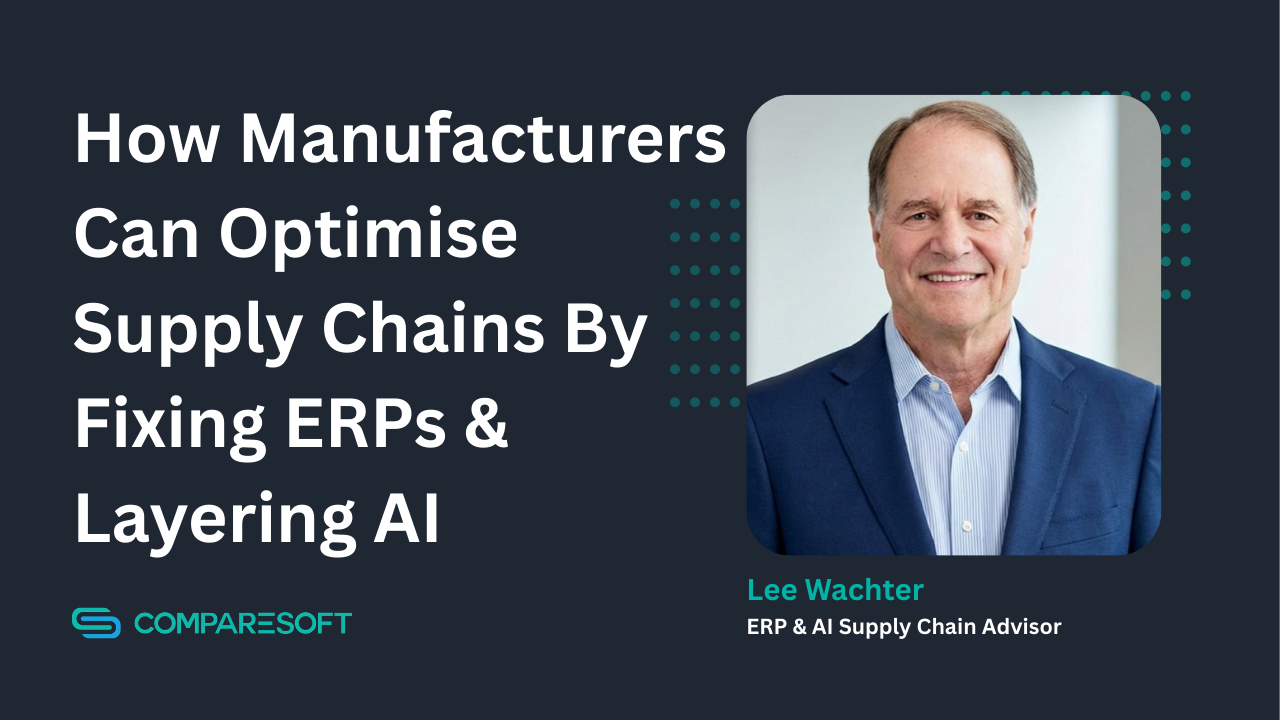
How Manufacturers Can Optimise Supply Chains By Fixing ERPs & Layering AI
Lee Wachter, ERP & AI Supply Chain Advisor, joins the Comparesoft ERP Podcast to explain how mid-market manufacturers and CPG companies can regain control of failing ERP supply chain operations, drawing on senior leadership experience at Olympus, Diageo, and three years inside an ERP vendor.
Listen and Watch the Podcast →Easily Shortlist & Compare ERP Software
Discover ERP systems for your accounting, sales, manufacturing, operations and delivery processes. See verified pricing, real features, realistic implementation plans & authentic erp reviews. Takes just 40 seconds. Save up to 33% on ERP costs.