
The Critical Success Factors (CSF) Behind Successful ERP Implementations
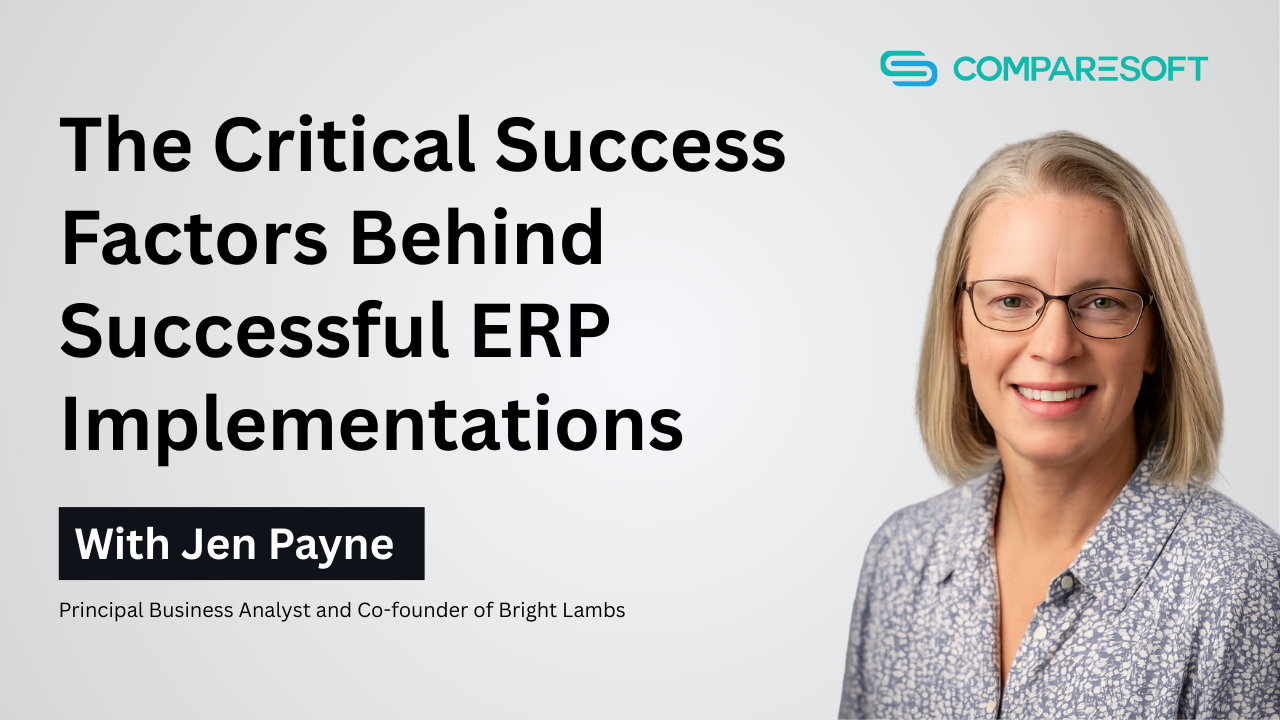
Jen Payne, Co-founder of Bright Lambs, joins us to break down the critical success factors behind successful ERP implementations and why so many projects fail before they even reach go-live.
What Are ERP Critical Success Factors?
ERP critical success factors are the conditions that need to be in place before, during, and after the implementation of ERP Software. CFSs exist to give implementation a realistic chance of being successful and delivering value to a business. When critical success factors are weak or ignored, there is a 70-90% chance that an ERP implementation will fail.
ERP success is not solely about the implementation of technology; it is about leadership, decisions, data, people, and how change is managed across the business. This is what critical success factors focus on.
ERP Critical Success Factors With Jen Payne
In this ERP podcast episode, Jen Payne, Principal Business Analyst & Co-Founder of Bright Lambs, breaks down the critical success factors behind successful ERP implementations and explains why so many projects fail before they ever reach go-live.
Drawing on her Master’s research into ERP critical success factors and her experience across manufacturing, engineering, and military logistics systems, Jen offers a grounded, practitioner-led view of what really matters in the early stages of an ERP programme.
A key theme throughout the discussion is that ERP journeys start long before software selection. Jen explains why listening to real operational pain points comes before defining solutions, and why spreadsheets and workarounds should be treated as signals, not problems to be dismissed. Data quality, governance, and realistic expectations all need to be addressed upfront if an ERP system is going to support the business rather than add friction.
During her research, Jen identified nine critical success factors that consistently influenced ERP outcomes across both civilian and military environments:
- Top management support
- A project champion or high-level steering committee
- Strong vendor partnerships and appropriate use of tools
- Project team training, experience, and competence
- Effective management of expectations
- A clear data analysis, conversion, and migration plan
- Change management and organisational readiness
- Active user involvement and feedback
- Legacy system support and contingency planning
These factors remain highly relevant today, even as cloud ERP and AI accelerate delivery timelines. As Jen explains, faster technology can amplify both good and bad decisions. Without strong foundations, organisations simply fail more quickly.
This episode provides practical guidance for manufacturing and engineering leaders who want to reduce ERP implementation risk by focusing on critical success factors that consistently separate success from failure. Watch on YouTube, or listen on Spotify and Apple.
What are You Looking to Improve with ERP?
Meet the Speakers

Jen Payne
Principle Business Analyst & Co-Founder of Bright Lambs
Helping organisations understand what is really going on inside their processes and systems.

Ryan Condon
Head of Content
Content architect and strategist at Comparesoft, helping software buyers make confident decisions through purposeful, well-structured content. Podcast Host and Head of Content since joining the team in 2019.

Easily Shortlist & Compare ERP Software
Discover ERP systems for your accounting, sales, manufacturing, operations and delivery processes. See verified pricing, real features, realistic implementation plans & authentic erp reviews. Takes just 40 seconds. Save up to 33% on ERP costs.