
Maintenance Management of UK's First Artificial Surf Lake
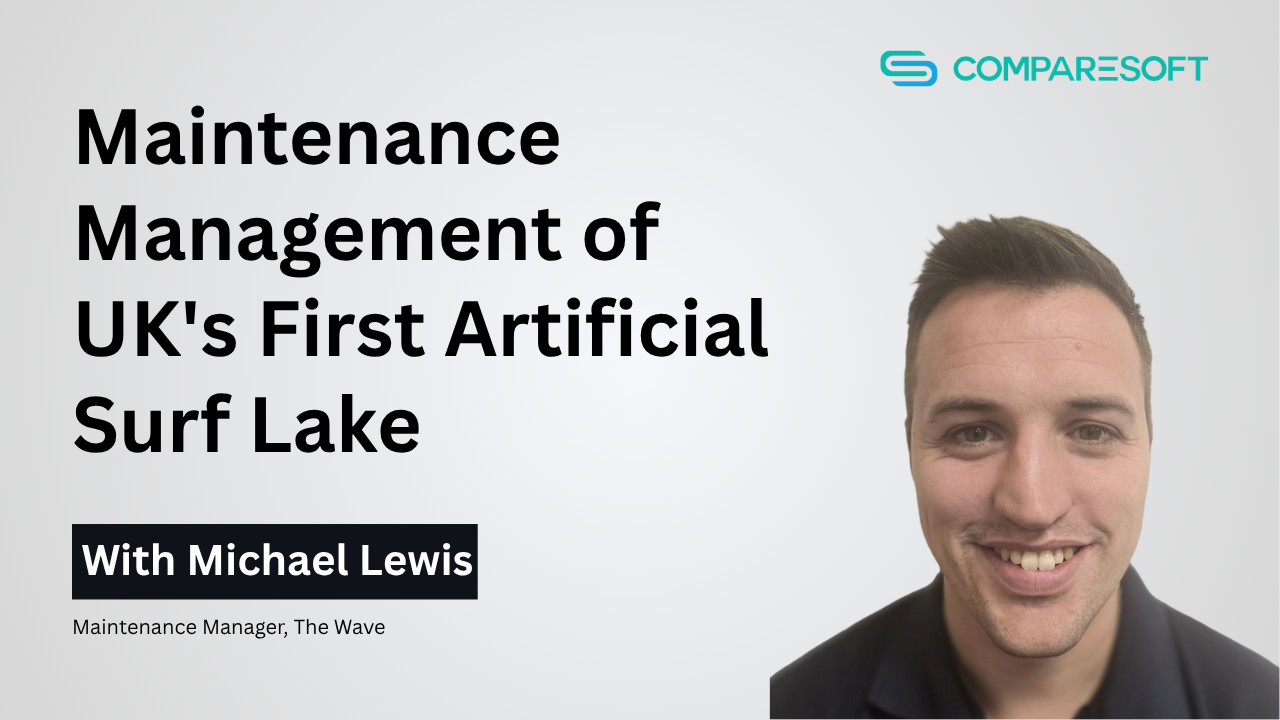
Michael Lewis, Maintenance Manager at The Wave (which is the UK's First Artificial Surf Lake) offers insight on why condition monitoring is important and how to build an impactful maintenance culture.
In this episode
- How The Wave’s Maintenance Manager Keeps the UK’s First Artificial Surf Lake Running
- Why Maintenance Culture Starts With Senior Buy-In
- The Maintenance Pyramid: From Reactive To Proactive
- Why Condition-Based Monitoring Changes Everything
- Planning Maintenance Activities Around Data, Not Guesswork
- Are Spreadsheets Enough For Maintenance Management?
- Maintenance As A Competitive Advantage
- Michael’s Three Tips For Effective Maintenance
- Full Transcript
How The Wave’s Maintenance Manager Keeps the UK’s First Artificial Surf Lake Running
Maintaining a 25 million litre artificial surf lake is not the same as maintaining a factory floor or a fleet of vehicles. But the principles that keep The Wave in Bristol running reliably are the same ones that underpin effective maintenance in any asset-heavy operation:
- Solid data
- Structured preventive work
- A culture that treats maintenance as a competitive advantage rather than a cost centre
In this episode of the Comparesoft Podcast, Michael Lewis, Maintenance Manager at The Wave, explains how he built a maintenance function from scratch around the world’s most advanced wave pool technology, and why condition-based monitoring sits at the heart of his approach.
Why Maintenance Culture Starts With Senior Buy-In
Michael is clear that building an effective maintenance department begins long before any work order is raised. It starts with how senior management views maintenance, and specifically how they view the maintenance budget.
A typical business should allocate five to 10% of its running costs to maintenance. But budget alone is not enough. What matters equally is the attitude towards maintenance when things go wrong. Are teams given time to repair equipment properly, or are they pressured to get it running as quickly as possible? The difference between a quick fix and a proper repair often determines whether a problem returns weeks later.
As Michael puts it, “If leadership treats maintenance as a necessary evil, the department will always be fighting fires. If leadership treats it as a strategic function, the team can plan, prevent, and improve.”
The Maintenance Pyramid: From Reactive To Proactive
Michael describes the maintenance maturity model as a pyramid with five levels. At the base sits reactive maintenance, where teams only respond to breakdowns after they happen. Above that are preventive, condition-based, predictive, and proactive maintenance.
The goal is to spend as much time as possible on everything above the base. Organisations that keep reactive maintenance between 15 and 30% of total workload are considered world-class. But Michael stresses the importance of setting achievable, short-term goals rather than trying to leap to the top of the pyramid overnight.
The process is cyclical, not linear: measure where you are, develop a plan, implement it, and measure again. Each cycle should move the team further up the pyramid. For organisations still reliant on reactive maintenance, a CMMS can provide the structure needed to begin that shift.
Why Condition-Based Monitoring Changes Everything
Condition-based monitoring is the area Michael is most passionate about, and it plays a central role in how The Wave manages its equipment. Using vibration analysis and temperature monitoring, his team can assess a machine’s health in real time, even when that machine has not yet failed.
This approach delivers three key benefits:
- It allows the team to see the direct impact of their maintenance work. After servicing a piece of equipment, they can monitor vibration levels and temperature data to confirm the improvement.
- It helps determine how often a machine actually needs maintaining, which prevents over-maintenance. Over-servicing equipment wastes time and diverts resources from other areas that may need attention.
- It provides hard evidence that the maintenance department is adding value, something that is notoriously difficult to demonstrate when the goal is preventing breakdowns from happening in the first place.
For teams considering this approach, condition-based maintenance software can tie sensor data directly into preventive maintenance schedules, making it easier to act on insights rather than just collect data.
Planning Maintenance Activities Around Data, Not Guesswork
When maintenance time is limited, and especially when reactive work still dominates the schedule, every hour of planned maintenance needs to count. Michael’s approach is to focus on the big-ticket items first: what takes up the most time, what causes the most downtime, and where the quick wins are.
Without solid data, this prioritisation is guesswork. With it, teams can direct their effort where it has the greatest impact. Safety and production-critical equipment come first by default, but beyond that, the data should guide the plan.
In situations where the maintenance team is stretched, Michael recommends restructuring shifts or bringing in additional hands to ensure preventive work does not get squeezed out entirely. Falling back on reactive-only maintenance creates a cycle that is expensive and difficult to break.
Are Spreadsheets Enough For Maintenance Management?
Michael has used spreadsheets extensively for maintenance management in previous roles. His verdict: they can work as a stopgap, but they are slower and more labour-intensive than dedicated maintenance management software.
The core issue is data input. A spreadsheet requires manual entry for every update, from rescheduling tasks to recording machine conditions. Modern CMMS software automates much of this. Machine running times, condition data, and schedule adjustments update automatically, which frees up the maintenance team to focus on actual maintenance rather than administration.
For small and medium businesses still relying on spreadsheets, the transition to a CMMS is often the single most impactful step towards reducing reactive maintenance and gaining visibility over equipment health.
Maintenance As A Competitive Advantage
Michael believes maintenance is too often viewed as a cost to be minimised rather than a capability to be developed. He points to Toyota as an example of a company that doubled down on maintenance discipline to reduce downtime, lower production costs, and improve quality.
The competitive edge comes from what you avoid, not just what you do. A plant that runs reliably and consistently produces lower unit costs and higher quality output. Maintenance downtime hits the bottom line directly, so reducing it is a strategic investment, not an overhead.
For maintenance managers making the case for investment, the evidence base matters. Predictive maintenance software and condition monitoring tools give teams the data they need to quantify the value they deliver.
Michael’s Three Tips For Effective Maintenance
Michael closes the conversation with three practical recommendations for maintenance managers and teams:
- Build everything on solid data. Track preventive maintenance completion rates, measure the ratio of preventive to reactive work, and use that data to guide every decision. Without reliable numbers, you cannot be sure of your outcomes. At a minimum, you should be completing at least one preventive job for every reactive job, and even that ratio is high.
- Use data to justify your budget. If you can prove the plant is improving, whether through condition monitoring trends, reduced downtime, or lower reactive maintenance rates, senior management is far more likely to protect your budget. Maintenance departments are typically only noticed when something breaks or when an accountant looks for savings.
- Always aim for the next level. Moving up the maintenance pyramid from reactive to preventive, from preventive to condition-based, and beyond requires continuous improvement. The first three levels (reactive, preventive, condition-based) are achievable with good data and a solid team. The higher levels require heavier investment, but the foundations start with getting the basics right.
Full Transcript
Matt:[00:00:31] Hi everybody. And welcome back to the Comparesoft podcast. My name is Matt Cook and I am your host. And today we’ve got our special guest Michael Lewis from The Wave. Michael started his career as an instrumentation engineer at RWEgeneration, got promoted to become materials handling technician, had a great career at RWE for nine years, and during the same time he also completed his bachelor’s degree in electrical and electronics engineering from the University of South Wales. He then became a maintenance manager at NSS and is now maintenance manager at The Wave. And The Wave is a place where you can surf anytime in the year, but we’ll go into that a little bit later on.
So, Michael, how’s it going? How are you? Has COVID affected the business? Obviously it is somewhere where you need people to be visiting for such a business, a leisure business. So how’s everything been going?
Michael: [00:01:42] Yeah, I’m really good. Thank you. Yes, it has affected us a great deal. As you can imagine, a surf league really does need strong summers, so we need a strong finish for sure.
Matt: [00:01:52] Could you tell us a little bit about what you do then at The Wave, how you’reinvolved in the business and what exactly you do there?
Michael: [00:02:00] Yeah, so I’m the maintenance manager at The Wave. I’ve worked here about 18months now. So I’ve seen it through the build stage and into opening. I’m in charge of new Wave machine and in general, facilities run site. So it involves heavily around the uptime of the machine and the general upkeep of the supporting infrastructure. It’s really good on my behalf because it’s got a heavy amount of condition-based monitoring based around it. So it’s easy to analyze and stay on top of and present touch where we have another go down electrically or mechanically. We had a few software glitches to start with, but since then we’ve been really solid.
Matt: [00:02:43] And obviously, I mean, it’s a massive piece of equipment. I haven’t been there myself, but judging from the photos, I mean, it’s a Lake. It’s huge. It’s not like one of these old school wave machines that we’ve seen on like a yacht or something that. It’s like a real Lake. It looks like a Lake like it’s quite incredible.
Michael: [00:03:06] So we bought a section of washing pool farm and used to come to in Breslin, turned it into a Lake. Yes, you’re right. It’s got occupancy of around 70people, 25 millilitres of water. Yeah, it’s really big and all that is poured from fresh tap water as well. It’s not from a river. So yeah, it is quite the engineering project.
Matt: [00:03:30] Yeah, sure. Incredible stuff. And so how would you set than a good maintenance culture?
Michael: Yeah, so from The Wave’s point of view, I find it quite easy because I literally established the first maintenance team. But in general, if you were going to go into a new place, it is first really important to get the buy-in from senior management. It’s really important how they see maintenance and how especially they see the maintenance budgets. So for example, typical running costs for a business, five to 10% of that should be spent on maintenance. And I think it’s really important to understand why. And again, it’s not just the investment they make into maintenance in their plant, it’s their attitude towards maintenance. And so like Mike Tyson says everyone has got a plan till they get hit in the face. What happens when the plant falls down? Are you actually given the correct amount of time to properly repair equipment or are you encouraged to get it working as soon as possible? Because there can be a large difference between the two and you’d know you can get it back running faster initially. It made me a detriment in the long run.
So once you get the buy-in from there, you’re able to sort of run with it then, so you’ll have to measure the current business is and see if you can take it on. So the maintenance pyramid is the absolute base of the pyramid is reactive maintenance. If you’re purely reactive, you’re definitely failing as a maintenance department. The next step of above preventative maintenance, then condition-based, then productive, and the top of the pyramid is proactive maintenance.
The more time you spend on everything apart from reactive maintenance, the better. So I believe if 15 to 30% of your, or if you’re in the bracket of 15 to 30% reactive maintenance, you are considered world-class, but it is definitely important to set achievable goals in terms of more short term success and then sort of move on from there. And it’s really important to see the measure where you are, develop a plan, implement and then measure again to see where you have got to is acyclic processes as opposed to linear and constantly strives to move further up the pyramid.
On top of that then, a full support structure around me and then most focus on the maintenance technician or the maintenance staff spend as much of their practical time maintaining the equipment. So you must remove or streamline the other processes.
So for example, the supervisors should already have the work plans. The large portion of their day should be spent on tomorrow and further. The workshop must be conducive of an efficient, proactive environment. That must be clean. It must be safe. The tools must be labelled up and put in the right places. Same with the stores. It’s like New York in the ’80s where they went on a broken window theory. So if you’re in a bad environment, it’s more likely to produce bad results is probably the best way of putting it. Until you get the absolute foundations in place and everyone’s clear on their goals, yeah, that’s the basis of a good culture of maintenance in my opinion.
Matt: [00:07:03] Okay, yeah. It makes absolute sense. And so moving on from that, how would you go about planning maintenance activities then?
Michael: [00:07:10] Okay. Yeah. So it’s really important, especially initially. And if you’re in a company that has a heavy portion of reactive maintenance that your maintenance time is spent wisely. So for example, a lot of the work has got to be really data-driven and focused on the big-ticket items, meaning what takes up most of the maintenance team’s time? What is causing the most down for them in the plant? And what are the quick wins? What are you able to get working fastest? And without data, it’s really going to slow down or make your work less efficient. So for example, if it’s again, safety and production problems, your hands are sort of tied and you must hit those first. So you may have to go about hiring additional hands or moving the structure to overload when shifts, so you have enough people to carry on preventative work. But it should all be around completing effective PMs.
Matt: [00:08:12] So how do you go about implementing an effective maintenance plan then?
Michael: [00:08:18] So again, what I really focused on in previous companies was condition-based monitoring. Condition-based monitoring can provide you with really good vibration and temperature analysis typically to show a machine’s performance, even though it hasn’t failed, it can show it’s failing, and this can be used in a few ways. You can maintain the machine, monitor again, and you can actively see the improvement you’ve made, and you can start to build up a scope of how often that machine actually needs maintaining because over maintenance can also affect the team as it takes a lot of time away from other areas which may need it. So if all maintenance needs arise at once, there’s all sort of cost and a time waste. So yeah, also a really effective tool to show what maintenance is actually doing.
So if you’re performing preventative maintenance, the machine won’t break down, but it’s hard to show that. So with actual data, the smoothing of vibrations or the levelling off of hotspots and temperatures on the equipment, you’re able to prove and show the benefits to your department.
Matt:[00:09:36] And so moving on slightly from that, do you think software tools are useful for managing said maintenance activities?
Michael: [00:09:43] Absolutely, yes. My team spent a lot of time previously. I’m currently finding the right software for our business. And I think if you really think about drastically reducing downtime, they’re essential these days. They are really good at tying in between condition-based monitoring equipment and life preventative maintenance schedules. It’s obviously more effective to run a maintenance schedule based around machine running times than actual calendar times. Yeah, for obvious reasons. But yeah, it really helps see over longer periods, the amount of reactive maintenance going down and decreasing as a proportion of your work, which will then be found in some production with an increased uptime.
Matt: [00:10:48] So what’s your take on using spreadsheets then for maintenance management and is that a good or a bad thing? What would be your advice on that or what you’ve seen people doing?
Michael: [00:10:59] Yeah, so I’ve used spreadsheets heavily in the past. If you can get the equations right, and if you can get all the data input into them, they can be useful. And they have been useful in the past, but they are very good. Well, they’re very good as a stop-gap between getting bespoke software and they were useful in tying two different software packages together, but there’s definitely a lot more clunky and a lot slower than it needs to be. And it’s the same as the software package is only as useful as the data you put into it, but for a spreadsheet a lot more time and a lot more effort to put the data into it. And with the modern maintenance software packages, that data like rescheduling and the current condition of the machine is automatically put in, which makes your job infinitely easier.
Matt: [00:11:52] So much easier. So how do you use a maintenance strategy as a competitive advantage?
Michael: [00:11:59] Yeah, that’s a really good question. To me, this is often I feel overlooked or seen at least as a necessary evil, but companies in the past have really, really focused on it and doubled down like Toyota to really reduce downtime, to increase quality. Once you get a plant running reliably and consistently the obvious knock-on effect then is cheaper and lower production costs as well as increased quality in whatever you’re producing. So, yeah, I think it’s really essential because maintenance downtime can really hit business bottom line hard. So it’s what they are avoiding rather than what are they actively doing. They are avoiding the downtime and ensuring that finds that time.
Matt: [00:12:53] Okay. That’s fascinating. So what are your top three tips then on effective maintenance for our listeners?
Michael: So the foundation of a modern maintenance department needs to be solid data. If you’re not getting solid data, you can’t be 100% sure of your outcomes. You need to be implementing effective, maintenance strategies in the right areas at the right time, especially in today’s climate, where everything is run, maybe with lower mining and especially lower costs. You really need to be focusing on the absolutely essential. So the bedrock needs to be solid data for your maintenance file even in terms of PMs completed, a percentage PMs completed, you must be keeping track of that. Preventative versus reactive. You should beat at least completing one preventative to one reactive job even that ratio is incredibly high. It needs to be heavily weighted towards preventative maintenance.
And with that data comes to the second point, which is helping convince a senior manager that you’re spending their money wisely. So if you can prove the plant is improving, or if you can physically show risk on condition-based monitoring systems where the equipment is getting better, they’re more likely to not to get your budget, because maintenance is typically only seen twice, once when it goes wrong and the other time when the accountant needs to make cuts.
Thirdly, I think it’s really important to see, especially when you go into a business, you’re very, very proactive. And as you mentioned, you’re looking at the culture, it’s really important to hit continuous improvements. And that to me involves moving up the pyramid of maintenance. So you need to be looking at the next level and what you need to achieve it. So reactive to preventative to a condition-based to predictive to proactive. The last two require heavy investment but just through good data and a solid team, you can easily get to a condition-based. I think that’s absolutely essential.
Matt: [00:15:07] And so wrapping up into our final question, what’s your favourite saying or quote on maintenance?
Michael: [00:15:17] Yeah, so I put up a thought, it’s this one. So if any of your maintenance staff say the quote, if it ain’t broke, don’t fix it, you’ve got to get rid of them because they clearly don’t know what maintenance is about. It’s really old fashioned. It’s got to go.
Matt: [00:15:34] Okay. That’s great. And so why don’t you tell us a little bit more about the wave then, because we haven’t spoken about that much. We said in the intro, we talk a little bit more about that. It looks incredible. It’s a surfing Lake. That’s all I know about it. I mean, how does this work? I mean, it’s a massive piece of water. How does it work? What is it? I mean, could you tell us a little bit more about that?
Michael: [00:15:55] Yeah. So The Wave uses, the latest Wave garden technology is the most advanced wave pool in the world, whereas traditionally, typical wave pools. Well have some way of impacting the water and you are at the lump of water that flows out of it. The waving technology where it’s only become possible in the last 10 years because computers are now powerful enough to model more simulations. So it’s capable of producing around 15 different kinds of waves going from really slow, gentle beginning waves up to full barrels. Twenty-five million litre pool in the middle of a farming in Bristol and it’s still your only one Northern hemisphere that is open to the public. There’s another one in Melbourne. And yeah, it really helps, well, massively improves your surf if you’re into that sort of thing. And we have inquiries quite often about professional surfers and professional teams would want them to come and train them there.
Matt: [00:17:02] And what about yourself? Are you a pro yet? I mean how many times have you got up on the board?
Michael: [00:17:08] That is a better question it is because I count them on one hand. I have a few go, you need to fast shutter to catch me stood up on the board and there’s some really, really good coaches down there. The waves that come out are perfectly consistent, so I’ve literally got no excuse for why I’m going tumbling on the water.
Matt: [00:17:26] Well, it’s a lot harder than it looks, right?
Michael: [00:17:30] The power of the wave is surprising because you obviously go from a standing start and then there’s this in the sea where I used to surf down, Porthcawl in south wales. I go in when the waves are quite little, so it barely carry you with this and you really feel it pushing you down there.
Matt: [00:17:49] And is it popular? How many sort of people do you get down there on a typical day, on a typical weekend or something like that or in the holidays?
Michael: [00:17:56] Oh yeah, we look to accommodate. I think in one given session, we can have about 60, 70 people in the pool every hour. It’s sort of, you come down for the whole experience. So you can come down, there’s plenty of cafes and restaurants down there. What’s quite unique about The Wave is if you typically are into surfing and especially as a spectator, you typically see a surfer 50 to 100meters away. So you can’t really see them catch a wave. Whereas we’ve got varying platforms and allocations bars, you can get right up to within three, four meters of some of the best surfers the Southwest has to offer to really see how they’re doing which I’m heavily taking notes, but I’m still at that stage.
Matt: [00:18:44] Well, that sounds absolutely fantastic. Well, thanks very much for being on the show. Really appreciate your wisdom now and some of the fantastic points that you’ve put across.
Michael: [00:18:54] Yes. Thanks for having me on. Thank you very much.
Matt:[00:18:56] No problem. And thanks again to the listeners. We will see you again very soon. We hope that this has been informative for you and I look forward to seeing you again soon. Ciao.
What Type of Maintenance Do You Perform?
Meet the Speakers

Michael Lewis
Maintenance Manager
Over 14 years experience in engineering and maintenance management.

Latest Maintenance Podcast Episodes
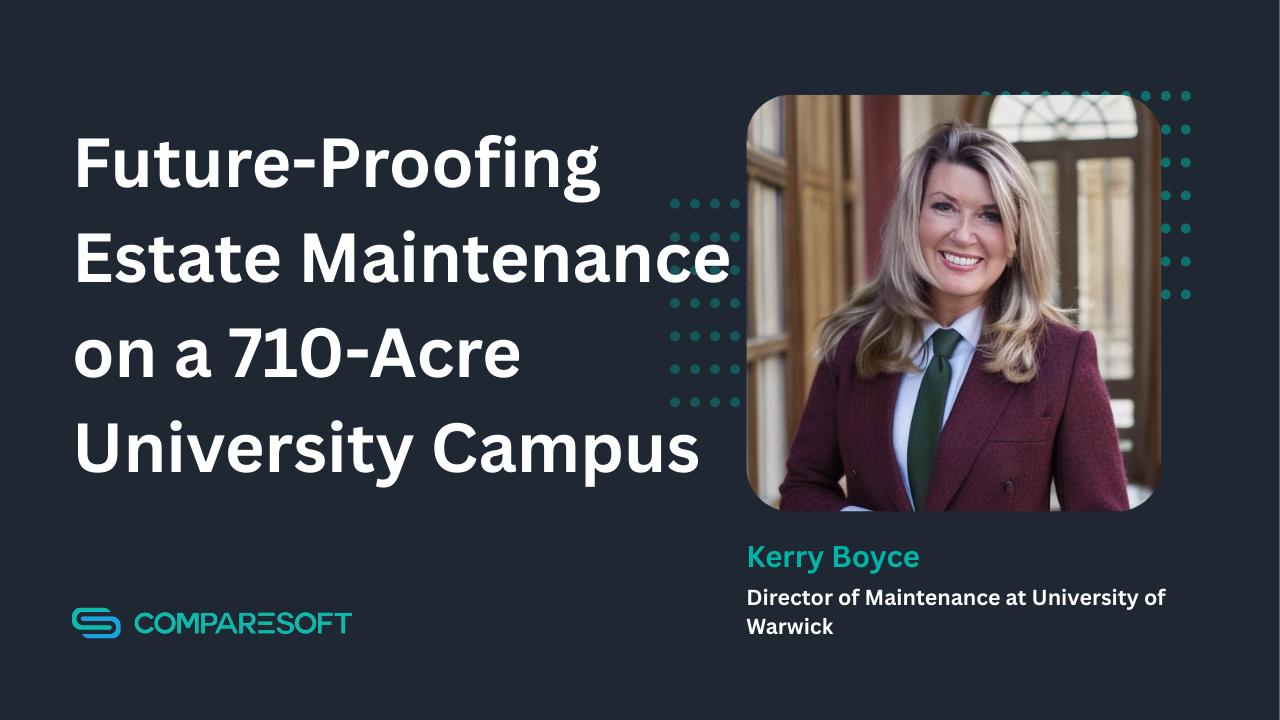
Future-Proofing Estate Maintenance on a 710-Acre University Campus
Kerry Boyce, Director of Maintenance at the University of Warwick, draws on a career spanning utilities, Transport for London, and the Royal Opera House to share what it takes to maintain a 710-acre university campus with over 500 buildings and a million-plus education assets.
Listen and Watch the Podcast →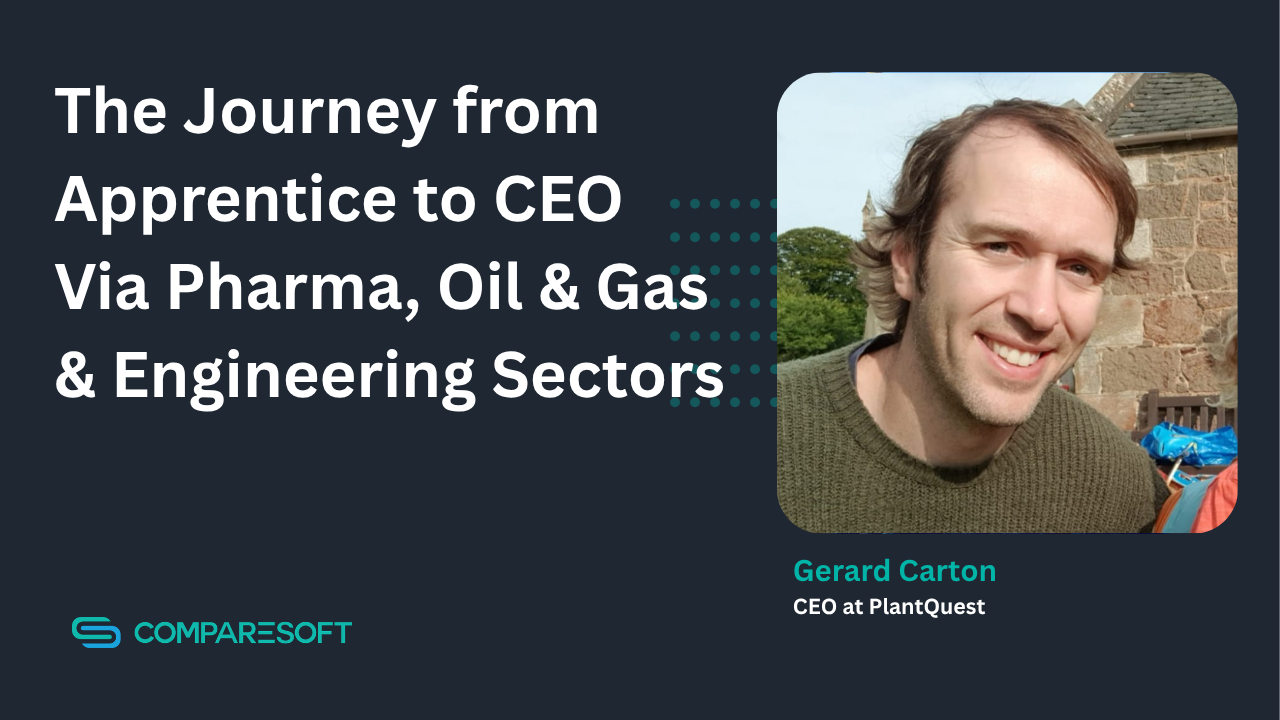
The Journey from Apprentice to CEO Via Pharma, Oil & Gas & Engineering Sectors
The CEO of PlantQuest, Gerard Carton, discusses the challenges faced in high-compliance environments in the Pharma, Oil & Gas, and Engineering Sectors and his journey from apprentice to CEO.
Listen and Watch the Podcast →
T-Cards to AI: Exploring the Evolution & Possibilities of Tech in Maintenance
Roy Milne, MD & Principal Consultant at newly-formed company Asset ONE, talks extensively about the progress and limitless capabilities of maintenance techniques and predictive maintenance strategies through the use of advanced technologies such as artificial intelligence.
Listen and Watch the Podcast →Easily Shortlist & Compare CMMS Software
Every maintenance team is run differently. Easily identify the best maintenance management software options that suit your way of maintenance. Takes just 40 secs, saving you 11 hours of research.