
How to Build a Condition Monitoring Strategy That Gets Results
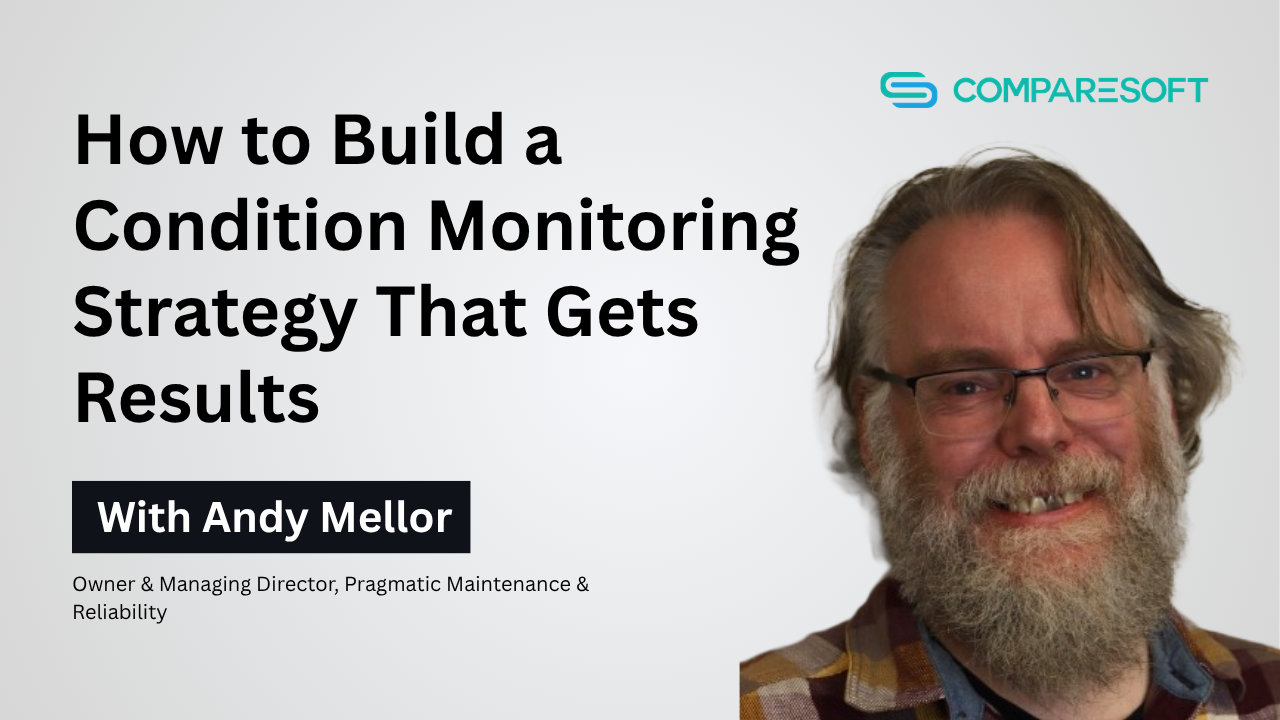
Andy Mellor explains what separates a condition monitoring programme that delivers measurable ROI from one that drifts into irrelevance. Former Plant Performance Engineer at British Steel, Andy, walks through the real reasons predictive maintenance fails and how engineers should present findings to plant managers.
In this episode
- The Challenge of Building a Condition Monitoring Strategy That Delivers ROI
- Why Condition Monitoring Programmes Fail (and Why It Is Not the Technology)
- What a Successful Condition Monitoring Strategy Looks Like
- How to Present Condition Monitoring Findings to Your Plant Manager
- Why Business Consequences Matter More Than Proving the Fault
- What to Look for in a Condition Monitoring System
- Low-Cost Condition Monitoring Wins You Can Implement Today
- How to Balance AI and Automation with Human Judgement in Condition Monitoring
- Four Principles That Prevent Emergency Troubleshooting
The Challenge of Building a Condition Monitoring Strategy That Delivers ROI
You have invested in vibration analysis equipment, thermal imaging cameras, and Condition-based Maintenance Software. Your engineers collect data on schedule every month. Reports go out. Yet unplanned downtime persists, maintenance costs stay flat, and your plant manager questions whether the programme is worth the spend.
The problem is rarely the technology. It is the gap between identifying a fault and getting it fixed.
In this episode of the Comparesoft Maintenance Podcast, Andy Mellor, Founder of Pragmatic Maintenance & Reliability, explains how to build a condition monitoring strategy that closes that gap, and how to present findings to plant managers so recommendations actually get acted on.
Andy brings over 20 years of experience across heavy industry, including eight years as a Research and Plant Performance Engineer at British Steel and long-term contract work at sites such as Anglesey Aluminium.
Why Condition Monitoring Programmes Fail (and Why It Is Not the Technology)
The most common reasons condition monitoring programmes fail are cultural, not technical. Andy identifies three root causes that repeat across industries:
- A lack of training investment
- Poor communication between data collectors and decision-makers
- No clear path from a condition monitoring report to a completed maintenance job.
These are challenges that mirror the wider patterns seen in CMMS implementation, where poor communication is consistently cited as a leading cause of failure.
One example makes this concrete. At Anglesey Aluminium, Andy reported high vibration on a motor for months. No action followed. When he investigated, he discovered the maintenance teams were paid based on preventive maintenance (PM) conformance, meaning scheduled PM inspections took priority over corrective work. Condition monitoring recommendations sat on a growing backlog because the incentive structure deprioritised them.
The teams were not negligent. The system they worked within prevented them from acting. Andy, together with the maintenance planner and his contract focal point, escalated the issue to the Works Director. Within a year, the site transitioned to a reliability-focused maintenance structure with pay incentives tied to reliability improvement rather than PM completion rates.
The takeaway is direct: your condition monitoring programme cannot succeed if the organisation around it is not structured to act on what it finds.
What a Successful Condition Monitoring Strategy Looks Like
Andy defines success in financial terms. A condition monitoring programme should reduce downtime, lower maintenance costs, and improve equipment reliability. Programmes that achieve this consistently deliver a return of better than five to one. Andy has seen returns as high as ten to one.
Reaching those figures requires integrating condition monitoring with other reliability disciplines. Vibration analysis, thermography, and oil analysis on their own are not enough. The largest long-term gains come from using condition monitoring data to attack root causes, not just anticipate failures.
Andy shares a clear example. On one site, his team identified a motor bearing repeatedly damaged by electrical discharge. Investigation revealed the bearing should have been an insulated type, but a standard bearing was fitted during the motor’s first overhaul ten years earlier. It had failed every two years since. Without the feedback loop from condition monitoring data to maintenance records, that pattern would have continued indefinitely.
This is why feedback matters. If the person doing the diagnostics never learns what was found when the equipment was opened up, root cause elimination cannot happen.
How to Present Condition Monitoring Findings to Your Plant Manager
If you are a condition monitoring engineer or reliability specialist, the way you present your findings directly affects whether they get acted on. Andy has refined his reporting approach over two decades and built it around a format he calls an action note. The key elements are:
- Clear asset identification, including a photograph of the equipment. Andy added photographs after a client overhauled the wrong conveyor because two adjacent assets had similar tag numbers.
- A concise problem summary in plain English, not technical jargon. Your audience is a busy maintenance manager, not a vibration analyst.
- A visible severity indicator, colour-coded and shade-coded, so the reader can assess urgency at a glance.
- Supporting data kept separate from the summary, available for anyone who wants a deeper technical dive.
- Actionable recommendations that describe a specific maintenance job someone can plan and complete, not vague observations.
Beyond the report format, Andy stresses the importance of having conversations before you submit. Go to the maintenance engineer and say: “Here is my data. Before I submit this, what are your options for overhaul?” That collaboration builds trust, and trust is what turns condition monitoring reports into completed work orders.
Why Business Consequences Matter More Than Proving the Fault
When presenting to senior managers, Andy recommends framing your findings around business consequences rather than technical proof. Start with: “I found an issue and I think it deserves your attention. This is what I think the problem is. These are the potential consequences if we do not act. Here are your options.”
Andy notes that a manager at British Steel told him: “Always give me an option. What is my do-nothing option?” That framing works because it respects the manager’s authority to make the decision while giving them everything they need to make it well.
People respond to bad news in two ways: denial (“that can’t be true”) or catastrophising (“the sky is falling”). Neither is helpful. By presenting the issue alongside its severity, its consequences, and the available options, you move the conversation from an emotional reaction to a practical decision. As Andy puts it, the maintenance of the equipment is not the goal of the organisation. The goal is to produce a product at a profit, provide a service, or complete a mission. Your condition monitoring findings need to connect to that context.
What to Look for in a Condition Monitoring System
If you are a maintenance leader evaluating condition monitoring tools, Andy focuses on practical capability rather than feature lists. Here is what matters most.
Vibration Data Collection Hardware
Look for a quality 24-bit analogue-to-digital (A-to-D) converter paired with a tri-axial accelerometer. A tri-axial sensor captures all three vibration axes in a single measurement, which reduces data collection time significantly. That time saving means your team (or your contractor) spends less time collecting and more time on analysis, follow-up, and root cause investigation.
Thermal Imaging Cameras
For most mechanical, electrical, and process applications, a mid-range camera with the right temperature range and pixel count is sufficient. Camera technology has improved dramatically. A unit costing a few hundred pounds today produces better images than equipment that cost £30,000 in the 1980s.
Condition Monitoring Software
The capabilities that matter most are ease of use, ease of setup, and effective data screening. If your programme generates a large volume of data, the software must help you screen out the remarkable from the routine. Without effective screening, manual review becomes a bottleneck that undermines the entire programme’s efficiency. Whether you are evaluating condition-based maintenance software or a broader predictive maintenance platform, prioritise these practical capabilities over feature counts.
Andy also makes a broader point: the hardware has already evolved beyond what most programmes need. The limiting factor in most condition monitoring programmes is not the technology. It is the processes, communication, and culture around it.
Low-Cost Condition Monitoring Wins You Can Implement Today
You do not need a large budget to start building a condition-based maintenance culture. Even smaller operations can benefit from these quick wins that cost very little and deliver immediate value.
- Mark your gauges. Put a green indicator (even a simple piece of paint) on the rim of each gauge at the expected reading. This makes it obvious to anyone doing a walk-round whether equipment is operating within normal parameters. It costs almost nothing and makes visual inspections far more effective.
- Fit oil sampling valves. This gives your maintenance team access to oil analysis data without specialist equipment or costly downtime. Andy calls it a no-brainer.
- Buy an affordable thermal imaging camera. Prices have dropped to a few hundred pounds for units that deliver quality images. They allow you to identify electrical and mechanical issues quickly, provided your team is trained to understand both the capability and the limitations.
These steps build the foundation of a condition monitoring culture before more complex programmes are layered on top. Whether you operate a manufacturing plant or manage maintenance across multiple sites, start here, prove the value, and then scale up.
How to Balance AI and Automation with Human Judgement in Condition Monitoring
As more sites adopt AI, remote sensors, and automated diagnostic tools, Andy sees clear potential but also a significant risk.
AI is effective at screening large volumes of condition monitoring data quickly and consistently. Andy references Daniel Kahneman’s work on human judgement, noting that AI produces more consistent assessments than people do. It has a clear role in processing routine data and flagging anomalies for human review.
However, experienced personnel remain essential. They validate AI output, perform follow-up inspections, and advocate for action based on what the AI finds. An AI system connected to sensors can flag a fault, but it cannot have the conversations with maintenance teams and managers that turn a flag into a completed repair.
Andy warns against using AI as a reason to deskill or downsize maintenance teams. Doing so risks pushing organisations back into a reactive culture, losing the proactive mindset, systems, and processes that underpin reliable operation. If AI gives your team more to react to rather than more insight to act on, you have lost ground.
The experienced workforce is also declining due to age and demographics. AI can help fill that gap, but only if organisations continuously feed data back to improve its diagnosis over time. An AI system that repeatedly gets recommendations wrong will simply be ignored, making it a wasted investment.
Four Principles That Prevent Emergency Troubleshooting
Asked for three principles, Andy offers four:
- Make sure your machinery is properly specified
- Properly installed
- Properly maintained
- and properly operated
These are not new ideas. But most emergency breakdowns trace back to a failure in one of these four areas. Getting them right consistently is the foundation of reliable operation, and the foundation of any condition monitoring programme that delivers lasting results.
What Type of Condition Monitoring Analysis Are You Looking For?
Meet the Speakers

Andy Mellor
Founder of Pragmatic Maintenance & Reliability
Owner & Managing Director, Pragmatic Maintenance & Reliability

Ryan Condon
Head of Content
Content architect and strategist at Comparesoft, helping software buyers make confident decisions through purposeful, well-structured content. Podcast Host and Head of Content since joining the team in 2019.

Latest Maintenance Podcast Episodes
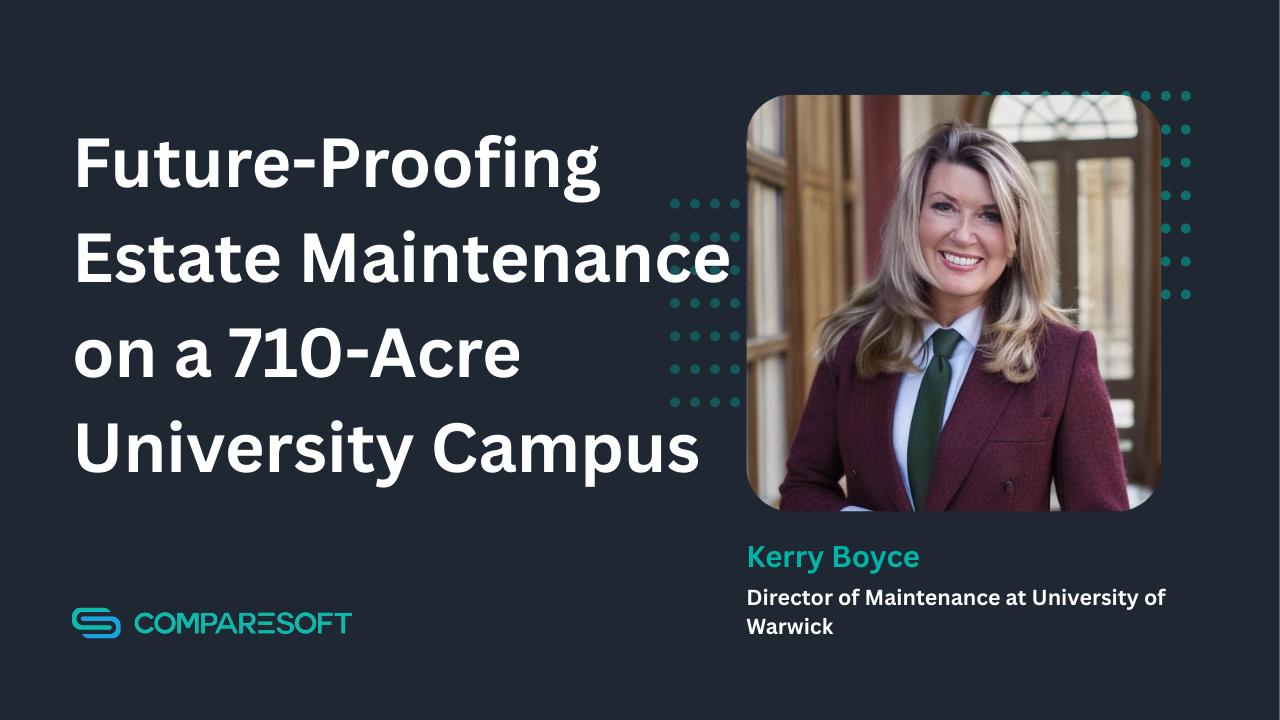
Future-Proofing Estate Maintenance on a 710-Acre University Campus
Kerry Boyce, Director of Maintenance at the University of Warwick, draws on a career spanning utilities, Transport for London, and the Royal Opera House to share what it takes to maintain a 710-acre university campus with over 500 buildings and a million-plus education assets.
Listen and Watch the Podcast →
The Journey from Apprentice to CEO Via Pharma, Oil & Gas & Engineering Sectors
The CEO of PlantQuest, Gerard Carton, discusses the challenges faced in high-compliance environments in the Pharma, Oil & Gas, and Engineering Sectors and his journey from apprentice to CEO.
Listen and Watch the Podcast →
T-Cards to AI: Exploring the Evolution & Possibilities of Tech in Maintenance
Roy Milne, MD & Principal Consultant at newly-formed company Asset ONE, talks extensively about the progress and limitless capabilities of maintenance techniques and predictive maintenance strategies through the use of advanced technologies such as artificial intelligence.
Listen and Watch the Podcast →Find the Right Condition Monitoring Software for Your Maintenance Team
From single-site plants to multi-facility operations, every maintenance team monitors equipment differently. Quickly find the condition-based maintenance software that matches your monitoring methods, sensor requirements, and reporting workflows.